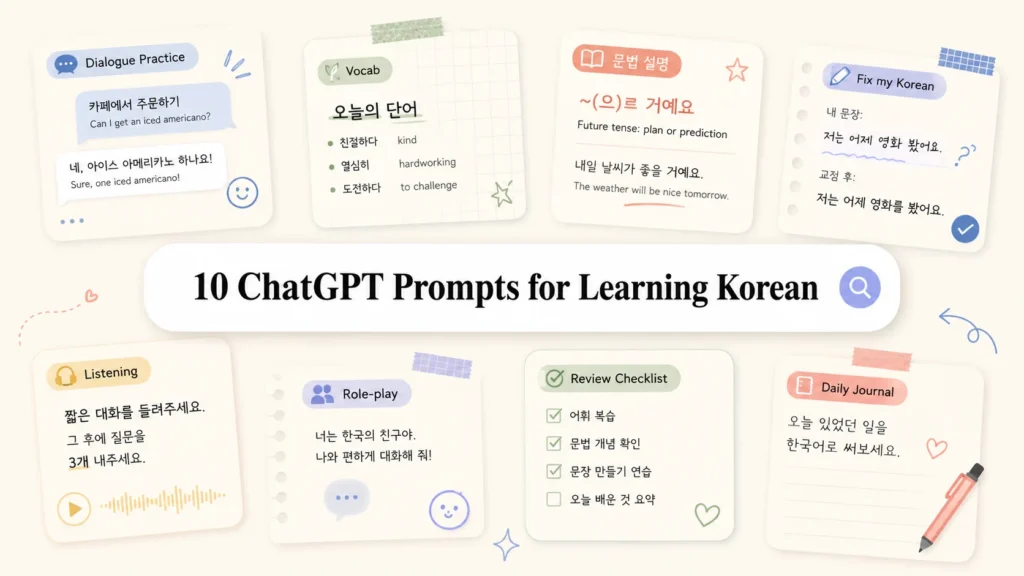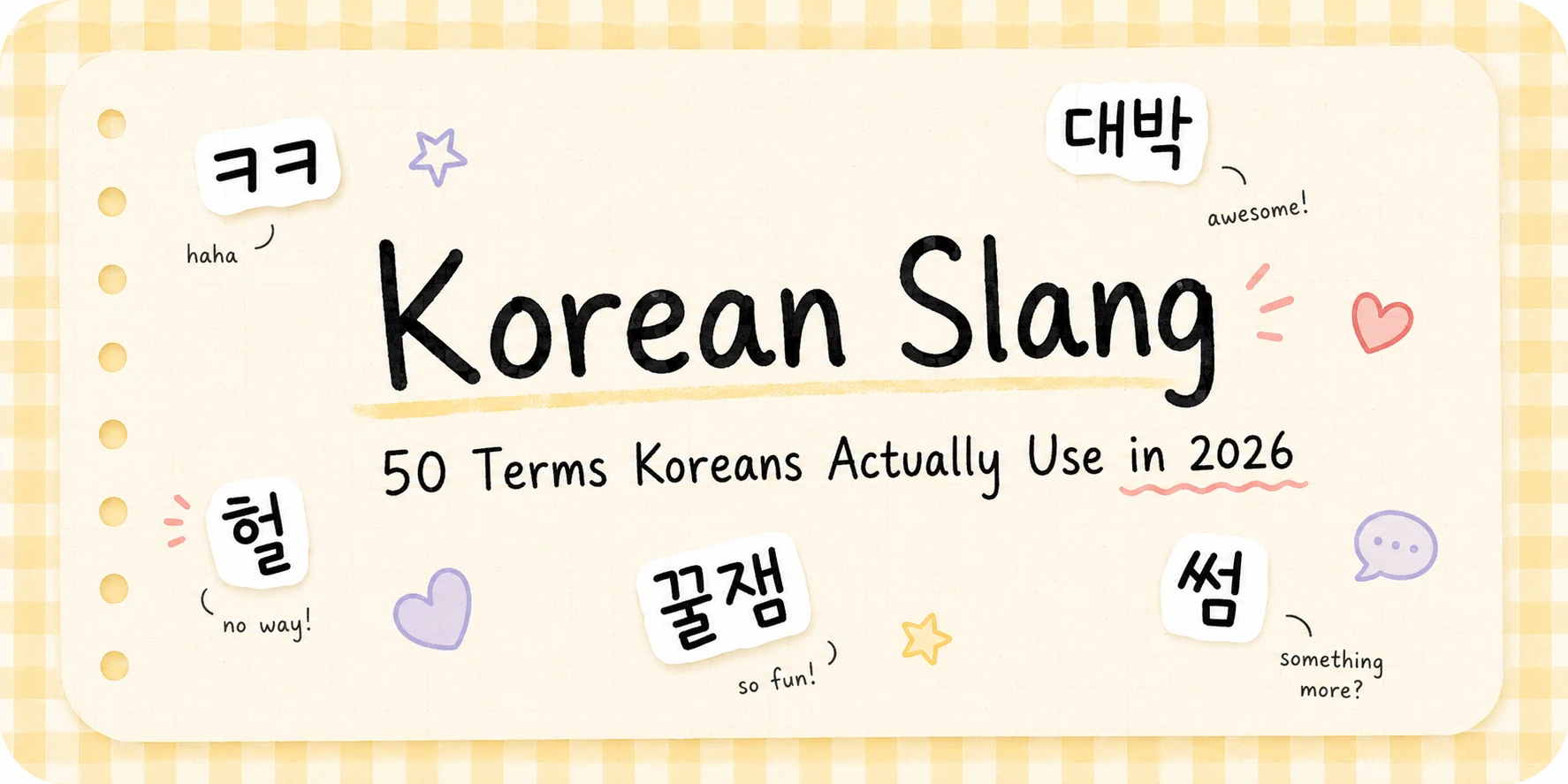
Searching for Korean slang usually means you have already seen a word in the wild. Maybe it showed up in a K-drama subtitle, a K-pop comment, a KakaoTalk message, or a variety show caption, and the dictionary meaning did not explain why people were laughing, teasing, flirting, or reacting so strongly. Since slang is usually informal language used outside standard vocabulary, the real meaning often depends on the scene, the relationship, and the tone.
I started collecting these words while learning Korean on my own through dramas, songs, Running Man, and variety shows. If you are also studying without a teacher, I wrote a separate guide on how long it really takes to learn Korean from a self-study perspective. Whenever a slang word made me pause, I saved the screenshot, checked the base meaning with the Korean-English Learners’ Dictionary from the National Institute of Korean Language, asked AI to break down the meaning, tone, origin, and safe usage, then added it to my Notion Korean Slang Tracker.
This guide is the cleaned-up version of that self-study list: 50 Korean slang words with Hangul, romanization, natural English meaning, origin story, real example, and a quick note on when to use each one safely.
Key Takeaways
Korean slang often comes from shortened words, consonant abbreviations, Konglish, internet jokes, idol culture, and variety show captions.
Start with everyday words like 대박, 헐, ㅋㅋ, 썸, and 눈치 because they appear across dramas, comments, and casual texts.
Check the 2025–2026 section for newer Korean slang like 추구미, 럭키비키, 테토, 에겐, 억텐, 찐텐, and 느좋.
Use the safety notes before trying Korean slang with teachers, coworkers, elders, or people you just met.
What Does Korean Slang Mean?
Korean slang means casual Korean words and expressions used in texting, social media, K-dramas, variety shows, K-pop comments, and everyday conversations with friends.
Some Korean slang words are classic reactions, such as 대박, 헐, and 미쳤다. Some are texting shortcuts, such as ㅋㅋ, ㅇㅈ, and ㄱㅅ. Some are newer Gen Z or internet expressions, such as 추구미, 럭키비키, 찐텐, and 느좋.
Most Korean slang works best in informal settings. You can use many of these words with friends, in comments, or while reacting to content online, but you should avoid most slang in job interviews, formal emails, school presentations, and serious conversations with elders or people you just met.
Most Useful Korean Slang to Know First
| Korean slang | Meaning | Best for |
|---|---|---|
| 대박 | awesome, amazing | reaction |
| 헐 | no way, oh my gosh | surprise |
| ㅋㅋ | lol | texting |
| ㅇㅈ | agreed, true | texting |
| 썸 | talking stage | dating |
| 눈치 | reading the room | social life |
| 추구미 | desired aesthetic | trends |
| 럭키비키 | lucky positive mindset | Gen Z slang |
| 찐텐 | genuine energy | variety shows |
| 느좋 | good vibe | comments |
Most Useful Korean Slang Words to Know First
1. 대박
Romanization: daebak
Meaning: awesome, amazing, jackpot-level good
대박 originally connects to a big win or jackpot, but now it is one of the most common Korean slang words for reacting to something impressive.
Example: 이 카페 진짜 대박이다.
English: This cafe is seriously amazing.
Use it when you react to food, talent, good news, a plot twist, or a performance. Avoid it in formal writing or serious professional settings.
2. 헐
Romanization: heol
Meaning: no way, oh my gosh, what
헐 is a short reaction sound used when you are surprised, shocked, speechless, or mildly offended. You will hear it in dramas, variety shows, and casual conversations.
Example: 헐, 진짜?
English: No way, really?
Use it with friends when something catches you off guard. Avoid using it with elders or in formal conversations because it sounds very casual.
3. 화이팅
Romanization: hwaiting
Meaning: you got this, good luck, cheer up
화이팅 comes from the English word “fighting,” but in Korean it means encouragement. It is used to cheer someone on before a test, performance, interview, or difficult day.
Example: 시험 잘 봐. 화이팅!
English: Good luck on your exam. You got this!
This one is safe in many casual and semi-casual situations, but still avoid using it as your main phrase in formal business writing.
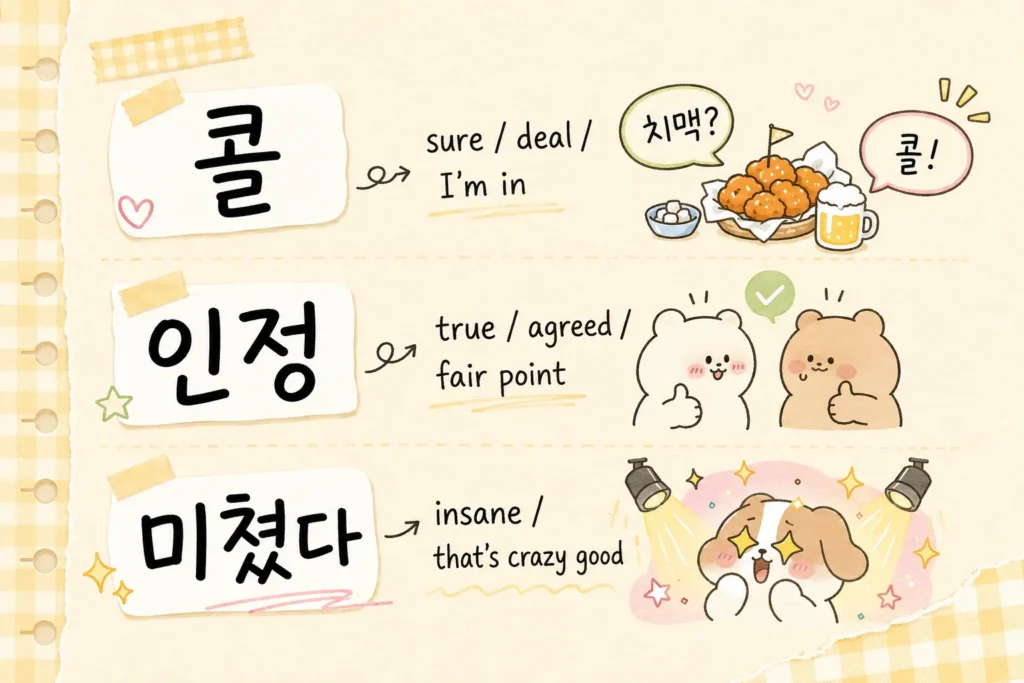
4. 콜
Romanization: kol
Meaning: deal, I’m in, sounds good
콜 comes from the English word “call.” In Korean slang, it means you accept an idea, plan, bet, or suggestion.
Example: 오늘 치킨 먹을래? 콜!
English: Want to eat chicken today? I’m in!
Use it when making casual plans with friends. Avoid it in formal meetings or polite professional messages.
5. 인정
Romanization: injeong
Meaning: agreed, true, I admit it
인정 literally means acknowledgment or recognition. As slang, it means “I agree” or “that is true.”
Example: 이 노래 진짜 좋다. 인정.
English: This song is really good. Agreed.
Use it in conversations, comments, and casual reactions. It can sound too direct in formal settings, so use standard polite wording when speaking to teachers or coworkers.
6. 미쳤다
Romanization: micheotda
Meaning: insane, crazy good, unbelievable
미쳤다 literally means “crazy,” but as slang it often means something is unbelievably good, intense, funny, beautiful, or impressive.
Example: 이 무대 진짜 미쳤다.
English: This stage performance is seriously insane.
Use it when reacting strongly to performances, visuals, acting, food, or plot twists. Be careful because the literal meaning is strong, so tone and context matter.
7. 레전드
Romanization: rejeondeu
Meaning: legendary
레전드 comes from the English word “legend.” Korean speakers use it for scenes, performances, jokes, photos, or moments that feel iconic.
Example: 오늘 방송 레전드였어.
English: Today’s episode was legendary.
Use it in comments, fandom spaces, and casual chats. It is not rude, but it is still casual.
8. 소름
Romanization: soreum
Meaning: chills, goosebumps
소름 literally means goosebumps. As a reaction, it means something gave you chills because it was shocking, scary, moving, or impressive.
Example: 마지막 장면 진짜 소름이었어.
English: The final scene gave me chills.
Use it when reacting to acting, singing, scary moments, plot twists, or emotional scenes. It works well in K-drama and K-pop comments.
9. 짱
Romanization: jjang
Meaning: the best, awesome
짱 is an older but still recognizable slang word meaning someone or something is the best.
Example: 너 진짜 짱이야.
English: You are seriously the best.
Use it in casual praise. It can feel cute, simple, or slightly old-school depending on the context.
10. 눈치
Romanization: nunchi
Meaning: social tact, reading the room
눈치 is one of the most useful Korean social words. It means the ability to read the mood, understand social cues, and act appropriately.
Example: 그는 눈치가 빨라.
English: He reads the room quickly.
Use it when talking about social awareness. It is not only slang, but it appears so often in dramas and variety shows that Korean learners should know it early.
2025–2026 Trending Korean Slang
11. 추구미
Romanization: chugumi
Meaning: desired aesthetic, pursued image, ideal vibe
추구미 combines 추구, meaning “to pursue,” with 미, meaning beauty or aesthetic. It describes the image, style, or vibe someone wants to have.
Example: 내 추구미는 차분한 올드머니 룩이야.
English: My chugumi is a calm old-money look.
Use it for fashion, lifestyle, personality, idol styling, Instagram mood boards, or personal aesthetics. It is trendy and casual, so avoid it in formal writing.
12. 럭키비키
Romanization: leokki biki
Meaning: lucky positive mindset
럭키비키 is connected to Jang Wonyoung’s “Lucky Vicky” way of reframing situations positively. It is often used when someone turns a small inconvenience into something lucky.
Example: 비 와서 카페에 더 오래 있을 수 있네. 완전 럭키비키잖아.
English: It is raining, so I get to stay at the cafe longer. Totally Lucky Vicky.
Use it playfully in social media captions or casual chats. It is trend-driven, so it may feel dated faster than classic slang.
13. 테토
Romanization: teto
Meaning: bold, strong-coded energy
테토 comes from testosterone-based trend language. In online Korean culture, it is used to describe a bold, energetic, strong, or assertive vibe.
Example: 그는 완전 테토남 느낌이야.
English: He gives total teto-man energy.
Use it when discussing internet personality trends, dating vibes, or visual impressions. Be careful because it is trend-based and can sound shallow if used seriously.
14. 에겐
Romanization: egen
Meaning: soft, gentle-coded energy
에겐 comes from estrogen-based trend language. It is often used to describe a softer, gentler, more delicate, or reserved vibe.
Example: 그 배우는 에겐 느낌이 강해.
English: That actor has a strong egen vibe.
Use it when talking about internet personality types or visual mood. Avoid using it to label real people too seriously.
15. 억텐
Romanization: eokten
Meaning: forced energy
억텐 is short for 억지 텐션, meaning forced energy. It describes someone acting excited, cheerful, or energetic when it does not feel natural.
Example: 오늘 내 웃음은 약간 억텐이었어.
English: My laughter today was kind of forced energy.
Use it when talking about social energy, variety shows, awkward gatherings, or fake enthusiasm. It is casual.
16. 찐텐
Romanization: jjinten
Meaning: genuine energy
찐텐 means real energy or genuine excitement. 찐 means real, and 텐 comes from tension, meaning mood or energy in Korean usage.
Example: 이건 억텐 아니고 찐텐이야.
English: This is not forced energy. This is real excitement.
Use it in variety show reactions, friend chats, and comments when someone’s reaction feels sincere.
17. 느좋
Romanization: neujoh
Meaning: good vibe
느좋 is shortened from 느낌 좋다, meaning “the feeling is good” or “the vibe is good.”
Example: 이 사진 완전 느좋이다.
English: This photo has such a good vibe.
Use it for photos, cafes, outfits, videos, music, room decor, and aesthetic posts. It is casual and trendy.
18. 갓생
Romanization: gatsaeng
Meaning: productive ideal life
갓생 combines 갓, from “god,” with 생, from life. It describes a disciplined, productive, admirable lifestyle.
Example: 오늘도 운동하고 공부했어. 갓생 살았다.
English: I worked out and studied today. I lived a productive life.
Use it for study routines, workout posts, self-improvement, and lifestyle content. It is still useful in social media contexts.
19. 꾸안꾸
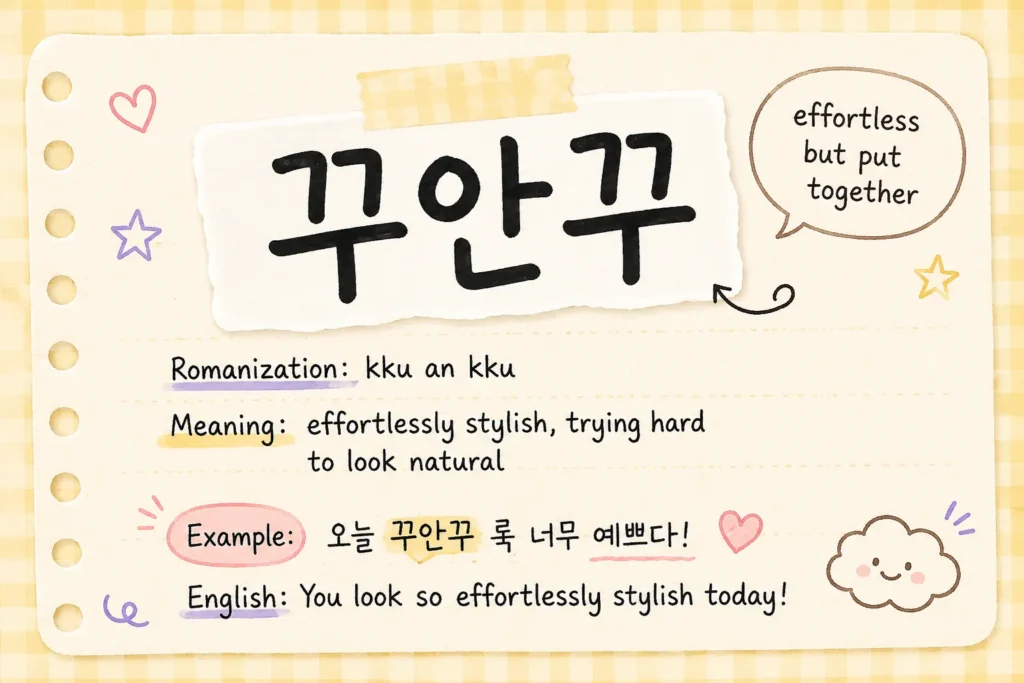
Romanization: kku-an-kku
Meaning: effortlessly styled, dressed up but not too dressed up
꾸안꾸 is short for 꾸민 듯 안 꾸민 듯, meaning “like you dressed up, but also like you did not.”
Example: 오늘 룩은 완전 꾸안꾸 느낌이야.
English: Today’s look has that effortlessly styled vibe.
Use it for fashion, makeup, hair, and casual styling. It is very useful in K-beauty and fashion content.
20. 중꺾마
Romanization: jung-kkeok-ma
Meaning: what matters is an unbreakable spirit
중꺾마 is short for 중요한 건 꺾이지 않는 마음, meaning “what matters is a heart that does not break.”
Example: 졌지만 괜찮아. 중꺾마지.
English: We lost, but it is okay. What matters is an unbreakable spirit.
Use it in sports, study motivation, gaming, and comeback moments. It feels motivational and internet-friendly.
Korean Texting Slang and KakaoTalk Shorthand
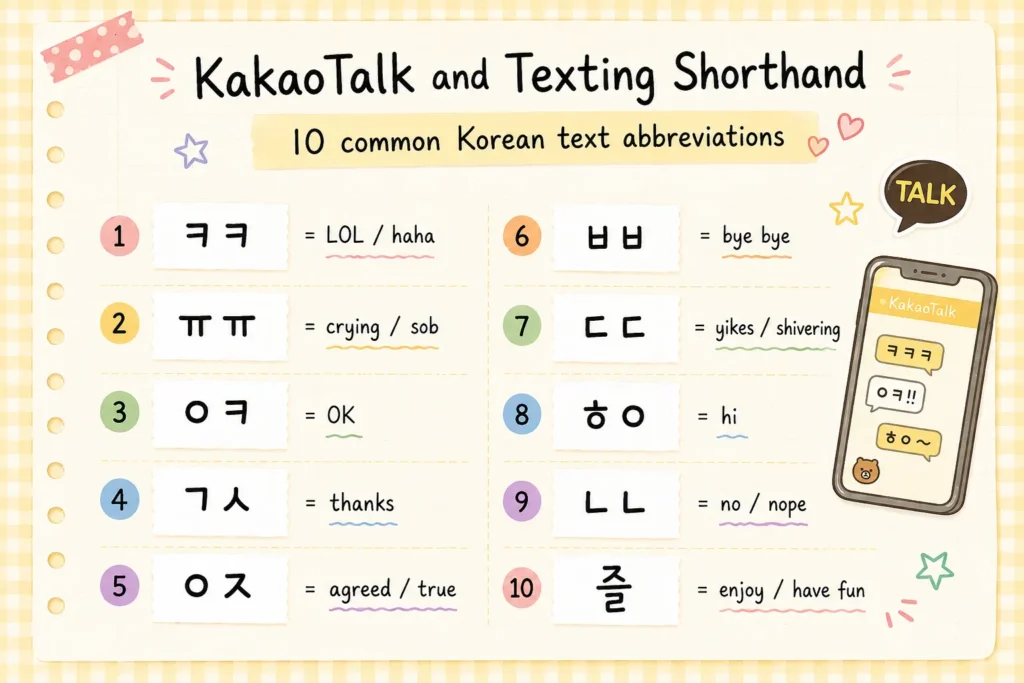
21. ㅋㅋ
Romanization: kkk
Meaning: lol, haha
ㅋㅋ is the most common Korean texting laugh. The more ㅋ you add, the stronger or more casual the laughter feels.
Example: 너무 웃겨ㅋㅋ
English: So funny lol.
Use it in texts, comments, and casual chats. Avoid it in professional emails or formal messages.
22. ㅠㅠ
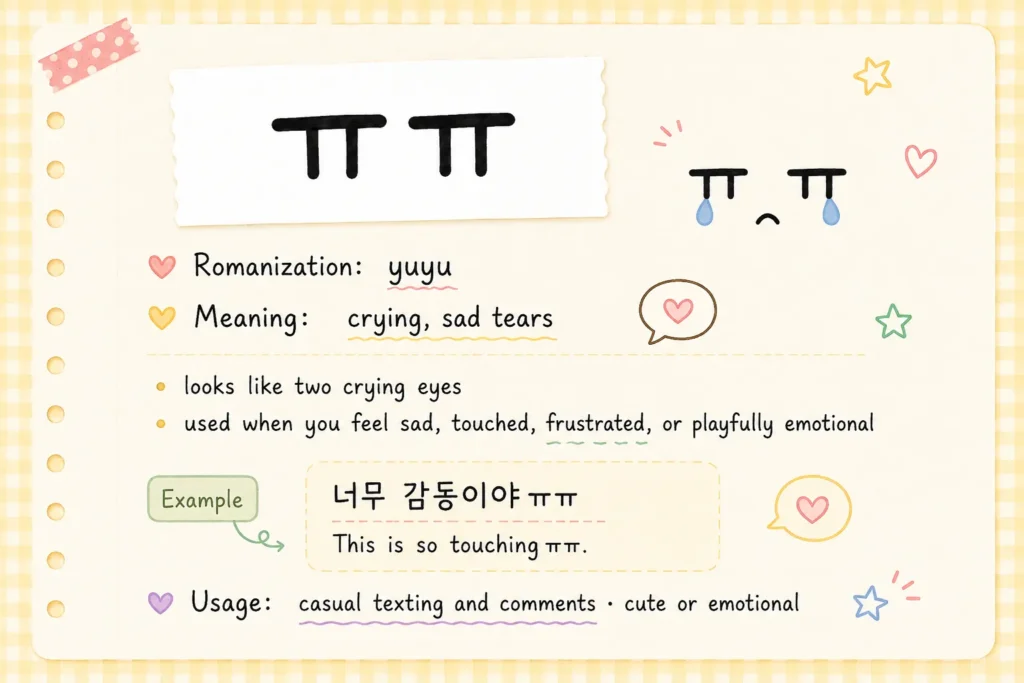
Romanization: yuyu
Meaning: crying, sad tears
ㅠㅠ looks like two crying eyes. It is used when you feel sad, touched, frustrated, or playfully emotional.
Example: 너무 감동이야ㅠㅠ
English: This is so touchingㅠㅠ.
Use it in casual texting and comments. It can feel cute or emotional.
23. ㅇㅋ
Romanization: okei
Meaning: okay
ㅇㅋ is a Korean texting shortcut for “okay.” It comes from the Korean pronunciation of OK.
Example: ㅇㅋ, 이따 봐.
English: Okay, see you later.
Use it with friends. In polite messages, write a fuller response instead.
24. ㄱㅅ
Romanization: gamsa
Meaning: thanks
ㄱㅅ is short for 감사, meaning thanks. It is quick and casual.
Example: 알려줘서 ㄱㅅ.
English: Thanks for letting me know.
Use it in casual messages. Avoid it when thanking someone formally.
25. ㅇㅈ
Romanization: injeong
Meaning: agreed, true
ㅇㅈ is the consonant shorthand for 인정. It is one of the most useful Korean texting slang expressions for agreeing quickly.
Example: 이 노래 진짜 좋다. ㅇㅈ?
English: This song is really good. Agreed?
Use it with friends, comments, and casual chats. It is too casual for formal situations.
26. ㅂㅂ
Romanization: baibai
Meaning: bye bye
ㅂㅂ is shorthand for bye bye. It is simple, casual, and common in texting.
Example: 나 먼저 갈게. ㅂㅂ
English: I will go first. Bye.
Use it in casual chats only.
27. ㄷㄷ
Romanization: dede
Meaning: trembling, shocked, scared
ㄷㄷ suggests shaking or trembling. It is used when something feels scary, intense, shocking, or impressive.
Example: 가격 ㄷㄷ
English: That price is scary.
Use it in comments and texts when something gives you a shocked reaction.
28. ㅎㅇ
Romanization: hai
Meaning: hi
ㅎㅇ is shorthand for 하이, from “hi.”
Example: ㅎㅇ 뭐 해?
English: Hi, what are you doing?
Use it in very casual chats. It can feel too lazy or abrupt if you use it with someone you are not close to.
29. ㄴㄴ
Romanization: nono
Meaning: no no
ㄴㄴ is a short way to say no, often used in fast texting.
Example: ㄴㄴ 그거 아니야.
English: No no, that is not it.
Use it with friends. Avoid it when you need to sound polite.
30. 즐
Romanization: jeul
Meaning: whatever, dismissive bye, enjoy
즐 originally comes from 즐겁게, meaning “enjoy,” but in internet slang it can sound dismissive, like “whatever” or “bye.”
Example: 아 몰라. 즐.
English: I do not know. Whatever.
Use it carefully. It can sound rude or childish depending on tone.
Korean Slang From K-Dramas and Variety Shows
31. 멘붕
Romanization: menbung
Meaning: mental breakdown, brain crash
멘붕 is short for 멘탈 붕괴, meaning mental collapse. It is used when your brain freezes because something shocking, stressful, or embarrassing happens.
Example: 동생을 보고 완전 멘붕 왔어.
English: I saw my younger sibling and totally froze.
Use it in casual storytelling, variety show reactions, and stressful situations. It is very useful for describing a sudden mental crash.
32. 이불킥
Romanization: ibul-kik
Meaning: cringe memory, blanket-kick moment
이불킥 literally means “blanket kick.” It describes the feeling of remembering something embarrassing at night and wanting to kick your blanket.
Example: 어제 한 말 생각나서 이불킥 했어.
English: I remembered what I said yesterday and cringed so hard.
Use it for embarrassing memories, awkward flirting, old messages, or social mistakes. It is casual and very visual.
33. 킬포
Romanization: kilpo
Meaning: key point, funny highlight, best part
킬포 is short for 킬링 포인트, meaning the standout point or best highlight of a scene.
Example: 이 장면이 오늘 영상의 킬포야.
English: This scene is the highlight of today’s video.
Use it when talking about variety shows, idol clips, funny edits, memes, and screenshots.
34. 찐친
Romanization: jjinchin
Meaning: real close friend
찐친 combines 찐, meaning real, with 친, from 친구, meaning friend. It means a genuinely close friend.
Example: 우리는 그냥 찐친이야.
English: We are just real close friends.
Use it for close friendships and casual captions. It feels warm and informal.
35. 팩폭
Romanization: paekpok
Meaning: brutal truth, fact attack
팩폭 is short for 팩트 폭력, literally “fact violence.” It means a painfully true comment.
Example: 그 말은 너무 팩폭이야.
English: That comment is such a brutal truth.
Use it in joking contexts with friends. Be careful because it can sound harsh.
36. 잡도리
Romanization: japdori
Meaning: playful scolding, calling someone out
잡도리 is used when someone gets grilled, scolded, teased, or playfully called out.
Example: 보자마자 잡도리 시작했어.
English: They started calling him out as soon as they saw him.
Use it for variety show teasing, friend-group banter, or playful scolding. Avoid using it in formal speech.
37. 웃참
Romanization: ut-cham
Meaning: trying not to laugh
웃참 is short for 웃음 참기, meaning holding back laughter.
Example: 그 표정 보고 웃참 실패했어.
English: I saw that face and failed to hold back my laugh.
Use it for variety shows, memes, reaction videos, and funny situations.
38. 장꾸
Romanization: jangkku
Meaning: mischievous person, playful troublemaker
장꾸 is short for 장난꾸러기, meaning someone who loves joking around.
Example: 오늘 완전 장꾸 모드네.
English: You are in total mischievous mode today.
Use it affectionately for someone playful. It sounds cute and casual.
39. 빌런
Romanization: billeon
Meaning: villain, troublemaker
빌런 comes from the English word “villain.” In Korean variety shows and internet comments, it often means someone who causes chaos or becomes the funny troublemaker.
Example: 오늘도 완전 빌런이네.
English: You are totally the troublemaker again today.
Use it playfully. Avoid using it seriously unless you mean someone is actually causing harm.
40. 오열
Romanization: oyeol
Meaning: sobbing hard
오열 means crying intensely. It is stronger than just 울다, meaning to cry.
Example: 마지막 장면 보고 오열했어.
English: I sobbed after watching the final scene.
Use it for emotional dramas, touching interviews, sad songs, or heartfelt variety show moments.
Relationship and Social Korean Slang
41. 썸
Romanization: sseom
Meaning: talking stage, situationship
썸 comes from the English word “something.” It means there is something romantic going on, but the relationship is not official yet.
Example: 둘이 아직 썸 타는 중이야.
English: They are still in the talking stage.
Use it for dating talk, K-drama relationships, and romantic gossip.
42. 밀당
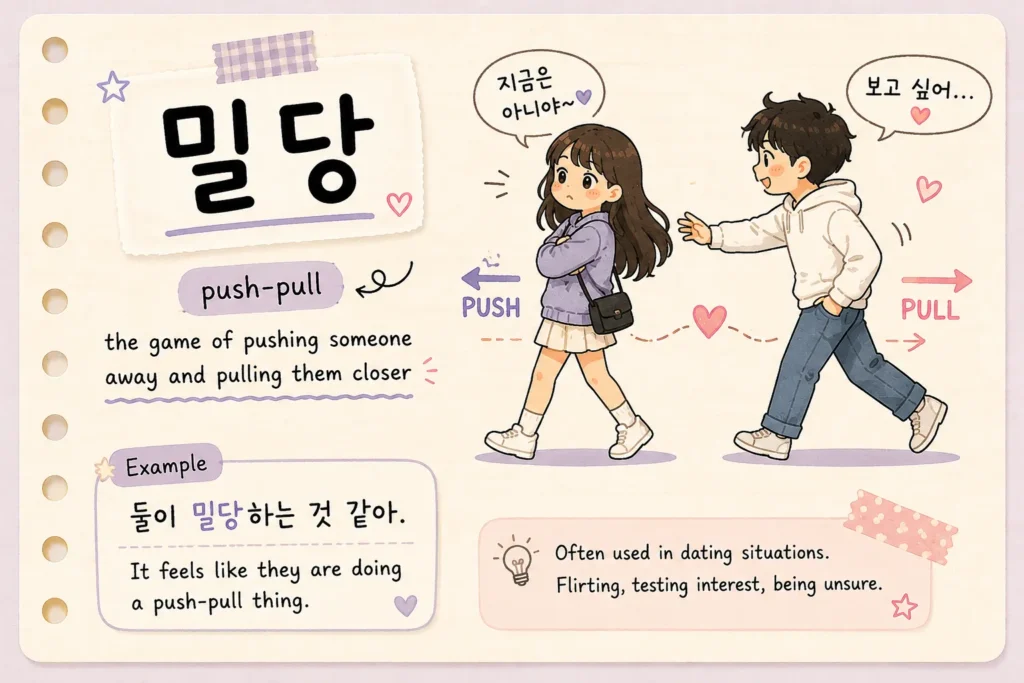
Romanization: mildang
Meaning: push and pull in dating
밀당 combines 밀다, to push, and 당기다, to pull. It describes the push-pull dynamic in flirting or dating.
Example: 둘이 밀당하는 것 같아.
English: It feels like they are doing a push-pull thing.
Use it when talking about romantic tension. It is casual and common in relationship talk.
43. 남사친
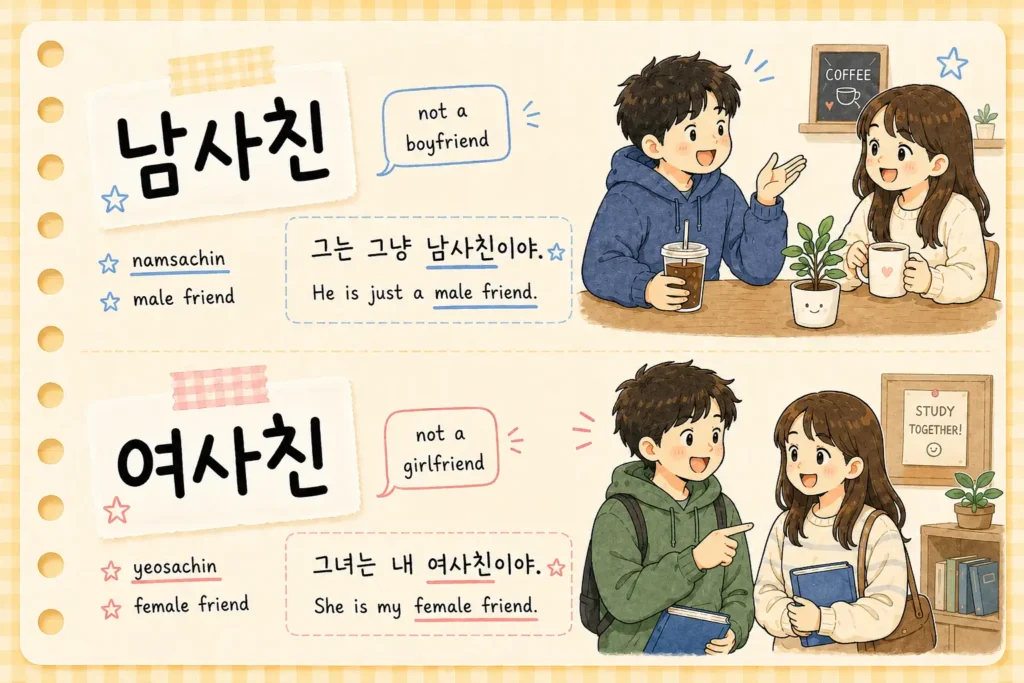
Romanization: namsachin
Meaning: male friend
남사친 is short for 남자 사람 친구, meaning a male person friend. It means a male friend who is not your boyfriend.
Example: 그는 그냥 남사친이야.
English: He is just a male friend.
Use it in friendship and dating contexts. It often appears in dramas and relationship conversations.
44. 여사친
Romanization: yeosachin
Meaning: female friend
여사친 is short for 여자 사람 친구, meaning a female person friend. It means a female friend who is not your girlfriend.
Example: 그녀는 내 여사친이야.
English: She is my female friend.
Use it when clarifying friendship vs romance.
45. 정뚝떨
Romanization: jeong-ttuk-tteol
Meaning: sudden loss of affection or interest
정뚝떨 is short for a phrase meaning your affection suddenly drops. It is similar to getting “the ick.”
Example: 그 말 듣고 정뚝떨 됐어.
English: After hearing that, I suddenly lost interest.
Use it in dating talk, friend gossip, or comment reactions. It is casual and a bit sharp.
46. 손절
Romanization: sonjeol
Meaning: cutting someone off
손절 originally means cutting losses, but socially it means cutting ties with someone.
Example: 그런 친구는 손절해야 돼.
English: You should cut off that kind of friend.
Use it carefully. It can sound strong because it implies ending a relationship.
47. 읽씹
Romanization: ilksip
Meaning: leaving someone on read
읽씹 combines 읽다, to read, with 씹다, to ignore. It means someone read your message but did not reply.
Example: 어제 메시지 보냈는데 읽씹당했어.
English: I sent a message yesterday, but they left me on read.
Use it in texting and dating conversations. It is casual.
48. 안읽씹
Romanization: an-ilksip
Meaning: ignoring without reading
안읽씹 means someone does not even open your message and ignores it.
Example: 하루 종일 안읽씹당했어.
English: I got ignored all day without them even reading it.
Use it for texting frustration. It feels casual and emotional.
49. 인싸
Romanization: inssa
Meaning: social insider, popular person
인싸 comes from “insider.” It means someone who is socially active, popular, and included in groups.
Example: 그는 학교에서 완전 인싸야.
English: He is totally popular at school.
Use it casually when talking about social life.
50. 아싸
Romanization: assa
Meaning: outsider, loner
아싸 comes from “outsider.” It means someone who is outside the main social group.
Example: 나는 주말에는 완전 아싸야.
English: On weekends, I am a total homebody outsider.
Use it lightly for yourself or friends. Be careful using it for someone else because it can sound judgmental.
How Korean Slang Is Built
Korean slang is not random. Once you understand how it is built, new words become easier to guess.
A lot of Korean slang comes from three patterns: abbreviation, Konglish, and internet wordplay.
Consonant Shorthand
Korean texting often shortens words by keeping only the first consonants.
For example, ㅋㅋ means laughing, ㅇㅈ comes from 인정, ㄱㅅ comes from 감사, and ㄴㄴ means no no.
This is why Korean texting slang can look confusing at first. The letters are usually a fast, casual version of a longer word.
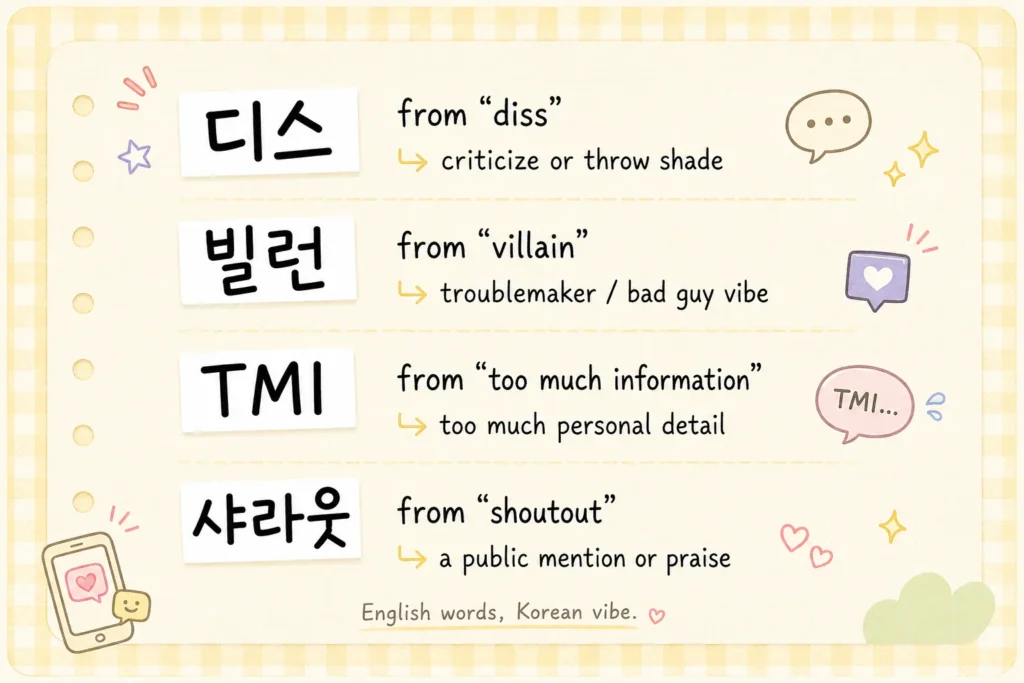
Konglish
Some Korean slang comes from English words that are adapted into Korean pronunciation or Korean internet culture.
For example, 디스 comes from diss, 빌런 comes from villain, TMI comes from too much information, and 샤라웃 comes from shoutout.
These words may look familiar to English speakers, but the Korean usage can feel more playful, especially in variety show captions and social media comments.
New Words From Pop Culture and Online Trends
Some Korean slang becomes popular because of idols, variety shows, memes, personality tests, or social media trends.
For example, 추구미 comes from a word-building pattern, 럭키비키 comes from idol culture, 억텐 and 찐텐 come from social energy, and 느좋 comes from shortening a phrase.
This is why Korean slang changes so quickly. A word can come from one viral clip, one idol moment, one caption style, or one comment trend, then suddenly appear everywhere.
When Not to Use Korean Slang
Korean slang is useful, but it is not always safe to use.
Use Korean slang with friends, in casual texting, in online comments, or when reacting to entertainment content. Be more careful with teachers, bosses, elders, coworkers, strangers, and people you just met.
| Situation | Safe to use Korean slang? | Better choice |
|---|---|---|
| Texting a close friend | Yes | ㅋㅋ, ㅇㅈ, 대박 |
| Commenting on K-pop content | Yes | 레전드, 소름, 느좋 |
| Talking to a teacher | Be careful | Use polite Korean |
| Job interview | No | Avoid slang |
| Formal email | No | Use standard Korean |
| Speaking to elders | Be careful | Start polite and mirror their tone |
A good rule is simple: recognize slang before you use it. If you are not sure whether a word is rude, dated, or too casual, ask someone or test it with AI first.
How I Learn Korean Slang From Screenshots With AI and Notion
When I find a Korean slang word I do not understand, I usually do not copy the word alone.
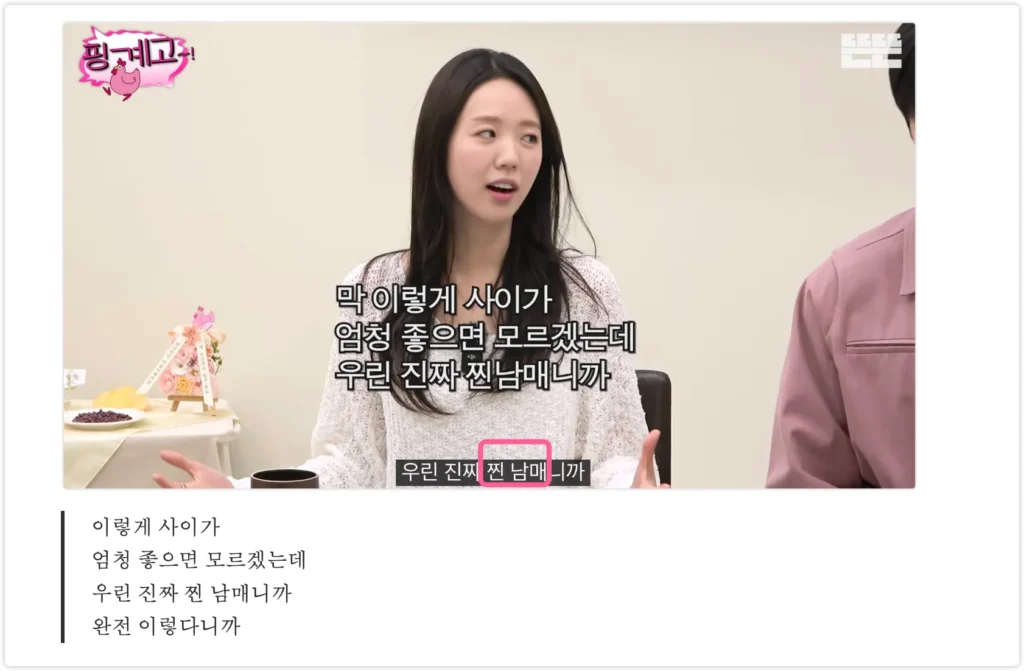
I take a screenshot. That screenshot might come from a K-drama subtitle, a Running Man reaction, a K-pop comment, a YouTube Short, or a KakaoTalk message. The full scene matters because Korean slang often changes meaning with tone, facial expression, emoji, and context.
I also made a free Korean slang cheat sheet tracker you can download and use alongside this workflow.
Here is my self-study flow:
- Take a screenshot of the Korean sentence or comment.
- Upload the screenshot to AI.
- Ask AI to find the slang, explain the meaning, and break down the tone.
- Ask for natural example sentences.
- Save the word into my Notion Korean Slang Tracker.
- Save the word into my Notion Korean Slang Tracker.
Before uploading a private chat screenshot, blur names, profile photos, phone numbers, and any personal details.
Once you have a running list, turn it into a flashcard deck using the free Quizlet alternative guide, which includes a ready-to-use Korean drama vocabulary prompt.
Copy This AI Prompt
I found this Korean slang in a screenshot. Please look at the screenshot and help me study it like a Korean teacher for self-study learners. Include:

The Korean slang word or phrase you found
The Hangul and romanization
The natural English meaning
The original sentence from the screenshot
A natural English translation of the full sentence
The word origin or abbreviation logic
The emotional tone: cute, funny, rude, dramatic, trendy, sarcastic, neutral, or old-fashioned
Where people usually use it: texting, K-dramas, variety shows, K-pop comments, daily conversation, or social media
When I can use it safely
When I should avoid using it
Three natural Korean example sentences, labeled as Beginner / Intermediate / Advanced
Two or three related slang words with brief comparisons — show how they're similar or different from the main slang
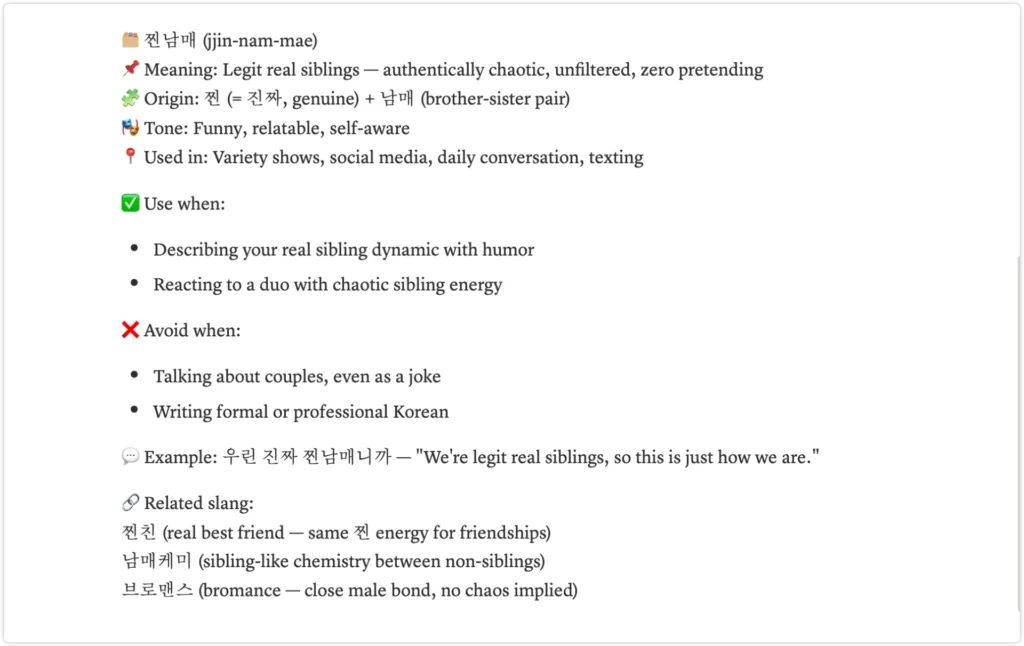
A Notion-ready study card in this exact format:

🗂️ [Word] ([Romanization])
📌 Meaning: [natural English meaning]
🧩 Origin: [word origin logic]
🎭 Tone: [emotional tone]
📍 Used in: [where people use it]
✅ Use when:

[situation 1]
[situation 2]

❌ Avoid when:

[situation 1]
[situation 2]

💬 Example: [Korean sentence] — "[English translation]"
🔗 Related slang:
[word 1] ([meaning])
[word 2] ([meaning])
[word 3] ([meaning])
See It in Action
Here is what the full workflow looks like in practice. I uploaded a subtitle screenshot from 핑계고, pasted the prompt, and got this breakdown in seconds.
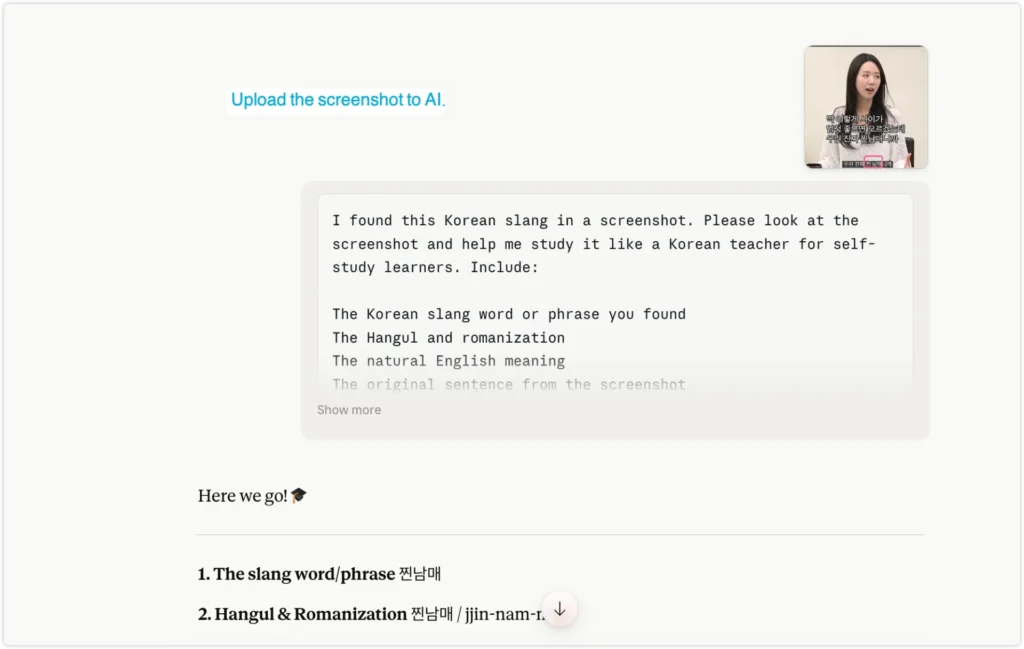
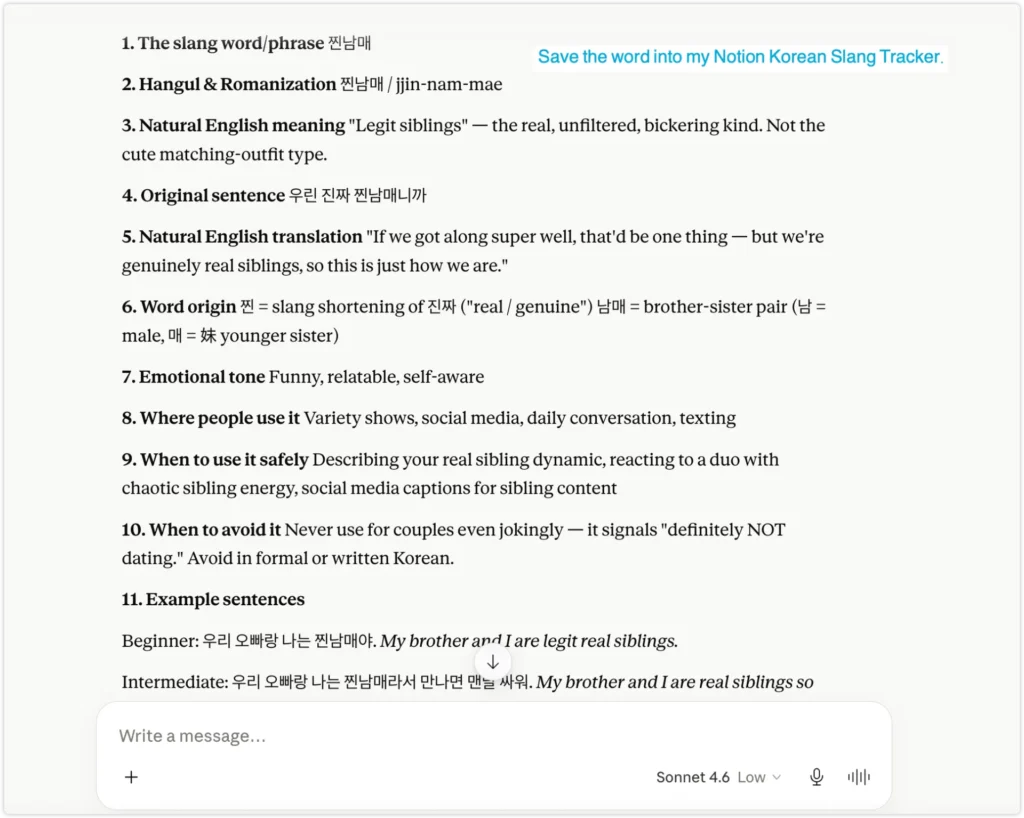
Then I copied the Notion card section directly into my tracker.
Example: Turning a Variety Show Screenshot Into a Study Card
I found 찐남매 in a subtitle clip from the Korean variety show 핑계고.
AI helped me turn it into this Notion card:
Word: 찐남매
Romanization: jjin-nam-mae
Meaning: Real siblings — the authentically chaotic, unfiltered kind, not the picture-perfect type
Origin: 찐 (shortened from 진짜, meaning “real/genuine”) + 남매 (brother-sister pair)
Tone: Funny, relatable, self-aware
Scene: Variety shows, social media captions, daily conversation
Example: 우린 진짜 찐남매니까
Translation: Because we’re genuinely real siblings — this is just how we are.
Use it with: Friends, sibling content, casual storytelling
Avoid it with: Romantic contexts, formal writing
Memory tip: 찐 = the “legit” stamp you put on anything genuine
Review status: New
This is much easier to remember than saving a plain definition. The screenshot keeps the slang connected to a real scene, so the word feels alive when I review it later.
You can start this workflow with a free AI tool. I only found a paid plan useful once I began uploading more screenshots, asking for longer breakdowns, and building study cards regularly. If you are curious about the cost side, I also wrote about the ChatGPT Plus subscription price in Turkey and what I checked before paying for it.
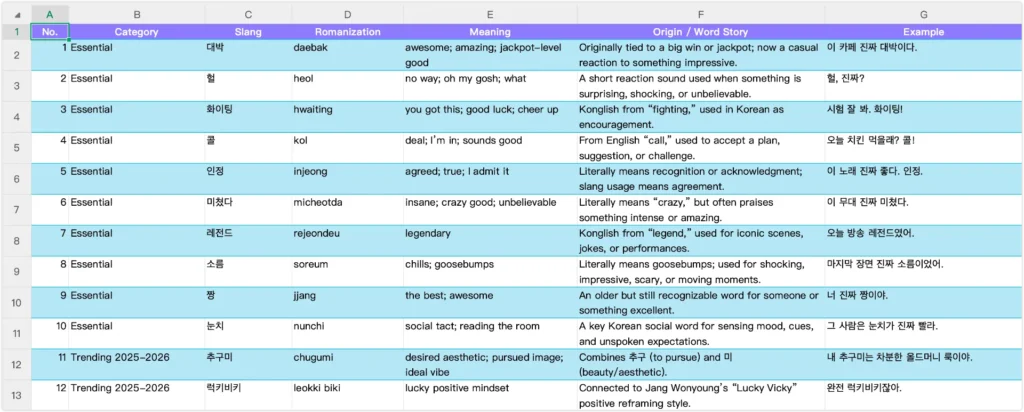
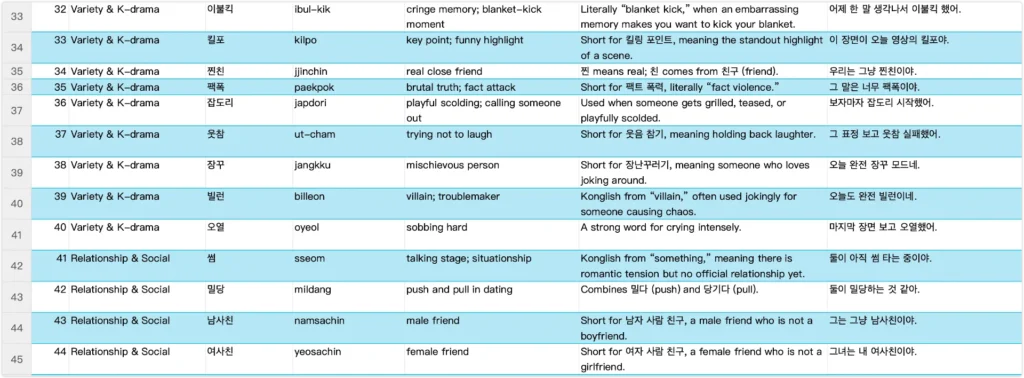
My Notion Korean Slang Tracker Fields
My Notion Korean Slang Tracker
If you want to build your own Korean slang tracker, here is what mine looks like in Notion. The example below is my 핑계고 EP.110 Korean Slang Tracker.
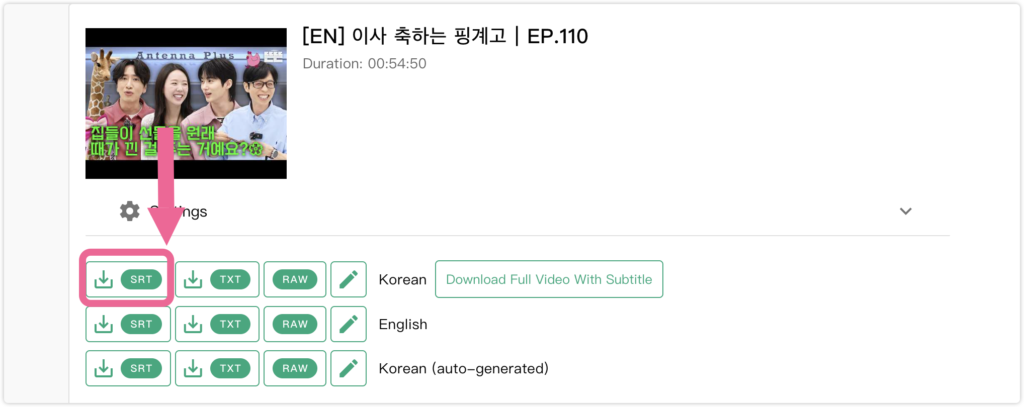
To build it, I downloaded the full episode subtitles with timestamps from downsub.com, uploaded the SRT file to AI, and asked it to find every slang word worth saving.
Then I saved each word into Notion with the source timestamp, category, and a safety note.
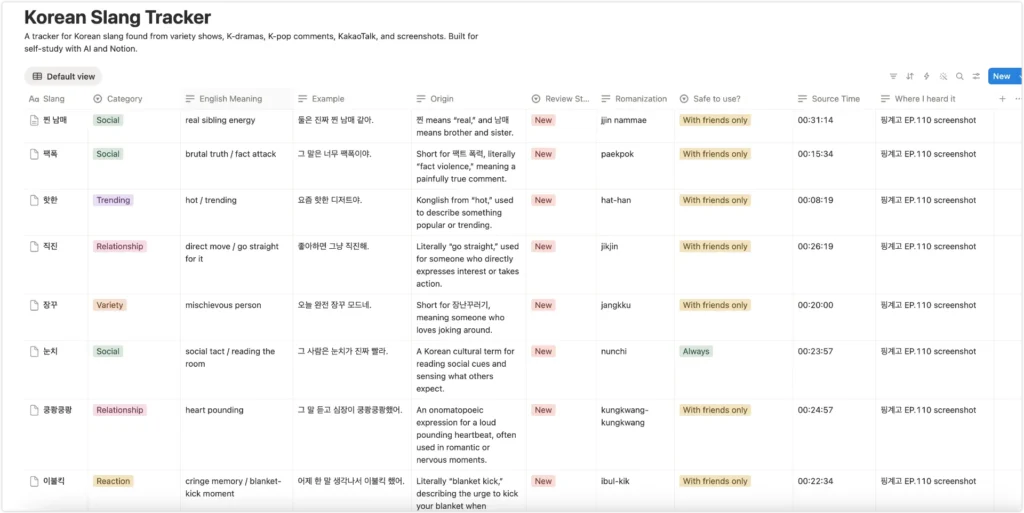
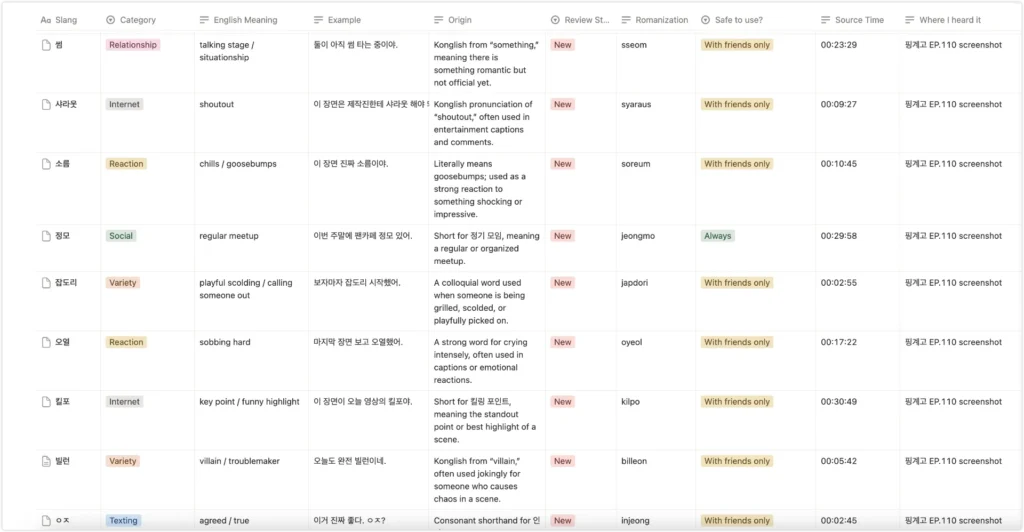
The “Where I heard it” and “Source Time” fields make it easy to go back and rewatch the exact moment in the episode if I want more context. I do one full episode at a time before moving to the next source.
If you want to start your own, you can duplicate mine for free.
[View My 핑계고 EP.110 Korean Slang Tracker in Notion →]
Korean Slang FAQs
What is the most popular Korean slang word?
One of the most popular Korean slang words is 대박, which means awesome, amazing, or jackpot-level good. You will hear it in dramas, variety shows, comments, and casual conversations.
What does 대박 mean?
대박 means awesome, amazing, or a big success. It originally connects to the idea of a jackpot or big win, but now it is used as a casual reaction.
What does cool mean in Korean slang?
For “cool” in Korean slang, you can use words like 대박, 짱, 미쳤다, or 레전드, depending on the tone. 대박 is a general “awesome,” while 레전드 feels more like “legendary.”
Is Korean slang hard to learn?
Korean slang feels hard at first because many words are shortened, trend-based, or tied to context. It becomes easier when you learn the word origin, save real examples, and notice where people actually use each phrase.
Can I use Korean slang with anyone?
No. Most Korean slang is best for friends, casual texting, comments, and entertainment reactions. Avoid slang with elders, teachers, bosses, strangers, and in formal situations unless you are sure it fits the relationship.
How do I keep up with new Korean slang?
The best way to keep up with Korean slang is to collect it from real content. Save screenshots from K-dramas, variety shows, K-pop comments, YouTube Shorts, and KakaoTalk messages. Then ask AI to explain the meaning, origin, tone, and safe usage before adding it to your own slang tracker.
Conclusion
You do not need to memorize all 50 Korean slang words at once.
Start with the words you actually see the most. If you watch K-dramas, begin with 대박, 헐, 썸, 눈치, and 멘붕. If you read K-pop comments, learn 레전드, 소름, 느좋, 추구미, and 찐텐. If you text in Korean, start with ㅋㅋ, ㅇㅈ, ㄱㅅ, ㅇㅋ, and ㅠㅠ.
Save this Korean slang list for the next time a drama line, idol comment, or KakaoTalk message makes you pause. Then take a screenshot, ask AI what the slang really means, and turn it into a study card you will actually remember.