Key Takeaways
- Most body part words come with extra layers — kanji logic, grammar patterns, and idioms that show up constantly in anime, dramas, and everyday conversation.
- Start with the 20 essential words, then learn the pain pattern [body part] が痛いです and the most common idioms.
- Download the free cheat sheet at the end to review vocabulary and idioms together in one place.
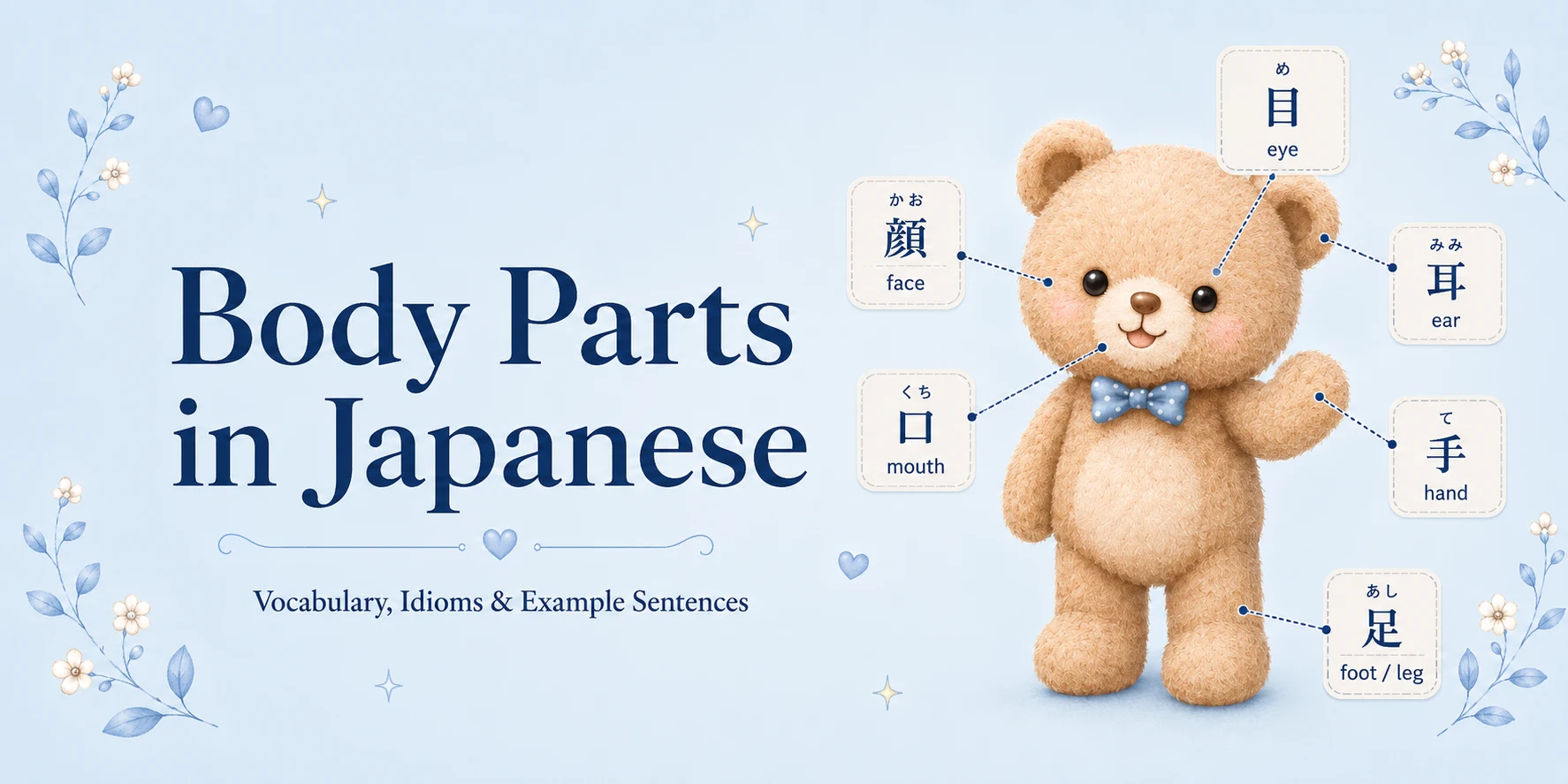
Japanese body parts are some of the most useful words to learn early. You need them to describe people, explain pain, understand daily phrases, and follow expressions that show up in anime, dramas, and real conversation.
But these words are not always literal. 頭(あたま)means “head,” but 頭にくる(あたまにくる)means to get angry or fed up. That is why this guide teaches body parts as real vocabulary, not just a memorization list.
You will learn the essential body parts in Japanese, common pain phrases like 頭が痛いです, tricky word pairs like 足 vs 脚, useful idioms, and simple ways to practice with AI. You can also download the free printable PDF at the end for quick review.
Start Here: 20 Japanese Body Parts Beginners Should Learn First
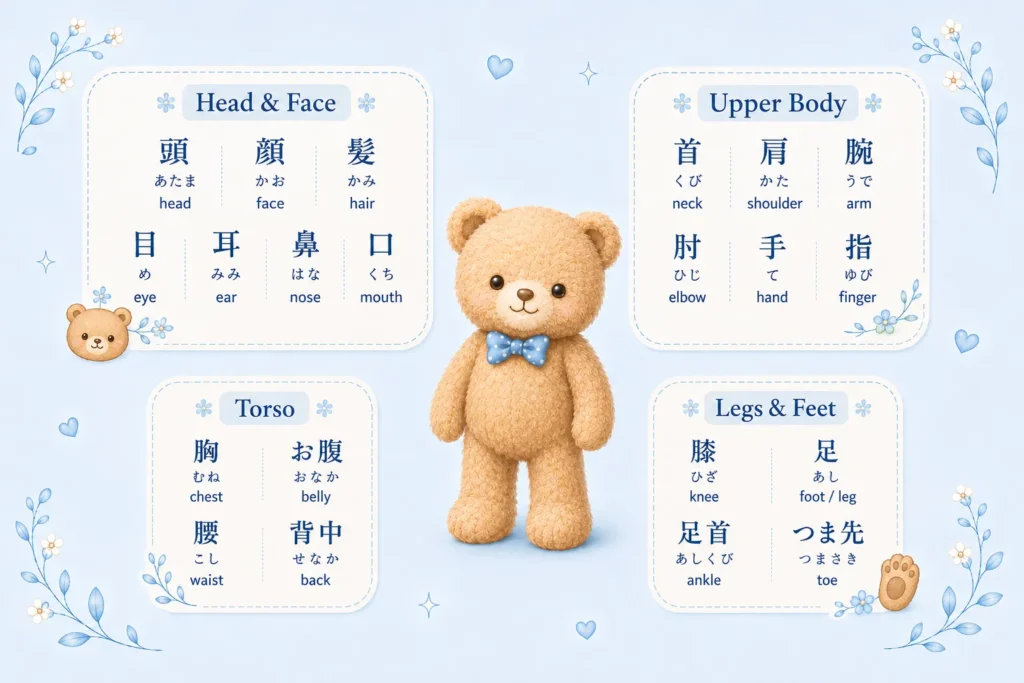
Body parts in Japanese are easiest to approach when you start small. These 20 words come up most often in beginner textbooks, daily conversation, health situations, and descriptions of people. Learn these first before working through the full list.
| # | Japanese | Hiragana | Romaji | English |
|---|---|---|---|---|
| 1 | 頭 | あたま | atama | head |
| 2 | 顔 | かお | kao | face |
| 3 | 髪 | かみ | kami | hair |
| 4 | 目 | め | me | eye |
| 5 | 耳 | みみ | mimi | ear |
| 6 | 鼻 | はな | hana | nose |
| 7 | 口 | くち | kuchi | mouth |
| 8 | 歯 | は | ha | tooth / teeth |
| 9 | 首 | くび | kubi | neck |
| 10 | 喉 | のど | nodo | throat |
| 11 | 肩 | かた | kata | shoulder |
| 12 | 手 | て | te | hand |
| 13 | 指 | ゆび | yubi | finger / toe |
| 14 | 胸 | むね | mune | chest |
| 15 | 背中 | せなか | senaka | back |
| 16 | お腹 | おなか | onaka | belly / stomach |
| 17 | 腰 | こし | koshi | lower back / waist |
| 18 | 足 | あし | ashi | leg / foot |
| 19 | 膝 | ひざ | hiza | knee |
| 20 | 足首 | あしくび | ashikubi | ankle |
Want this as a printable study chart? The free PDF at the end groups the core words, pain pattern, tricky pairs, and idioms into one quick review sheet.
Body Parts in Japanese from Head to Toe
Now for the full vocabulary list, grouped by body area. Grouping words by region is easier than memorizing one long alphabetical list because it mirrors how you actually think about the body.
Head and Neck
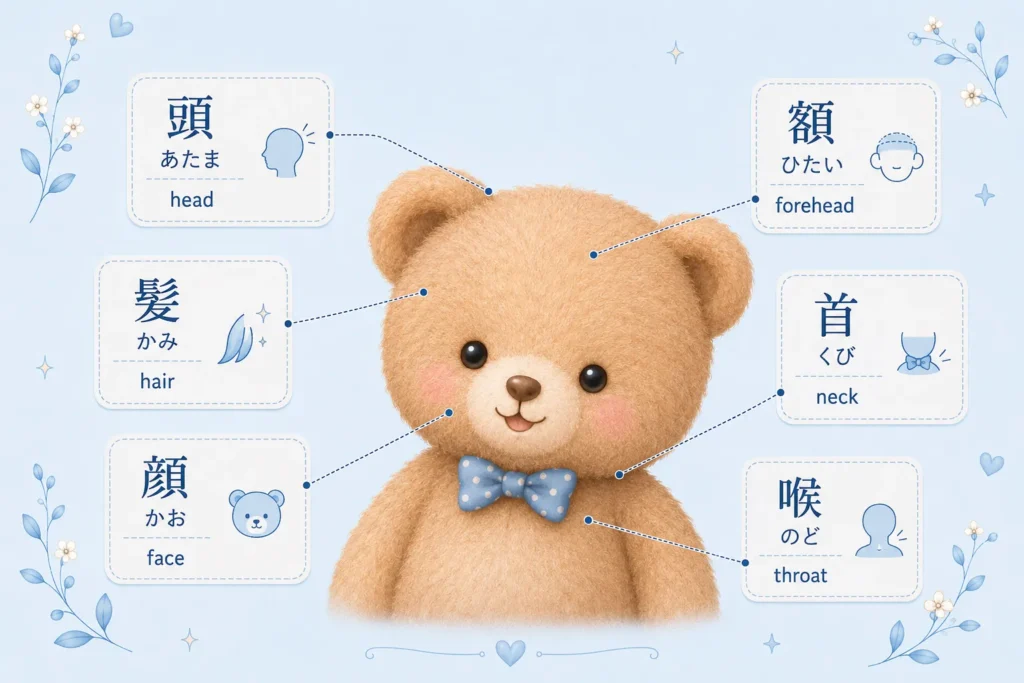
| Japanese | Hiragana | Romaji | English |
|---|---|---|---|
| 頭 | あたま | atama | head |
| 髪 | かみ | kami | hair |
| 顔 | かお | kao | face |
| 額 | ひたい | hitai | forehead |
| 首 | くび | kubi | neck |
| 喉 | のど | nodo | throat |
Face Parts in Japanese
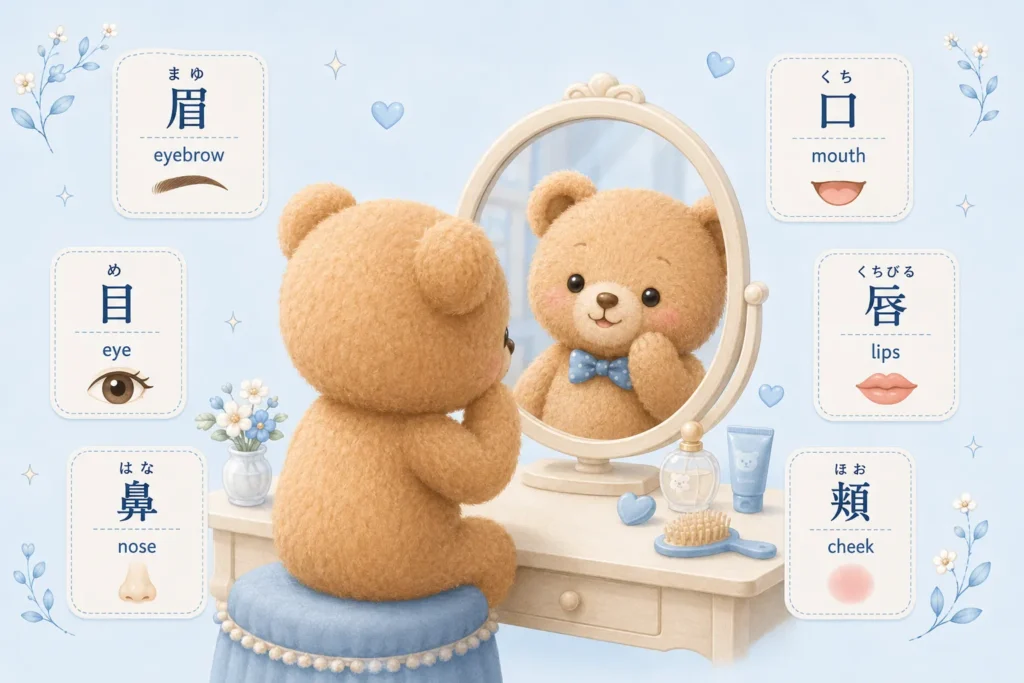
Face parts in Japanese are especially useful because they appear in descriptions of people, expressions, beauty content, anime reactions, and health situations.
| Japanese | Hiragana | Romaji | English |
|---|---|---|---|
| 目 | め | me | eye |
| 瞳 | ひとみ | hitomi | pupil / eye (poetic) |
| 眉 | まゆ | mayu | eyebrow |
| まぶた | まぶた | mabuta | eyelid |
| まつげ | まつげ | matsuge | eyelash |
| 鼻 | はな | hana | nose |
| 口 | くち | kuchi | mouth |
| 唇 | くちびる | kuchibiru | lips |
| 歯 | は | ha | tooth / teeth |
| 舌 | した | shita | tongue |
| 耳 | みみ | mimi | ear |
| 耳たぶ | みみたぶ | mimitabu | earlobe |
| 頬 | ほお | hoo | cheek |
| 顎 | あご | ago | chin / jaw |
Upper Body and Arms
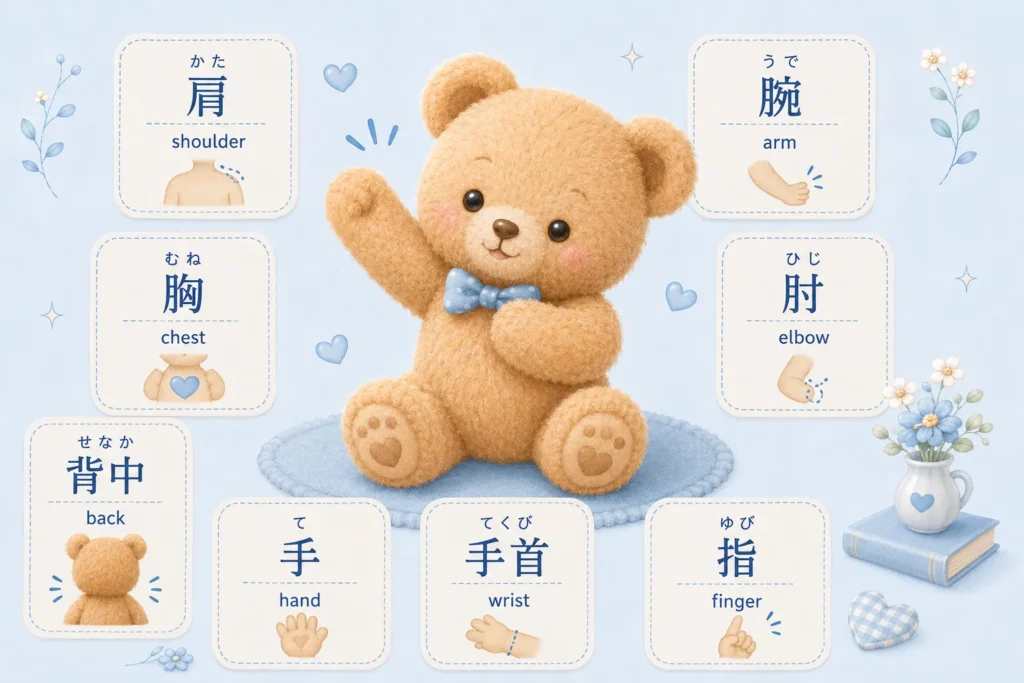
| Japanese | Hiragana | Romaji | English |
|---|---|---|---|
| 肩 | かた | kata | shoulder |
| 胸 | むね | mune | chest |
| 背中 | せなか | senaka | back |
| 腕 | うで | ude | arm |
| 肘 | ひじ | hiji | elbow |
| 手 | て | te | hand |
| 手首 | てくび | tekubi | wrist |
| 指 | ゆび | yubi | finger |
| 親指 | おやゆび | oyayubi | thumb |
| 人差し指 | ひとさしゆび | hitosashiyubi | index finger |
| 中指 | なかゆび | nakayubi | middle finger |
| 薬指 | くすりゆび | kusuriyubi | ring finger |
| 小指 | こゆび | koyubi | little finger / pinky |
| 爪 | つめ | tsume | nail |
Stomach, Waist and Lower Body
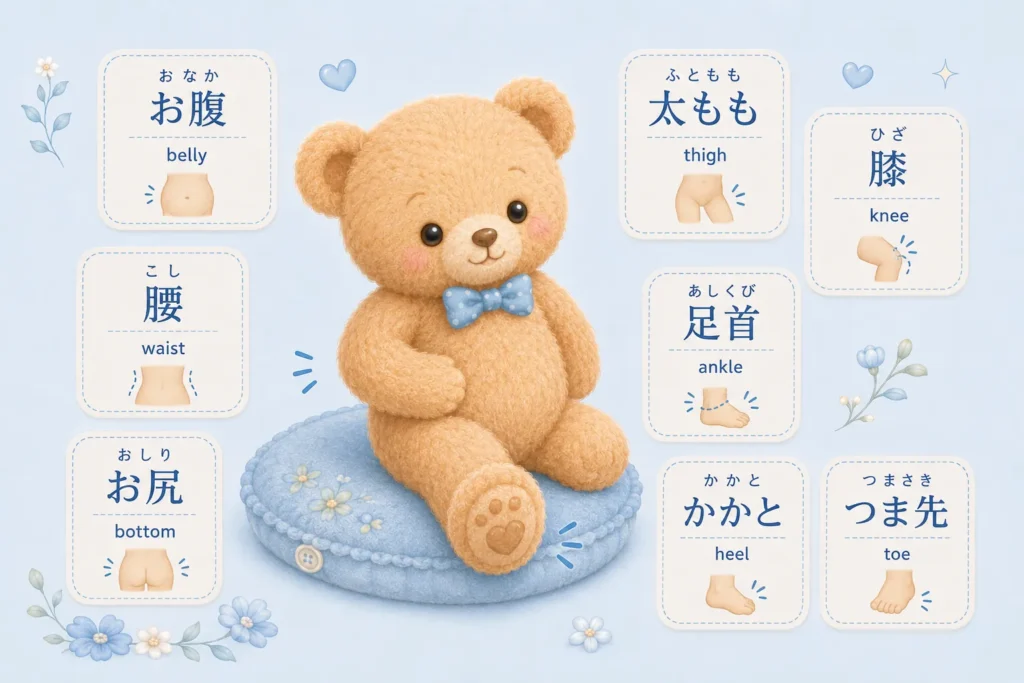
| Japanese | Hiragana | Romaji | English |
|---|---|---|---|
| お腹 | おなか | onaka | belly / stomach |
| 腹 | はら | hara | belly (rougher / idiomatic) |
| 胃 | い | i | stomach organ |
| 腰 | こし | koshi | lower back / waist |
| お尻 | おしり | oshiri | bottom / buttocks |
| 足 | あし | ashi | leg / foot |
| 太もも | ふともも | futomomo | thigh |
| 膝 | ひざ | hiza | knee |
| すね | すね | sune | shin |
| ふくらはぎ | ふくらはぎ | fukurahagi | calf |
| 足首 | あしくび | ashikubi | ankle |
| かかと | かかと | kakato | heel |
| 足の指 | あしのゆび | ashi no yubi | toe |
Internal Organs and Body Materials
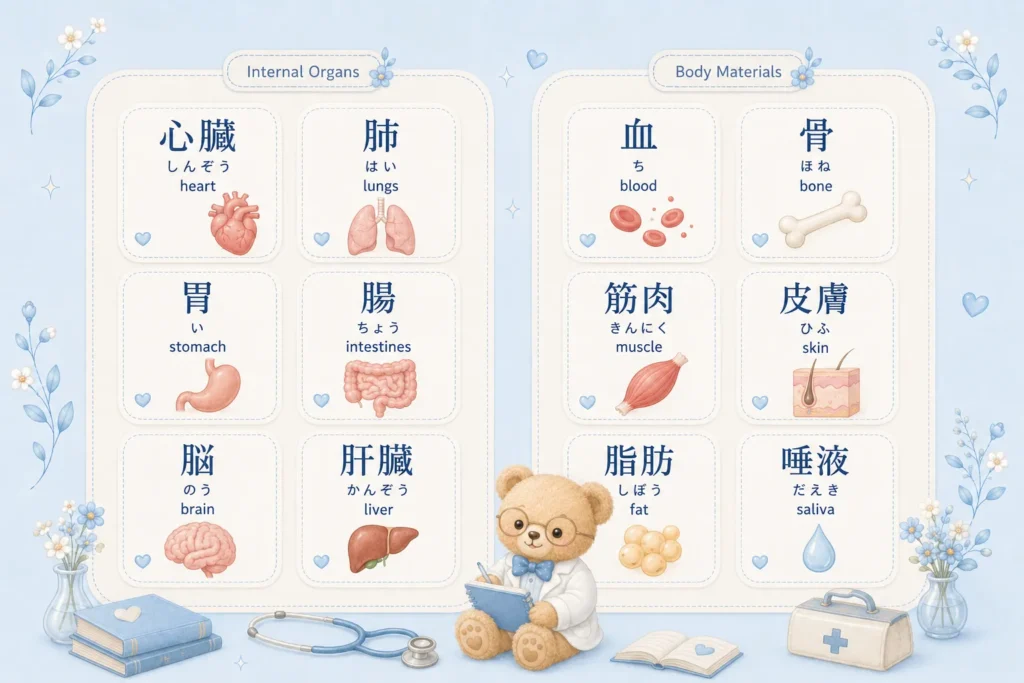
| Japanese | Hiragana | Romaji | English |
|---|---|---|---|
| 体 | からだ | karada | body |
| 皮膚 | ひふ | hifu | skin |
| 骨 | ほね | hone | bone |
| 血 | ち | chi | blood |
| 筋肉 | きんにく | kinniku | muscle |
| 脳 | のう | nou | brain |
| 心臓 | しんぞう | shinzou | heart |
| 肺 | はい | hai | lung |
| 腸 | ちょう | chou | intestines |
| 肝臓 | かんぞう | kanzou | liver |
| 内臓 | ないぞう | naizou | internal organs |
Cracking the Kanji Code: Why So Many Body Part Kanji Use 月
When I first noticed that so many body part kanji share what looks like a moon shape, I went looking for an explanation. The answer is 肉月(にくづき), and once you know it, these kanji start making a lot more sense.
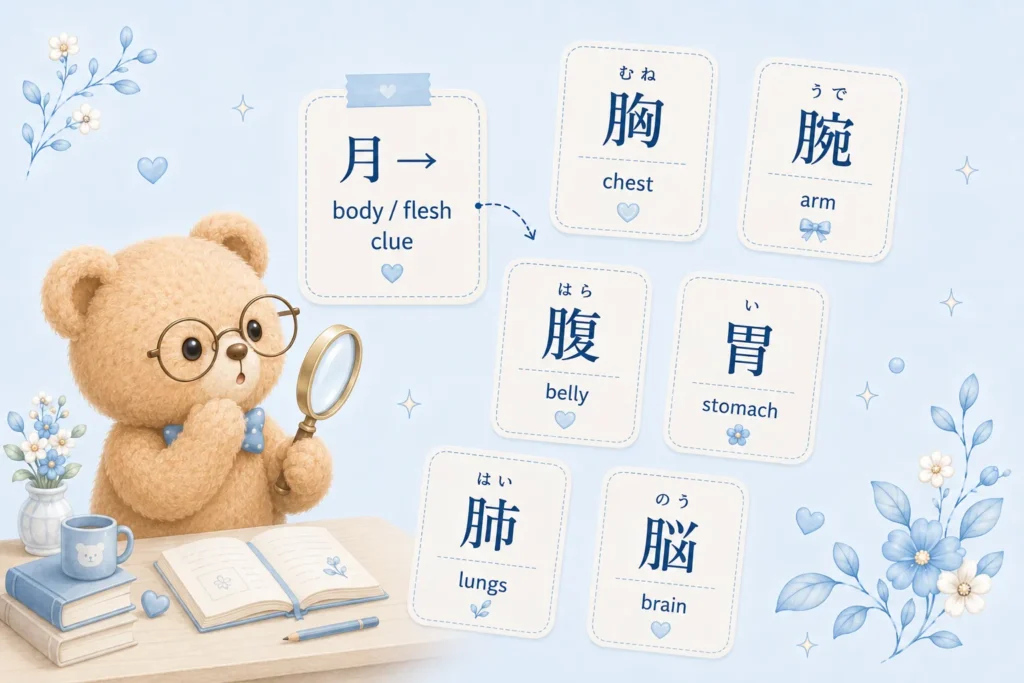
Once you notice 肉月(にくづき), body part kanji start to feel less random. You begin seeing a clue inside the character before you even memorize the full word, and the whole kanji system becomes a little easier to navigate.
お腹, 腹 and 胃: Which “Stomach” Word Should You Use?
Japanese has more than one word that translates to “stomach” in English. The right choice depends on the situation.
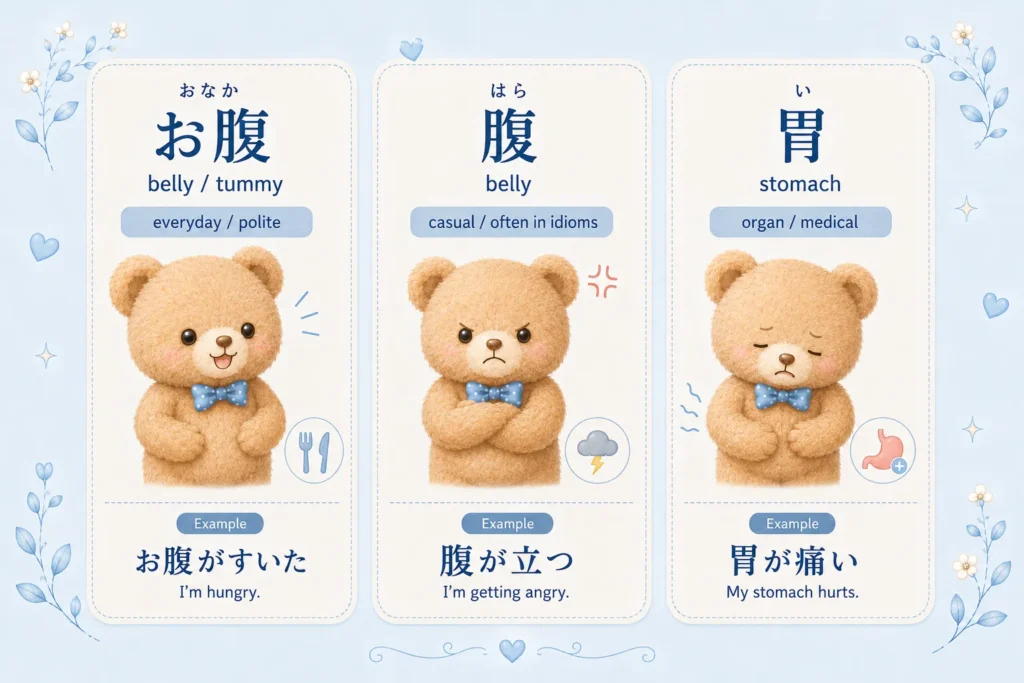
| Word | Reading | Best meaning | Tone | Example |
|---|---|---|---|---|
| お腹 | おなか | belly / stomach | everyday, polite | お腹が痛いです。My stomach hurts. |
| 腹 | はら | belly / gut | rougher, idiomatic | 腹が立つ。I am angry. |
| 胃 | い | stomach organ | medical, specific | 胃が痛いです。My stomach organ hurts. |
Use お腹 in most daily situations. Use 胃 when you want to be specific, especially at a clinic or pharmacy. Watch for 腹 in idioms, because it often points to emotion rather than the physical stomach.
How to Say “It Hurts” in Japanese?
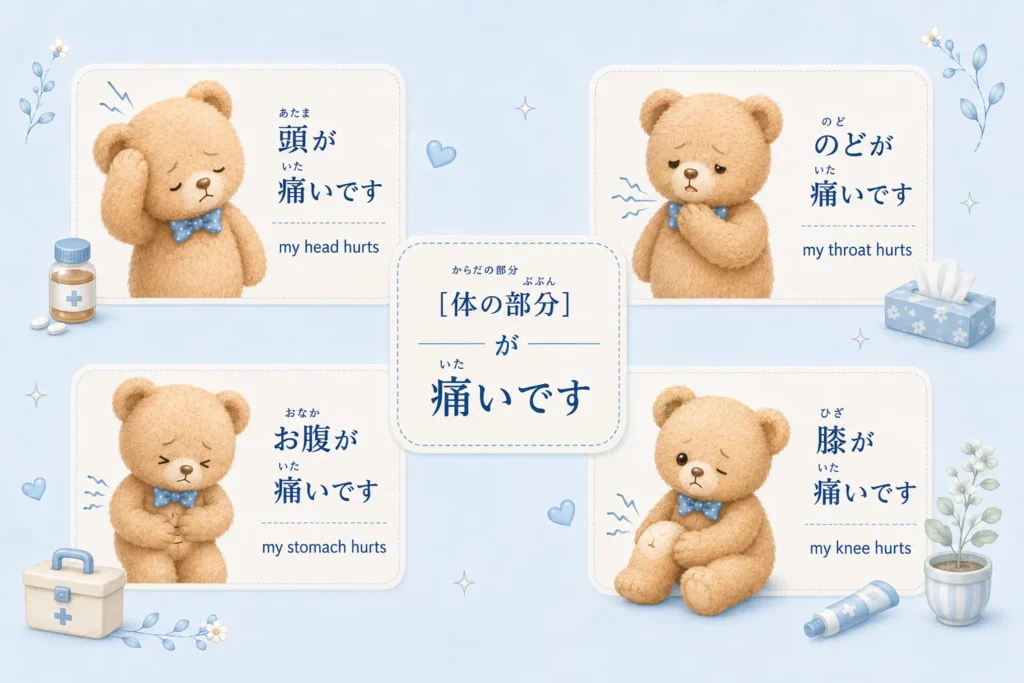
The most useful pattern for describing pain is:
[Body part] が痛いです。 My [body part] hurts.
You can swap in almost any body part from the vocabulary tables above:
| Japanese | Hiragana | English |
|---|---|---|
| 頭が痛いです。 | あたまがいたいです。 | My head hurts. |
| 喉が痛いです。 | のどがいたいです。 | My throat hurts. |
| 歯が痛いです。 | はがいたいです。 | My tooth hurts. |
| お腹が痛いです。 | おなかがいたいです。 | My stomach hurts. |
| 背中が痛いです。 | せなかがいたいです。 | My back hurts. |
| 腰が痛いです。 | こしがいたいです。 | My lower back hurts. |
| 膝が痛いです。 | ひざがいたいです。 | My knee hurts. |
| 足首が痛いです。 | あしくびがいたいです。 | My ankle hurts. |
At a Clinic or Pharmacy
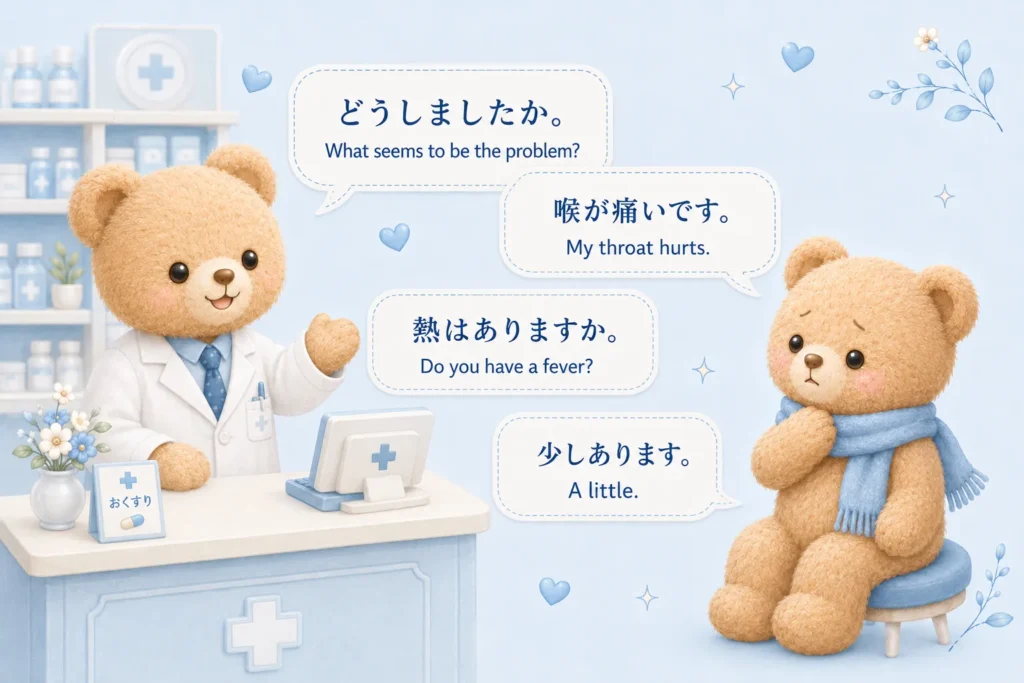
A: どうしましたか。 What seems to be the problem?
B: 喉(のど)が痛(いた)いです。 My throat hurts.
A: 熱(ねつ)はありますか。 Do you have a fever?
B: 少(すこ)しあります。 A little.
A few body part words and this one pattern are enough to communicate a real problem in a stressful situation.
How to Describe Appearance with Body Parts
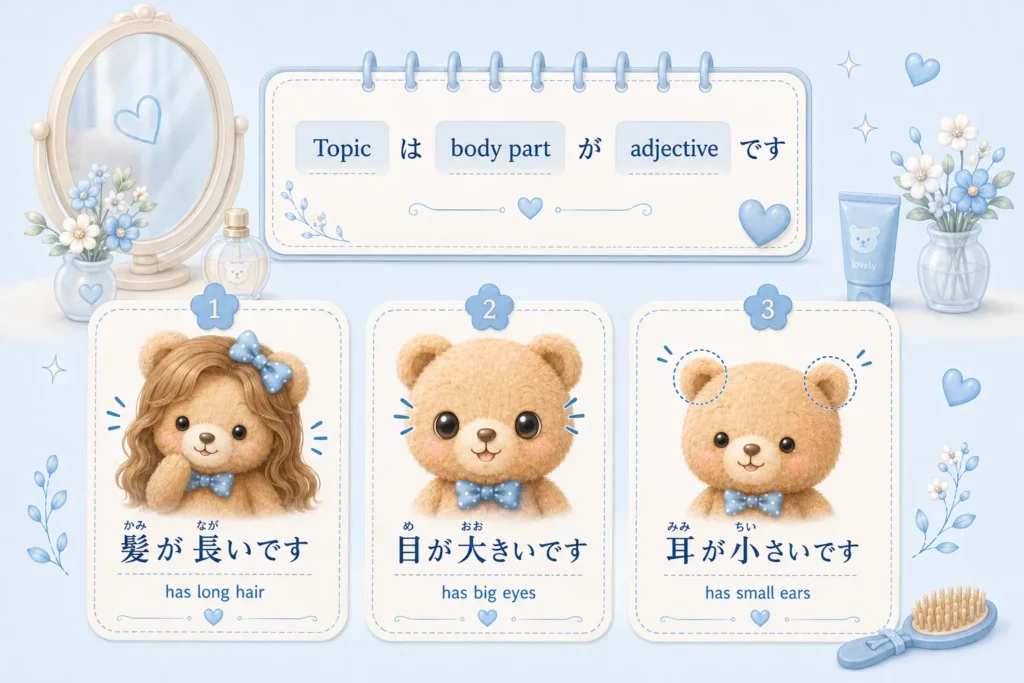
Body part words also pair with adjectives to describe people and physical features. The basic pattern is:
[Body part] が [adjective] です。
| Japanese | Hiragana | English |
|---|---|---|
| 目が大きいです。 | めがおおきいです。 | The eyes are big. |
| 髪が長いです。 | かみがながいです。 | The hair is long. |
| 鼻が高いです。 | はながたかいです。 | The nose is high-bridged. |
| 顔が小さいです。 | かおがちいさいです。 | The face is small. |
| 手がきれいです。 | てがきれいです。 | The hands are beautiful. |
Putting Things On: 被る, 着る, 履く and More
Japanese does not use one single verb for “wear.” The verb changes depending on which part of the body the item goes on.
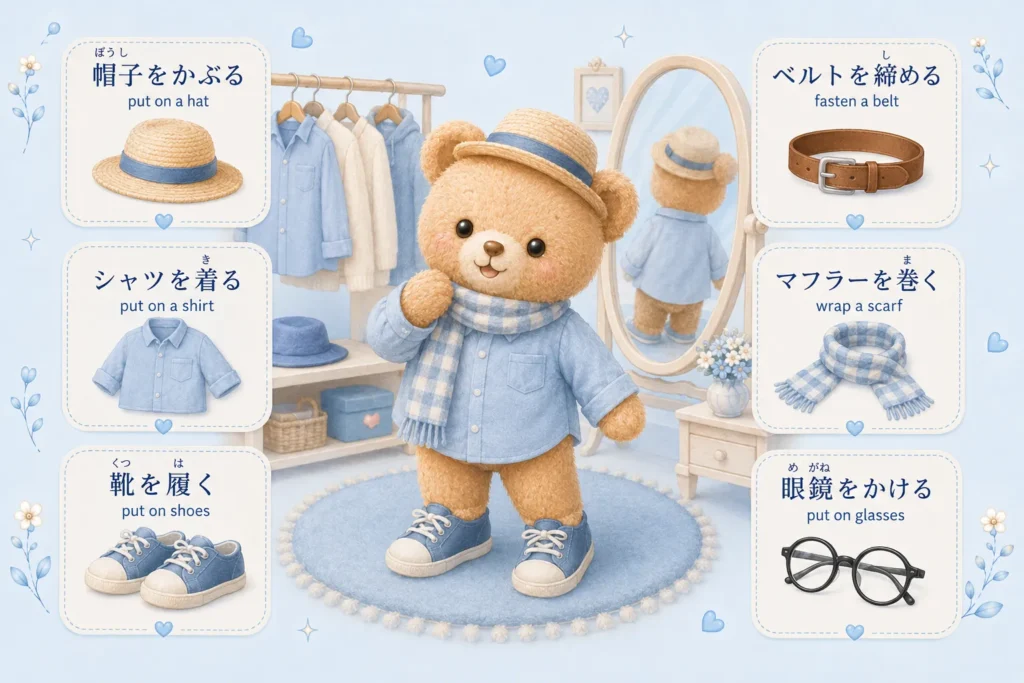
| Verb | Reading | Used for | Example |
|---|---|---|---|
| 被る | かぶる | things worn on the head | 帽子を被ります。I wear a hat. |
| 着る | きる | clothes on the upper body | シャツを着ます。I wear a shirt. |
| 履く | はく | clothes or items on the lower body | 靴を履きます。I wear shoes. |
| 締める | しめる | things tied around the neck or waist | ネクタイを締めます。I tie a tie. |
| 巻く | まく | things wrapped around the neck or body | マフラーを巻きます。I wear a scarf. |
| かける | かける | glasses or things worn on the face | 眼鏡をかけます。I wear glasses. |
A hat goes on your head, so you 被る it. Shoes go on your feet, so you 履く them. Glasses sit on your face, so you かける them. Once you connect each verb to the body zone it belongs to, the right choice becomes much easier to remember.
Don’t Mix These Up: Common Body Part Mistakes
Some Japanese body part words do not map onto English one-to-one. These are the pairs that trip up beginners most often.
足 vs 脚
Both are read あし.
足 is the everyday word for leg or foot. It covers the whole lower limb depending on context and is the safer default for most situations.
脚 often points more specifically to the leg as a shape, function, or support structure. You may see it in phrases about long legs, table legs, or the physical form of the lower body.
For most beginner sentences, 足 is correct.
手 vs 腕
手(て) means hand. It refers to the part from the wrist to the fingertips.
腕(うで) means arm. It refers to the area from the shoulder to the wrist.
Use 手 for holding, washing, writing, and touching. Use 腕 for arm movement, arm strength, and sleeves.
指 vs 足の指
指(ゆび) can mean either finger or toe.
To be clear about toes, say 足の指(あしのゆび), which literally means “foot fingers.” In Japanese, fingers and toes share the same word because they are both just ゆび attached to different limbs.
髪 vs 紙 vs 神
All three are read かみ but mean completely different things.
| Word | Hiragana | Meaning |
|---|---|---|
| 髪 | かみ | hair |
| 紙 | かみ | paper |
| 神 | かみ | god / deity |
Context usually makes the meaning clear, but the kanji is important when reading written Japanese.
Japanese Body Part Idioms You’ll Actually Hear
Body part idioms are where this vocabulary becomes much more useful and interesting. These expressions appear constantly in casual Japanese, dramas, anime, manga, and songs, and they almost never mean what the literal translation suggests.
頭にくる(あたまにくる)
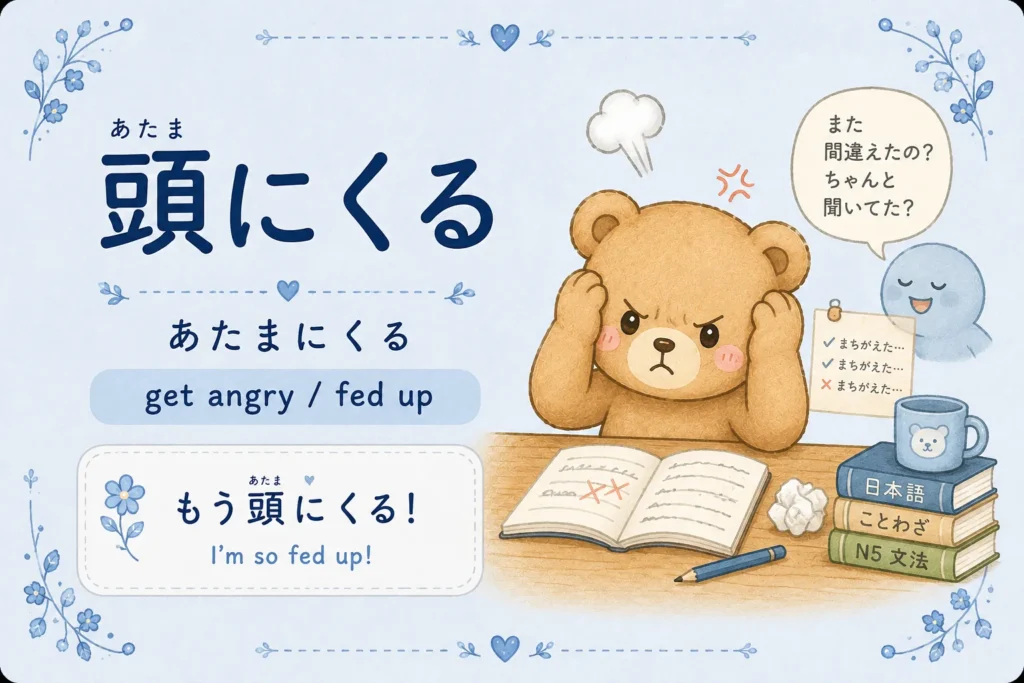
Literal meaning: “it comes to the head”
Real meaning: to get angry or fed up
This phrase does not mean your head hurts. It describes frustration rising up inside you. You will often hear it when a character is pushed past their limit by a rude comment or a repeated mistake.
Example: もう頭にくる!
(もうあたまにくる!)
That’s it. I’m so fed up.
腹が立つ(はらがたつ)
Literal meaning: “the belly stands up”
Real meaning: to get angry
This is one of the most common ways to express anger in Japanese. Notice that it uses 腹(はら), not お腹(おなか). When 腹 appears in an idiom, it almost always points to emotion rather than the physical stomach.
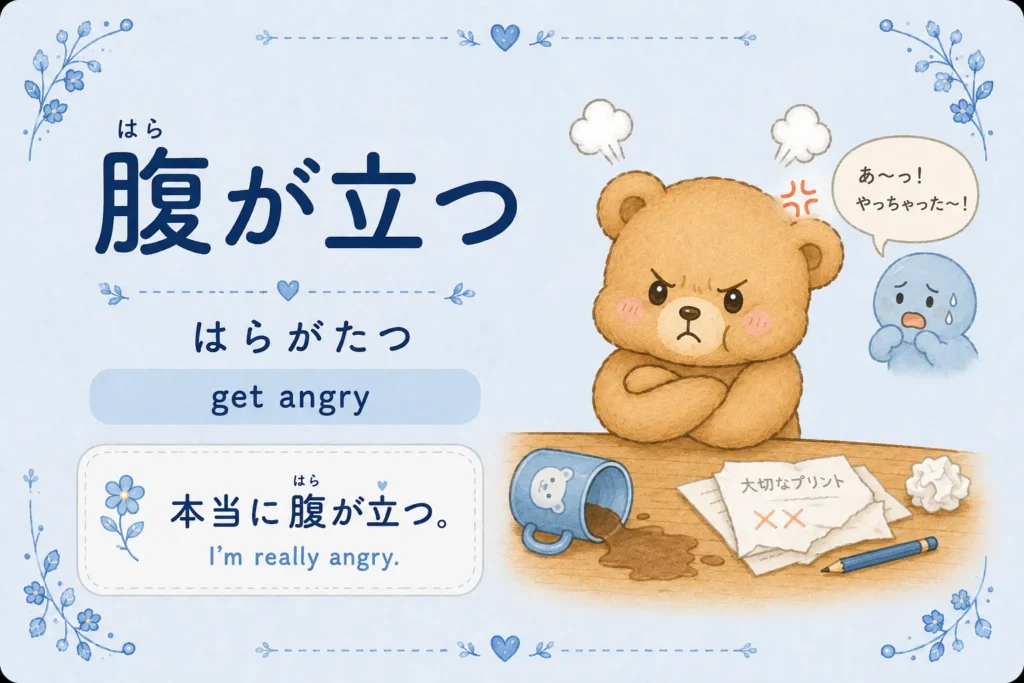
Example: 本当に腹が立つ。
(ほんとうにはらがたつ。)
I’m really angry.
耳が痛い(みみがいたい)
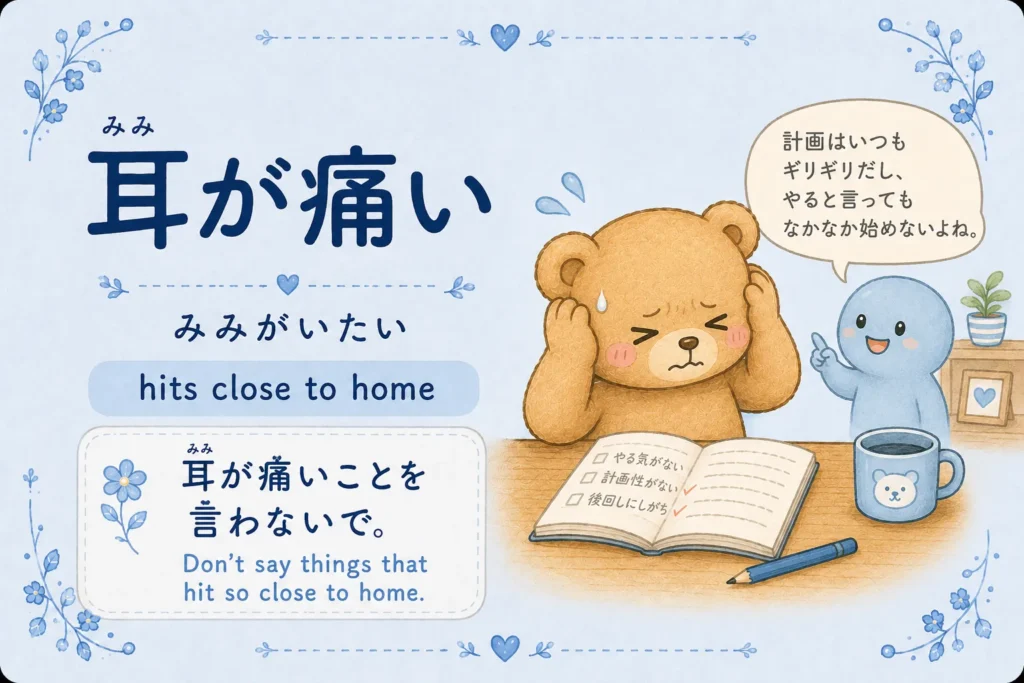
Literal meaning: “the ears hurt”
Real meaning: something is hard to hear because it is true
Use this when someone says something accurate that you would rather not face. It is similar to “that hits close to home” in English.
Example: 耳が痛いことを言わないで。
(みみがいたいことをいわないで。)
Don’t say things that hit so close to home.
顔が広い(かおがひろい)
Literal meaning: “the face is wide”
Real meaning: to be well connected, to know many people
This is a compliment. Someone who is 顔が広い is the kind of person who seems to know everyone in any room.
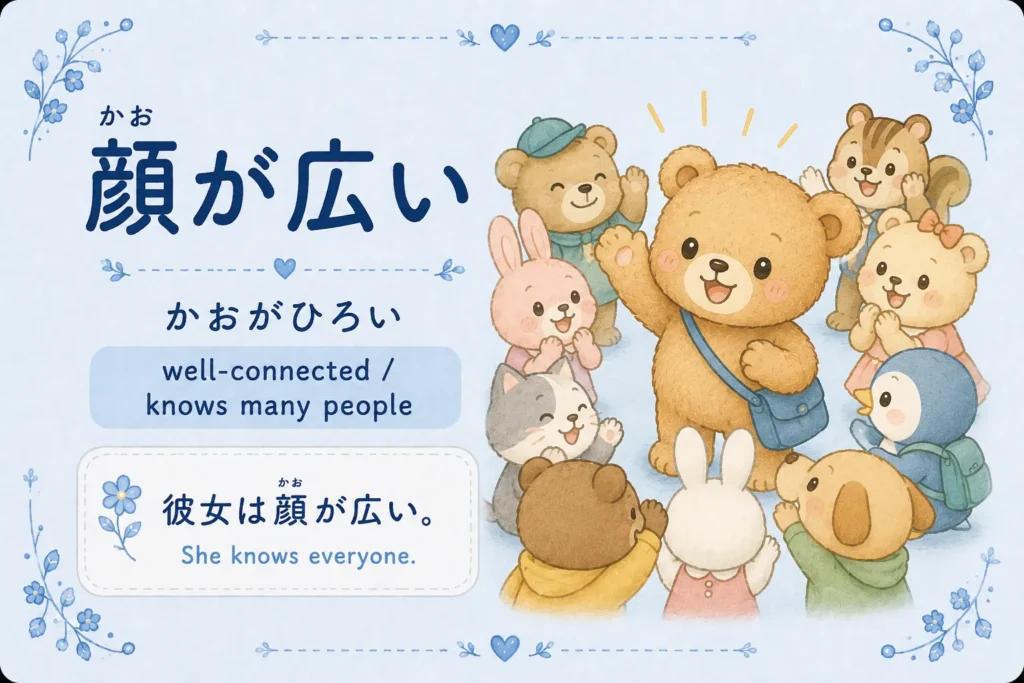
Example: 彼女は顔が広い。
(かのじょはかおがひろい。)
She knows everyone.
口が軽い(くちがかるい)
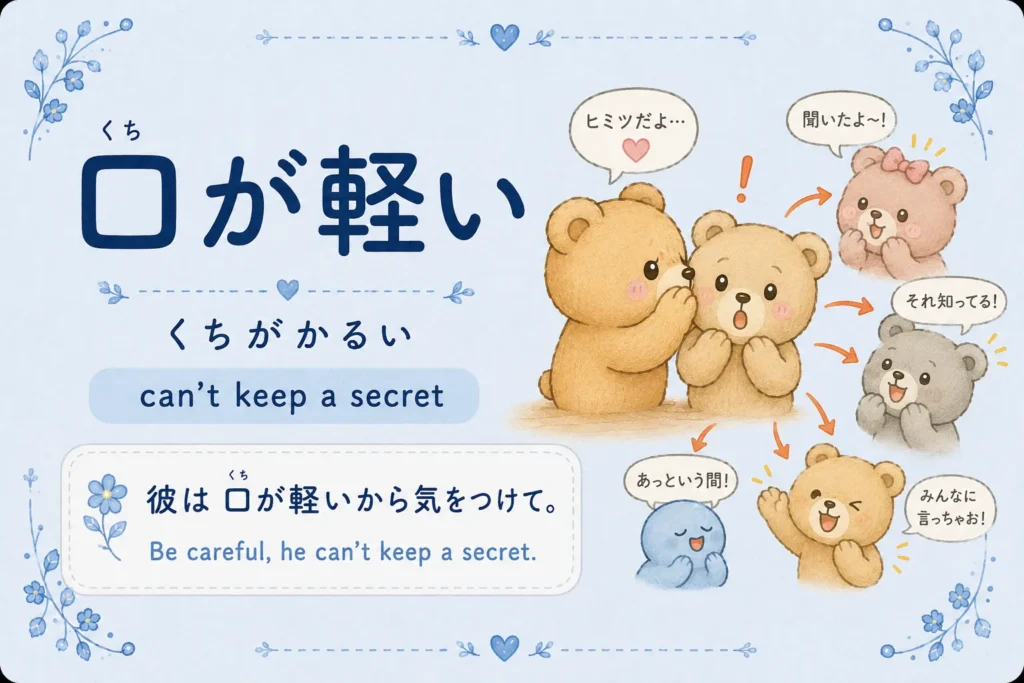
Literal meaning: “the mouth is light”
Real meaning: to be unable to keep a secret, to talk too much
The opposite is 口が重い(くちがおもい), which describes someone who is quiet or reserved.
Example: 彼は口が軽いから気をつけて。(かれはくちがかるいからきをつけて。)Be careful, he can’t keep a secret.
目が回る(めがまわる)
Literal meaning: “the eyes spin”
Real meaning: to be dizzy, or to be so busy that everything feels like a blur
You will hear this both for literal dizziness and for being completely overwhelmed with work or tasks.
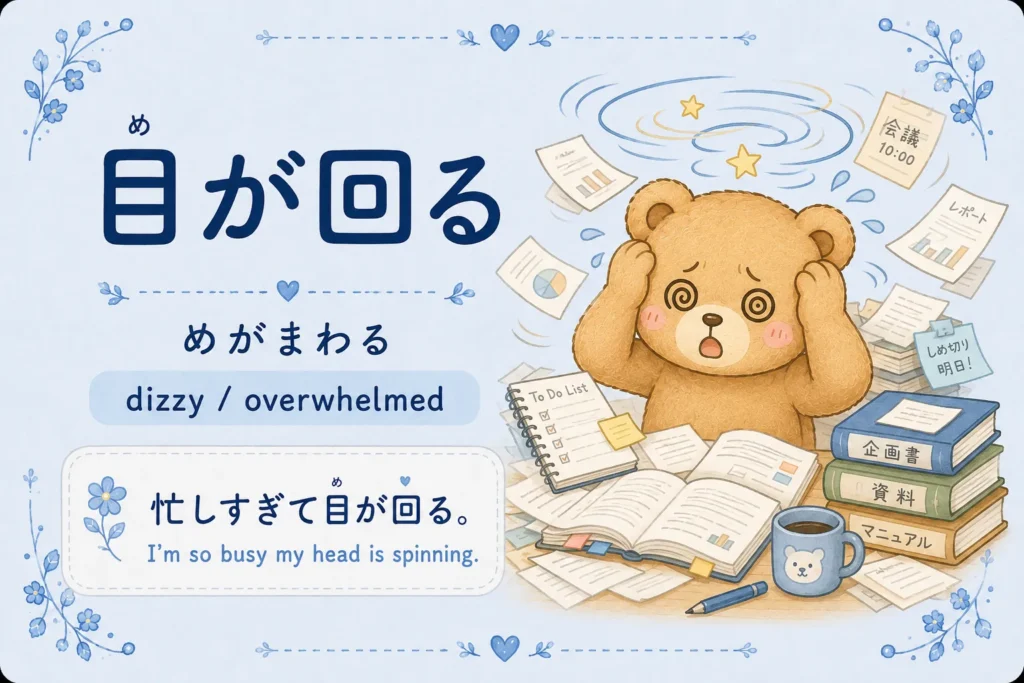
Example: 忙しすぎて目が回る。
(いそがしすぎてめがまわる。)
I’m so busy my head is spinning.
手が空く(てがあく)
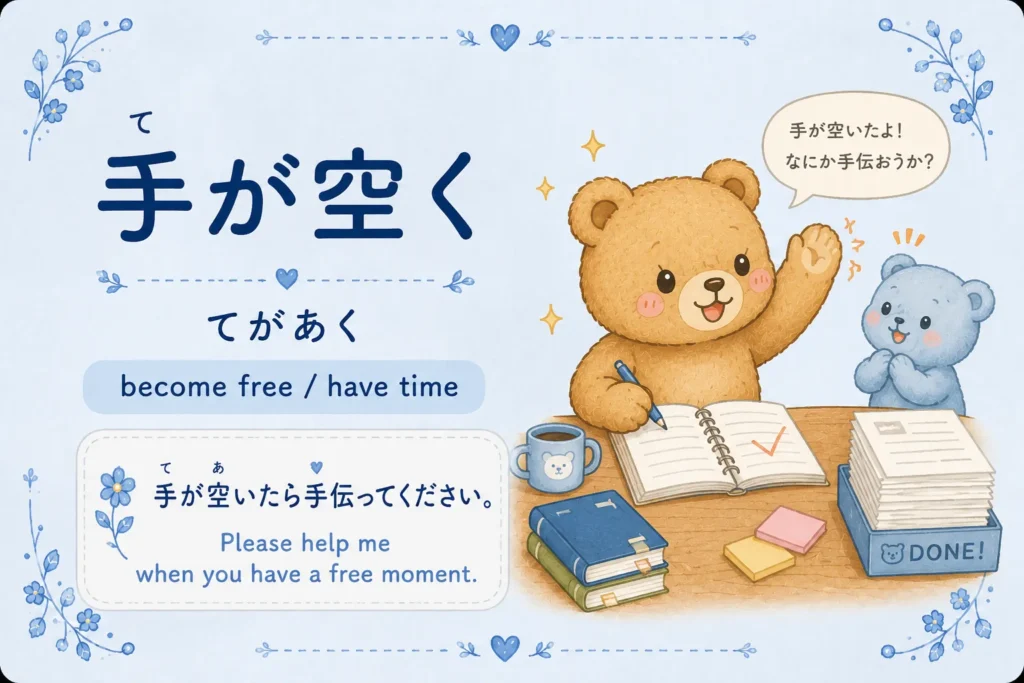
Literal meaning: “the hands become empty”
Real meaning: to become free, to have time available
Use this when you want to offer help or ask if someone is available.
Example: 手が空いたら手伝ってください。
(てがあいたらてつだってください。)
Please help me when you have a free moment.
足を引っ張る(あしをひっぱる)
Literal meaning: “to pull someone’s foot”
Real meaning: to hold someone back or drag them down
This does not mean joking around, which is what “pull someone’s leg” means in English. In Japanese it means to sabotage or slow someone down, often unintentionally.
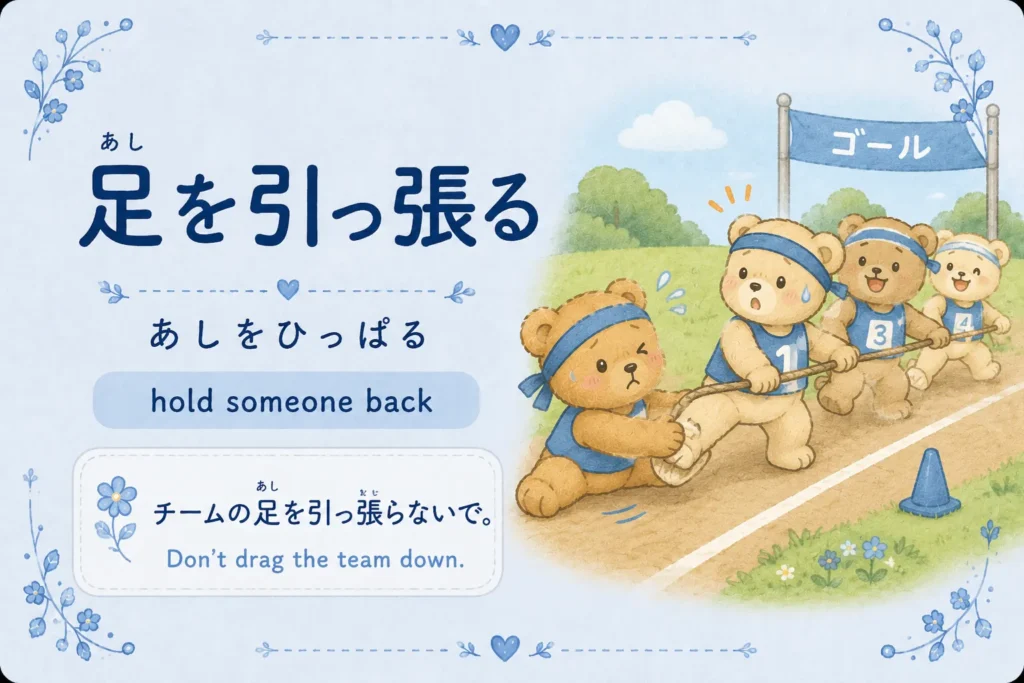
Example: チームの足を引っ張らないで。
(チームのあしをひっぱらないで。)
Don’t drag the team down.
胸がいっぱい(むねがいっぱい)
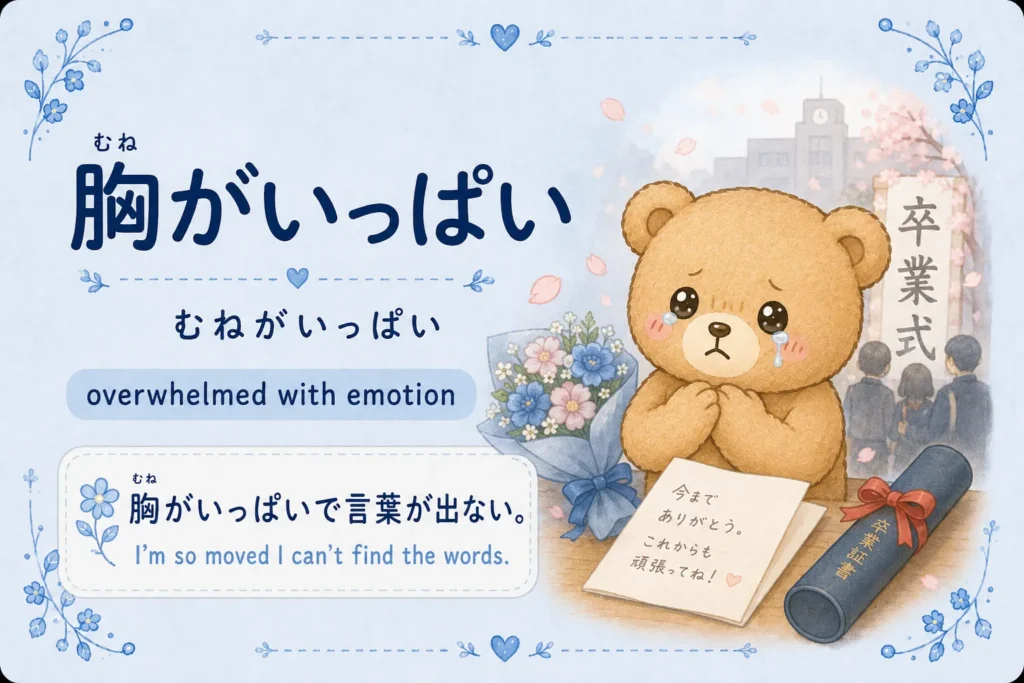
Literal meaning: “the chest is full”
Real meaning: to be overwhelmed with emotion, deeply moved
This works for both happy and bittersweet moments. You will hear it at graduations, reunions, and emotional scenes in dramas.
Example: 胸がいっぱいで言葉が出ない。
(むねがいっぱいでことばがでない。)
I’m so moved I can’t find the words.
首になる(くびになる)
Literal meaning: “to become a neck”
Real meaning: to get fired, to lose your job
This one surprises most learners. The connection comes from the image of a head being separated from its body, which historically meant execution and later became a metaphor for losing one’s position.
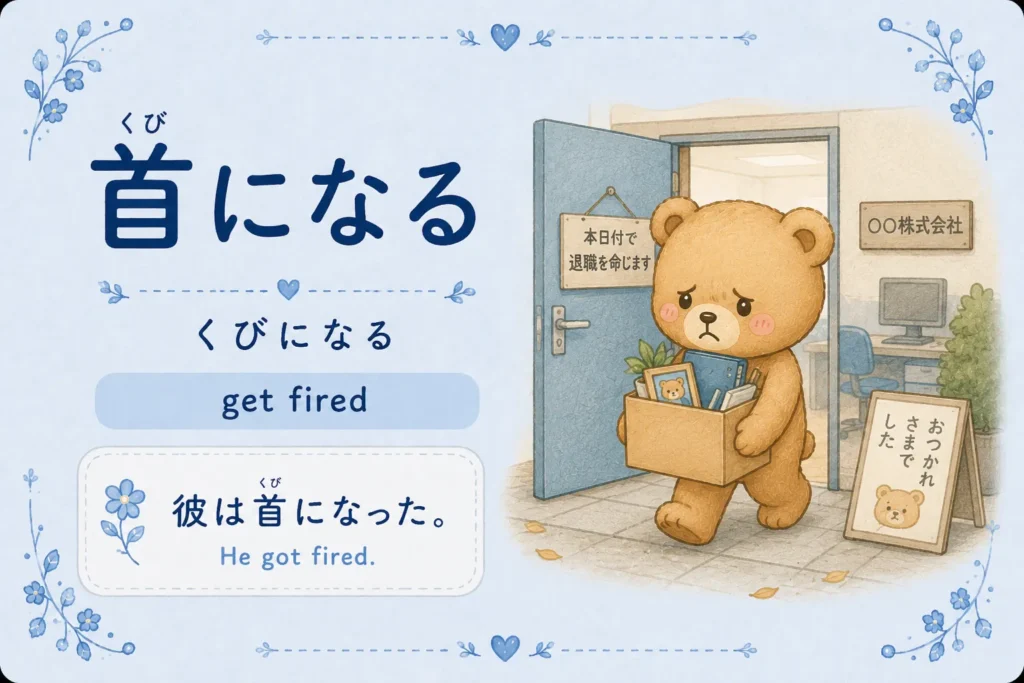
Example: 彼は首になった。
(かれはくびになった。)
He got fired.
These idioms are also part of why body part vocabulary shows up so much in Japanese songs and anime. Words like 心臓(しんぞう), 瞳(ひとみ), and 背中(せなか)carry strong emotional weight in lyrics and dialogue. Once these words click, you will start noticing them everywhere.
The free cheat sheet at the end groups the vocabulary and idioms together so you can review both in one place.
Quick Self-Check
Can you remember the Japanese word for each of these without looking up?
- The word that means both foot and leg
- The body part idiom that means “to get angry”
- Which verb do you use to put on a hat?
- What does 肉月 tell you about a kanji?
- How do you say “my knee hurts” in Japanese?
Answers
- 足(あし)— it covers both foot and leg depending on context.
- 腹が立つ(はらがたつ)— literally “the belly stands up.”
- 被る(かぶる)— used for anything worn on the head.
- It tells you the kanji is related to the body or flesh, not the moon.
- 膝が痛いです(ひざがいたいです)
My Step-by-Step Ways to Practice These Words with AI
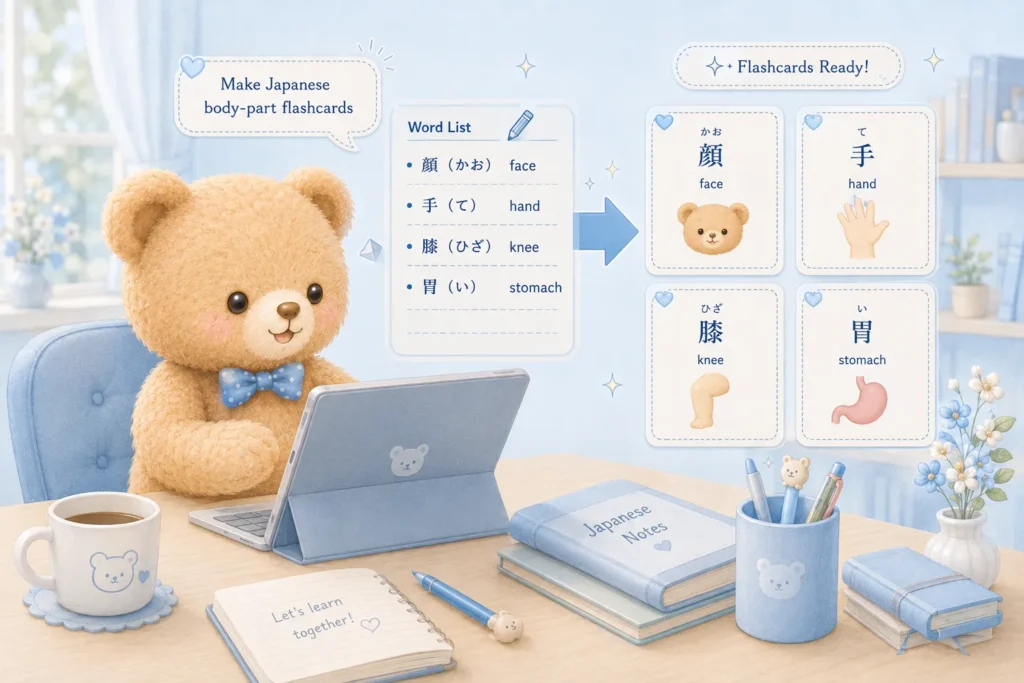
Way 1: Interactive Flashcards
Reading a vocabulary list is a good start, but real learning happens when you test yourself. Copy any word list from this guide into Gemini, and it will instantly generate a full interactive flashcard set with a memory hook, an example sentence, and a hint for each word.
Gemini’s built-in flashcard player even tracks which words you’ve mastered and which ones still need practice, so you spend your time where it actually counts. If you want more ready-to-copy prompts for turning vocabulary lists into study cards, I also put together a free Quizlet alternative guide with flashcard formats you can use for Japanese, Korean, and other languages.
Here is how to do it in under a minute.
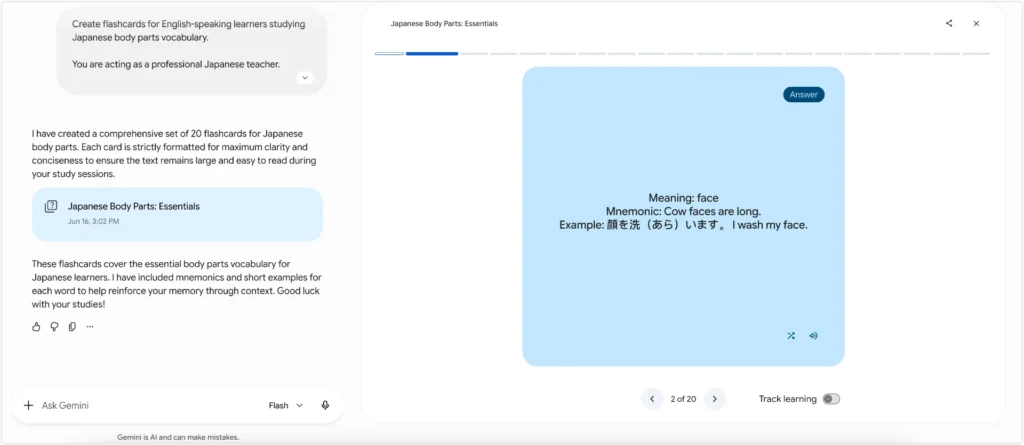
Step 1: Open Gemini and sign in with a free Google account.
Step 2: Copy the prompt below.
Step 3: Paste it into Gemini, then replace [Paste your word list here] with the words you want to self-test. You can copy directly from any table in this article.
Step 4: Hit send. Gemini automatically generates an interactive flashcard deck — flip through each card, check your recall, and use the hint if you get stuck.
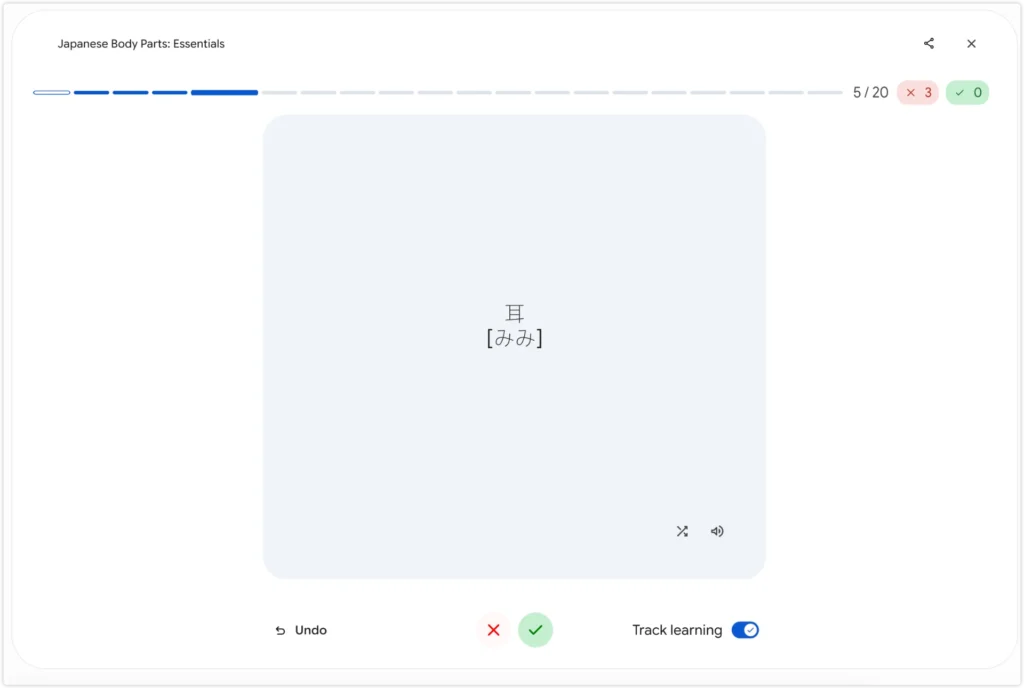
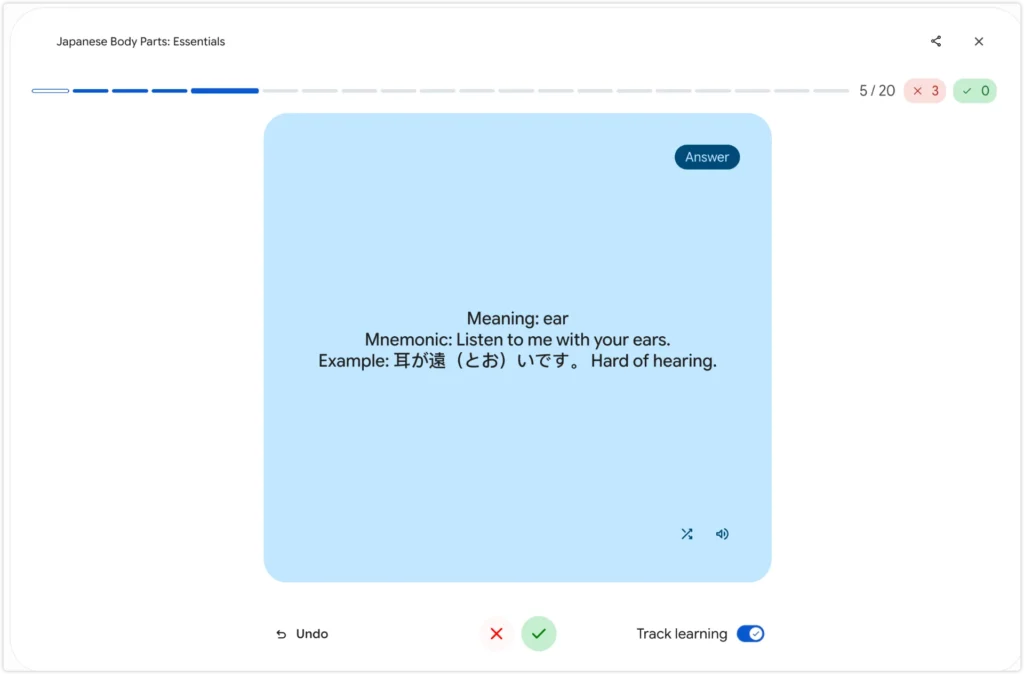
Tip: Before you start flipping, turn on Track learning in the bottom right corner. Gemini will automatically prioritize cards you find difficult and space out the ones you already know — so you spend your time on the words that actually need practice.
All you need is a free Google account — no extra apps or sign-ups required.
Create flashcards for English-speaking learners studying Japanese body parts vocabulary.

You are acting as a professional Japanese teacher.

CRITICAL: Keep ALL text extremely concise so fonts display as large and clear as possible.

If example sentences are provided, use them. If not, create a short, natural everyday example sentence yourself.

Please strictly follow this format for each card:

Front:
- First line: Kanji only.
- Second line: Hiragana reading in brackets.

Back:
- Bold headers for each section.
- ① Meaning: English translation of the target word.
- ② Mnemonic: ONE short, punchy sentence.
- ③ Example: 4-6 words maximum + English translation.
- If any kanji in the example sentence is NOT the target word, add its Hiragana in brackets immediately after. Example: 手を洗(あら)います。

Here are the words I want to practice:
[Paste your word list here]

Rules:
- One card per word. No skipping.
- Keep tone friendly and layout clean.
Way 2: JLPT-Style Quiz
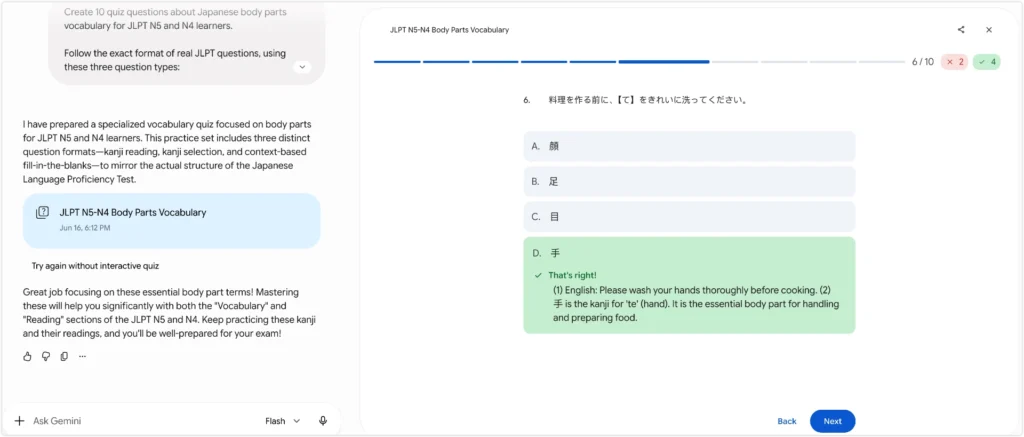
Once you have gone through the flashcards, you can test yourself further with a JLPT-style quiz. Paste this prompt into Gemini:
Create 10 quiz questions about Japanese body parts vocabulary for JLPT N5 and N4 learners.

Follow the exact format of real JLPT questions, using these three question types:

Question type 1: Choose the correct hiragana reading for the kanji word marked with 【】.
Question type 2: Choose the correct kanji for the hiragana word marked with 【】.
Question type 3: Fill in the blank with the most appropriate word.

Formatting rules:
- For types 1 and 2, mark the target word with 【】brackets. Example: 毎日【目】の薬を使います。
- For type 1 answer options: use hiragana only. Distractors must be readings of other real body part kanji at N5-N4 level, not random single characters. Example: め、みみ、はな、くち.
- For type 2 answer options: use kanji only. Distractors must be real body part kanji at N5-N4 level.
- For type 3 answer options: use hiragana only, never kanji. Example: みみ、め、くち、て.
- 4 options per question (A, B, C, D).
- After the correct answer, include: (1) English translation of the full sentence, (2) a short explanation of why this answer is correct and why the other options are wrong.
- Keep all vocabulary within N5-N4 level.
- Use body parts vocabulary only.
Free Printable Body Parts in Japanese Cheat Sheet
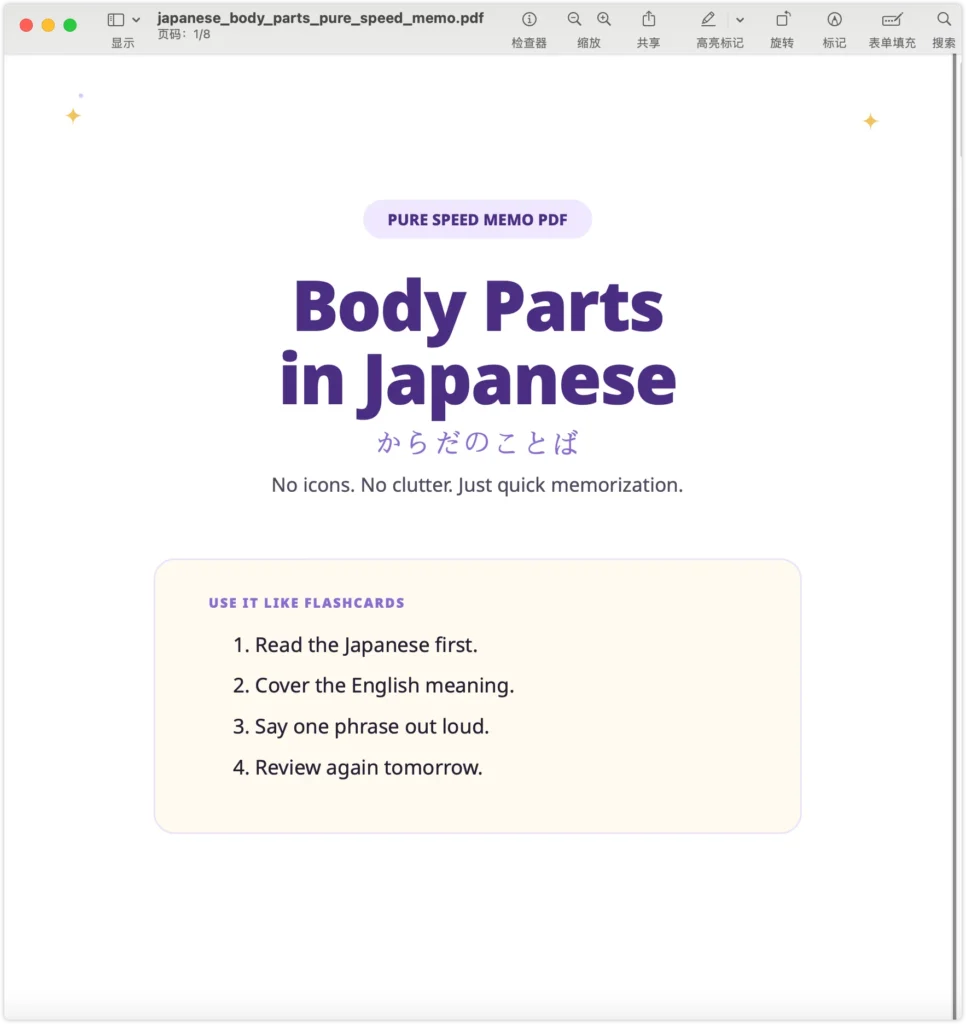
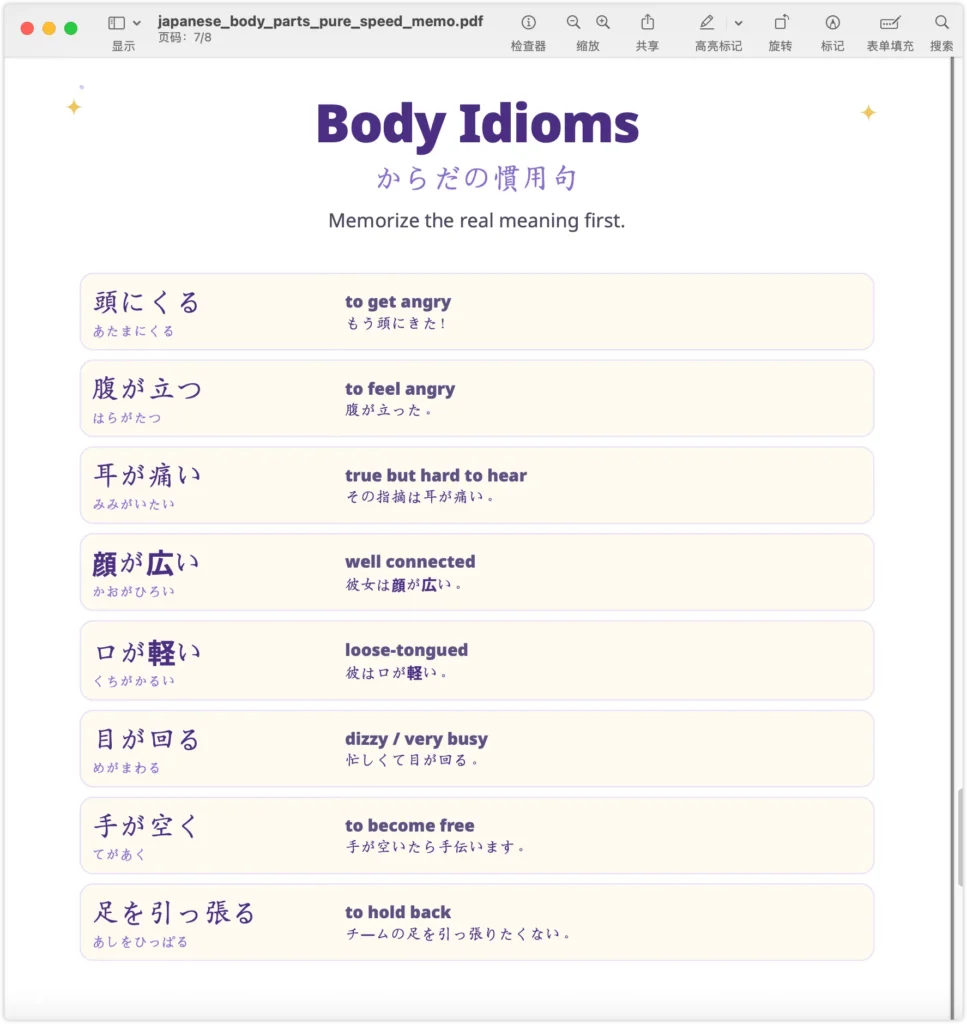
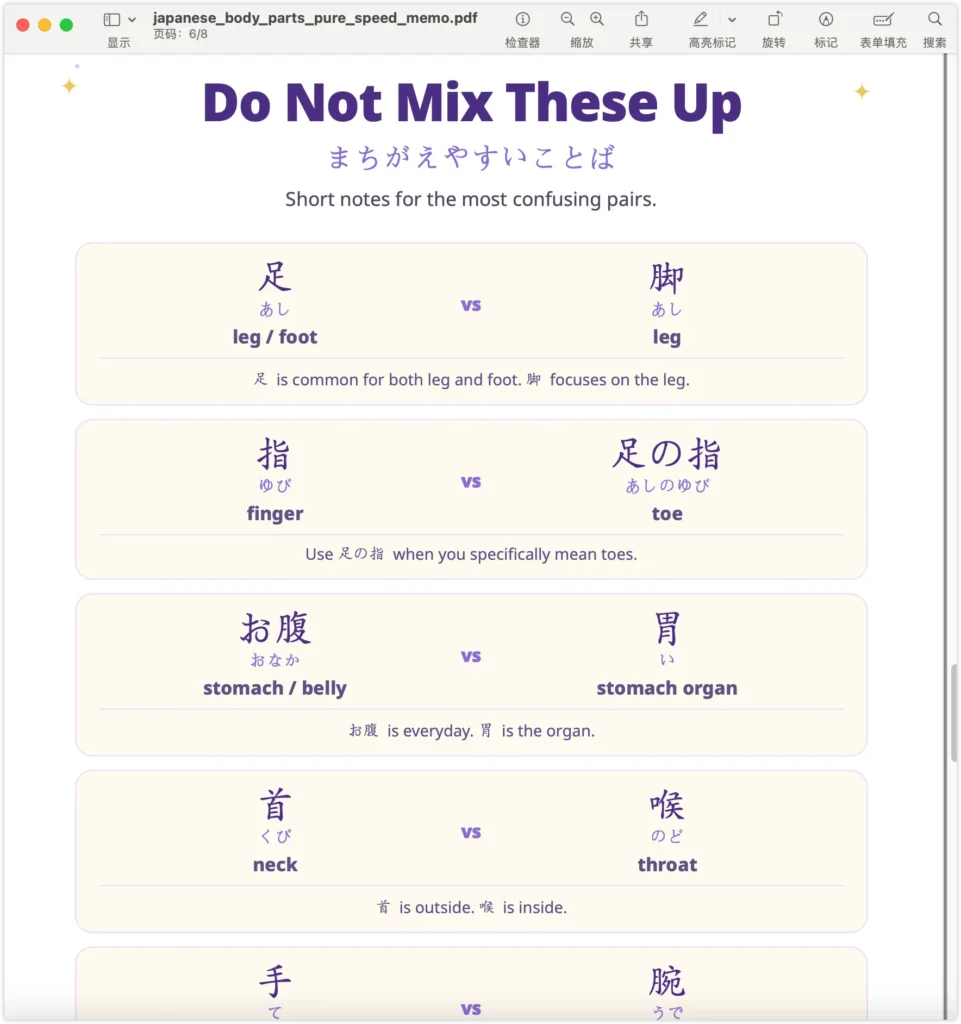
Want to review everything without scrolling back through the full article? Download the free printable cheat sheet below. It includes the 20 most useful body parts to learn first, a head-to-toe vocabulary chart, face parts, the pain pattern が痛いです, tricky pairs like 足 vs 脚 and 手 vs 腕, and the most common body part idioms.
Body Parts in Japanese FAQs
What are the most common body parts in Japanese?
Some of the most common body parts in Japanese are 頭(あたま)head, 顔(かお)face, 目(め)eye, 耳(みみ)ear, 鼻(はな)nose, 口(くち)mouth, 手(て)hand, お腹(おなか)stomach, and 足(あし)leg or foot. These appear often in beginner textbooks, daily conversation, and health situations.
How do you say “my head hurts” in Japanese?
“My head hurts” is 頭が痛いです(あたまがいたいです). You can use the same pattern with other body parts, such as 喉が痛いです for “my throat hurts” or 膝が痛いです for “my knee hurts.”
What is the difference between 足 and 脚?
Both are read あし. 足 is the common everyday word for leg or foot, covering the whole lower limb. 脚 often focuses more specifically on the leg as a shape or function. For most beginner sentences, 足 is the safer default.
What is the difference between 手 and 腕?
手(て)means hand, usually from the wrist to the fingertips. 腕(うで)means arm, from the shoulder to the wrist. Use 手 for washing, holding, and writing. Use 腕 for arm movement, arm strength, and sleeves.
How do you say “toe” in Japanese?
Toe is usually 足の指(あしのゆび), literally “foot finger.” The word 指(ゆび)can mean both finger and toe, so 足の指 makes the meaning clear when you need to specify.
Why do many Japanese body part kanji have 月 in them?
In many body part kanji, the 月 shape is not the moon. It is 肉月(にくづき), a radical related to flesh or meat. You can see it in kanji like 胸, 腕, 肺, 脳, and 腹. Once you recognize it, body part kanji become much easier to identify at a glance.
Are body parts important for JLPT N5 or N4?
Yes. Basic body part words appear often in beginner Japanese materials and test resources. They are useful for reading, daily conversation, describing people, and explaining symptoms. You can check the JLPT official website for more details on vocabulary tested at each level.
What body part idioms should beginners learn first?
Start with 頭にくる, 腹が立つ, 耳が痛い, 顔が広い, 口が軽い, 目が回る, 手が空く, and 足を引っ張る. These appear often in casual Japanese, dramas, and anime, and they are confusing if you only know the literal body part meaning.
Final Thoughts
Body parts in Japanese are more than a beginner vocabulary list. They help you describe pain, talk about appearance, understand clothing verbs, read kanji more easily, and catch idioms in real conversation.
Start with the 20 essential words. Then learn the pain pattern and the most common idioms. Once those click, you will start noticing body part words everywhere in Japanese.
If you are also building your adjective vocabulary, pair this guide with the Japanese i-adjectives guide and the Japanese na-adjectives guide. Body words and adjectives combine naturally into the kind of simple, useful sentences that actually come up in conversation.