Watching Japanese shows without subtitles was the goal I set when I started learning Japanese on my own. No class, no teacher. Just the shows, a notebook, and a lot of rewinding.
The phrases that stayed with me were never the textbook ones. They were lines that landed differently in context: a character under pressure, a punchline that only worked in Japanese, a single word that carried a whole scene.
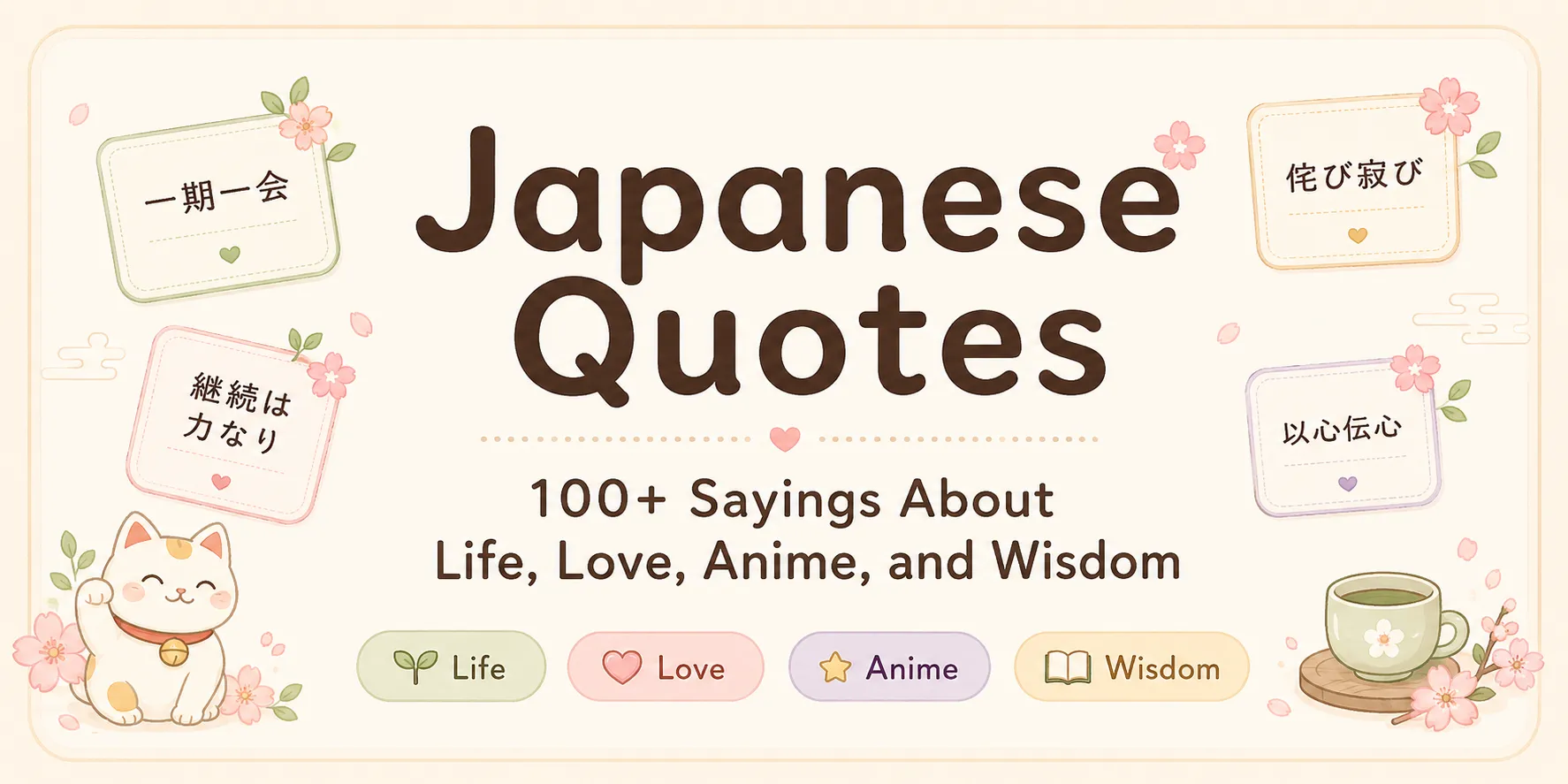
That feeling is what this guide is built around: 100+ Japanese quotes with Kanji, Kana, Romaji, and plain English meaning, so you can read them, understand them, and choose one that actually fits your mood.
Every Japanese quote in this guide appears only once as a main entry. That means you can browse 100+ different Kanji sayings without seeing the same phrase repeated across sections.
To keep the list useful, I cross-check readings and meanings with Japanese dictionary resources like Jisho. For proverbs, four-character idioms, and culture-heavy phrases, I also check Japanese sources such as Kotobank and cultural references like Urasenke’s introduction to Chado, especially when a quote carries Buddhist, Zen, samurai, tea ceremony, or tattoo-related nuance.
Key Takeaways
Japanese quotes are easier to remember when you see the Kanji, Kana, Romaji, and English meaning together.
This guide covers life quotes, motivational sayings, Instagram bio ideas, tattoo phrases, love quotes, anime lines, proverbs, nature words, samurai sayings, and funny Japanese proverbs.
For tattoos, use only short, meaning-stable phrases and always verify the Kanji with a native speaker before making it permanent.
How We Checked These Japanese Quotes
Each quote in this guide is reviewed for Kanji spelling, Kana reading, Romaji pronunciation, literal meaning, and natural English usage.
For tattoo ideas, I focus on short Kanji phrases with stable meanings. Some entries include a caution note when a phrase is culturally heavy, philosophical, or easy to misunderstand.
Use this guide as a starting point. For permanent tattoos, always confirm the final phrase with a native Japanese speaker or Japanese teacher.
Start Here: How to Choose the Right Japanese Quote
You do not need to scroll through the whole list at once. Start with the section that matches what you want the quote to do.
| What You Want | Go To This Section | Best For |
|---|---|---|
| Something steady and personal | Japanese Quotes About Life and Perseverance | patience, growth, hard seasons |
| A stronger line about ambition or comeback energy | Japanese Motivational Quotes About Strength and Success | goals, discipline, courage |
| Something short enough for a profile | Short Japanese Quotes for Instagram Bios and Captions | Instagram bios, captions, profile moods |
| A phrase you might use for a tattoo | Japanese Tattoo Quotes | short Kanji, stable meanings, safer choices |
| Something emotional or romantic | Japanese Quotes About Love and Relationships | love, fate, loyalty, connection |
| A line with fandom energy | Famous Anime Quotes in Japanese Fans Still Remember | anime fans, edits, study notes |
| Cultural wisdom and life lessons | Famous Japanese Proverbs | traditional sayings, advice, reflection |
| Something soft, seasonal, or Zen-like | Japanese Quotes About Nature, Wabi-Sabi, and Zen Calm | nature, calm, impermanence |
| Warrior imagery or Bushido feeling | Samurai and Bushido Quotes in Japanese | honor, strength, self-control |
| A proverb with a funny literal image | Funny and Surprisingly Literal Japanese Proverbs | humor, memorable sayings, cultural fun |
🌱 Japanese Quotes About Life and Perseverance
Japanese quotes about life rarely promise that things will be easy. They are more honest than that. Many of them say: keep going, stay patient, start again, and let time do part of the work.
七転び八起き
ななころびやおき · Nanakorobi yaoki
Meaning: Fall seven times, stand up eight.
Use it when: You want a quote about refusing to stay down.
継続は力なり
けいぞくはちからなり · Keizoku wa chikara nari
Meaning: Consistency becomes strength.
Use it when: You need a reminder that showing up every day matters more than bursts of effort.
石の上にも三年
いしのうえにもさんねん · Ishi no ue ni mo sannen
Meaning: Stay with something long enough, and it will change.
Use it when: You are in a slow season and need patience with a skill, job, or relationship.
塵も積もれば山となる
ちりもつもればやまとなる · Chiri mo tsumoreba yama to naru
Meaning: Even dust can pile up into a mountain.
Use it when: You want a quote about small steps becoming something big over time.
雨降って地固まる
あめふってじかたまる · Ame futte ji katamaru
Meaning: After rain, the ground hardens.
Use it when: You want a quote about becoming stronger after hardship.
苦あれば楽あり
くあればらくあり · Ku areba raku ari
Meaning: Where there is hardship, there is also ease.
Use it when: You need to believe that hard times will not last forever.
案ずるより産むが易し
あんずるよりうむがやすし · Anzuru yori umu ga yasushi
Meaning: Doing it is easier than worrying about it.
Use it when: You are overthinking and need to start.
明日は明日の風が吹く
あしたはあしたのかぜがふく · Ashita wa ashita no kaze ga fuku
Meaning: Tomorrow will bring its own wind.
Use it when: You want to stop worrying about every future outcome.
負けるが勝ち
まけるがかち · Makeru ga kachi
Meaning: Sometimes losing is winning.
Use it when: You want a quote about stepping back wisely instead of fighting every battle.
人生山あり谷あり
じんせいやまありたにあり · Jinsei yama ari tani ari
Meaning: Life has mountains and valleys.
Use it when: You want a quote that accepts both good days and hard days as normal.
臥薪嘗胆
がしんしょうたん · Gashin shoutan
Meaning: Endure hardship for a long-term goal.
Use it when: You want a quote about staying disciplined through an uncomfortable season.
失敗は成功のもと
しっぱいはせいこうのもと · Shippai wa seikou no moto
Meaning: Failure is the origin of success.
Use it when: You want the Japanese equivalent of “fail forward.”
努力に勝る天才なし
どりょくにまさるてんさいなし · Doryoku ni masaru tensai nashi
Meaning: No genius surpasses hard work.
Use it when: You want a quote that says consistent effort beats natural talent.
一日一歩
いちにちいっぽ · Ichinichi ippo
Meaning: One day, one step.
Use it when: You want a daily reminder that progress only needs one small move forward.
根気よく
こんきよく · Konki yoku
Meaning: With patience and persistence.
Use it when: You want a short phrase about staying with something steadily.
歩みを止めるな
あゆみをとめるな · Ayumi wo tomeru na
Meaning: Do not stop walking.
Use it when: You want a direct, quiet instruction to keep moving forward.
思い立ったが吉日
おもいたったがきちじつ · Omoi tatta ga kichijitsu
Meaning: The day you decide to act is the best day to begin.
Use it when: You want a quote about starting now instead of waiting for the perfect moment.
百折不撓
ひゃくせつふとう · Hyakusetsu futou
Meaning: Unbroken after many setbacks.
Use it when: You want a powerful quote about refusing to give up after repeated failure.
志高く
こころざしたかく · Kokorozashi takaku
Meaning: Aim high.
Use it when: You want a simple phrase about keeping your ambition high.
一念発起
いちねんほっき · Ichinen hokki
Meaning: Make a firm decision to begin.
Use it when: You are ready to change direction and start something seriously.
🔥 Japanese Motivational Quotes About Strength and Success
Japanese motivational quotes often focus on effort before outcome. They are not always loud or dramatic. Many of them are about discipline, decision, focus, and quiet forward motion.
精神一到
せいしんいっとう · Seishin ittou
Meaning: Full focus can make the impossible possible.
Use it when: You want a quote about concentration and total commitment.
捲土重来
けんどちょうらい · Kendo chourai
Meaning: Return stronger after defeat.
Use it when: You want comeback energy after a setback.
起死回生
きしかいせい · Kishi kaisei
Meaning: Turn around a hopeless situation.
Use it when: You want a dramatic quote about recovery or complete reversal.
一致団結
いっちだんけつ · Icchi danketsu
Meaning: Unite as one.
Use it when: You want a quote about teamwork and shared strength.
孤軍奮闘
こぐんふんとう · Kogun funtou
Meaning: Fight hard alone.
Use it when: You are doing your best without much support from others.
深謀遠慮
しんぼうえんりょ · Shinbou enryo
Meaning: Think deeply and plan far ahead.
Use it when: You want a quote about strategy and long-term patience.
質実剛健
しつじつごうけん · Shitsujitsu gouken
Meaning: Simple, sincere, and strong.
Use it when: You want a quote about real character without showing off.
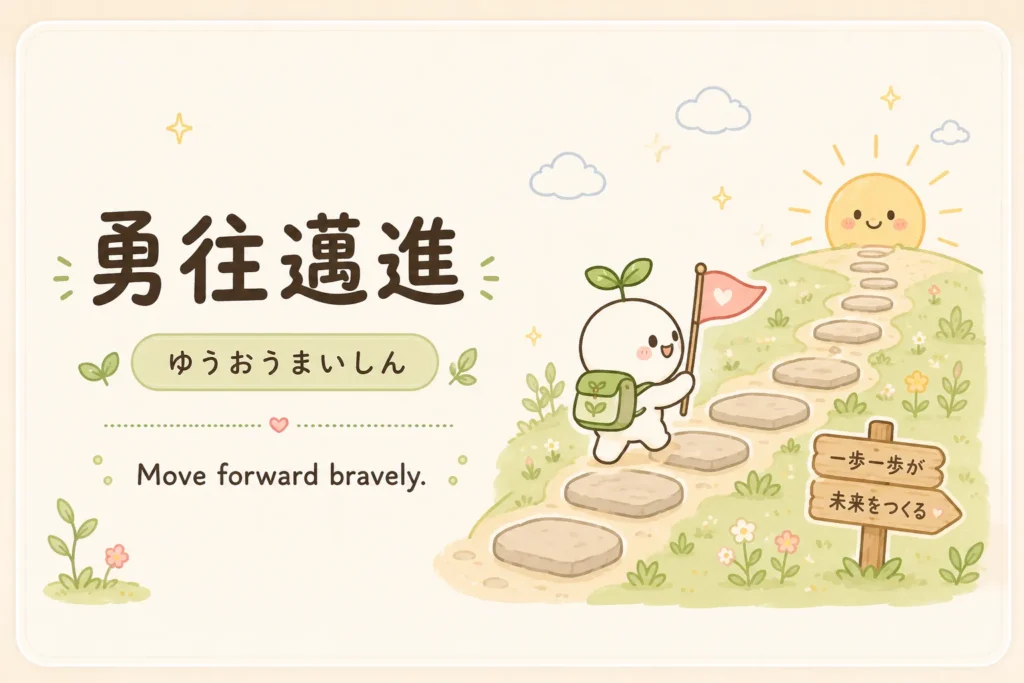
勇往邁進
ゆうおうまいしん · Yuuou maishin
Meaning: Move forward bravely.
Use it when: You want a quote about courage and forward momentum.
切磋琢磨
せっさたくま · Sessa takuma
Meaning: Polish yourself through effort and practice.
Use it when: You want a quote about growth through study, discipline, or healthy competition.
🪷 Short Japanese Quotes for Instagram Bios and Captions
Short Japanese quotes work best for bios when they feel clean, visual, and easy to understand. Choose one that matches the mood of your profile, then pair it with a simple English line if you want the meaning to feel clear to new visitors.
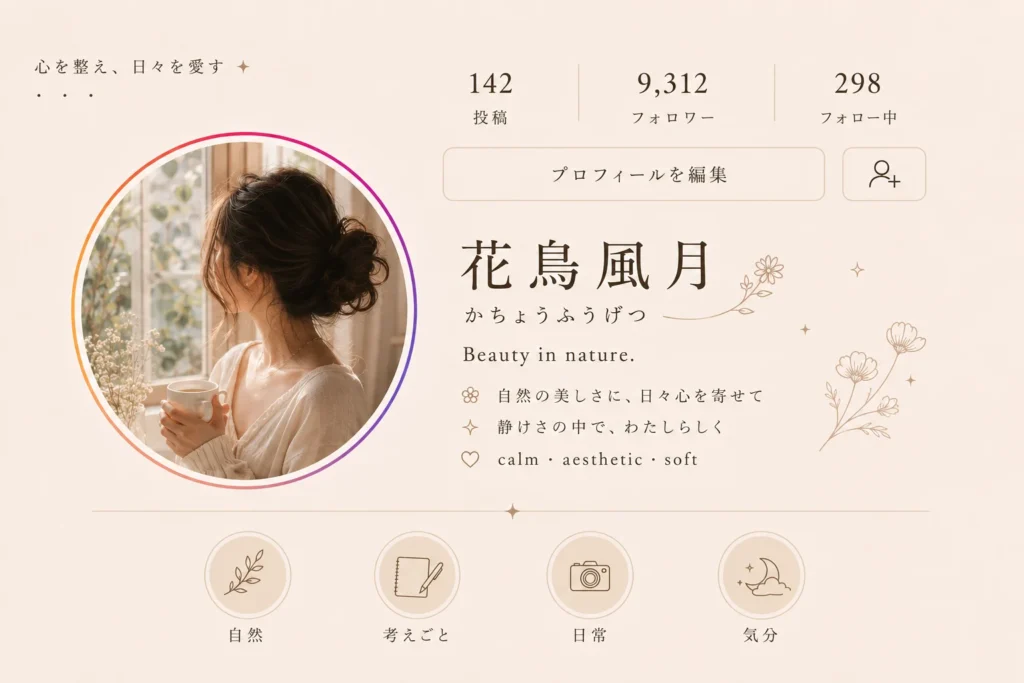
一期一会
いちごいちえ · Ichi-go ichi-e
Meaning: Treasure this one-time moment.
Use it when: You want a romantic or poetic bio about rare encounters.
無我夢中
むがむちゅう · Muga muchuu
Meaning: Lost in what I love.
Use it when: You want a dreamy line about passion, focus, or creative obsession.
一歩一歩
いっぽいっぽ · Ippo ippo
Meaning: One step at a time.
Use it when: You want something soft, grounded, and easy to remember.
以心伝心
いしんでんしん · Ishin denshin
Meaning: Heart to heart.
Use it when: You want a quote about deep understanding without words.
喜怒哀楽
きどあいらく · Kido airaku
Meaning: Joy, anger, sadness, and pleasure.
Use it when: You want a bio that honors the full range of human emotion.
天真爛漫
てんしんらんまん · Tenshin ranman
Meaning: Pure and naturally cheerful.
Use it when: You want a warm, open, and lighthearted profile mood.
物の哀れ
もののあわれ · Mono no aware
Meaning: The bittersweet beauty of passing things.
Use it when: You want a poetic bio with a soft, melancholy feeling.
百花繚乱
ひゃっかりょうらん · Hyakka ryouran
Meaning: A hundred flowers blooming at once.
Use it when: You want a vibrant quote about creativity, beauty, or expression.
十人十色
じゅうにんといろ · Juunin toiro
Meaning: Ten people, ten colors.
Use it when: You want a quote about individuality and personal style.
温故知新
おんこちしん · Onko chishin
Meaning: Learn from the old, understand the new.
Use it when: You want a reflective bio about curiosity and growth.
因果応報
いんがおうほう · Inga ouhou
Meaning: Every action returns.
Use it when: You want a short quote about karma, honesty, and consequences.
前向きに
まえむきに · Maemuki ni
Meaning: Face forward.
Use it when: You want something light, hopeful, and direct.
To make your bio feel natural, do not overload it with too many symbols or translations. One Japanese quote plus one short English phrase is usually enough.
Example formats:
Chosen quote + “No rush, just forward.”
Chosen quote + “Soft heart, steady mind.”
Chosen quote + “Still learning, still becoming.”
Chosen quote + “A little more myself every day.”
If you want your whole profile to match the same mood, pair one Japanese quote with a simple English line. For more profile formats, browse these aesthetic Instagram bio ideas and then add one Japanese phrase that fits your vibe.
🖋️ Japanese Tattoo Quotes: Beautiful Kanji With Safe Meanings
Japanese tattoo quotes need more care than captions. A phrase can look beautiful but carry the wrong nuance, feel too old-fashioned, or depend on context you did not know about.
Before you tattoo it, check four things: Kanji spelling, Kana reading, natural meaning, and real-life usage.
A short check with a Japanese tutor costs far less than fixing a permanent mistranslation.
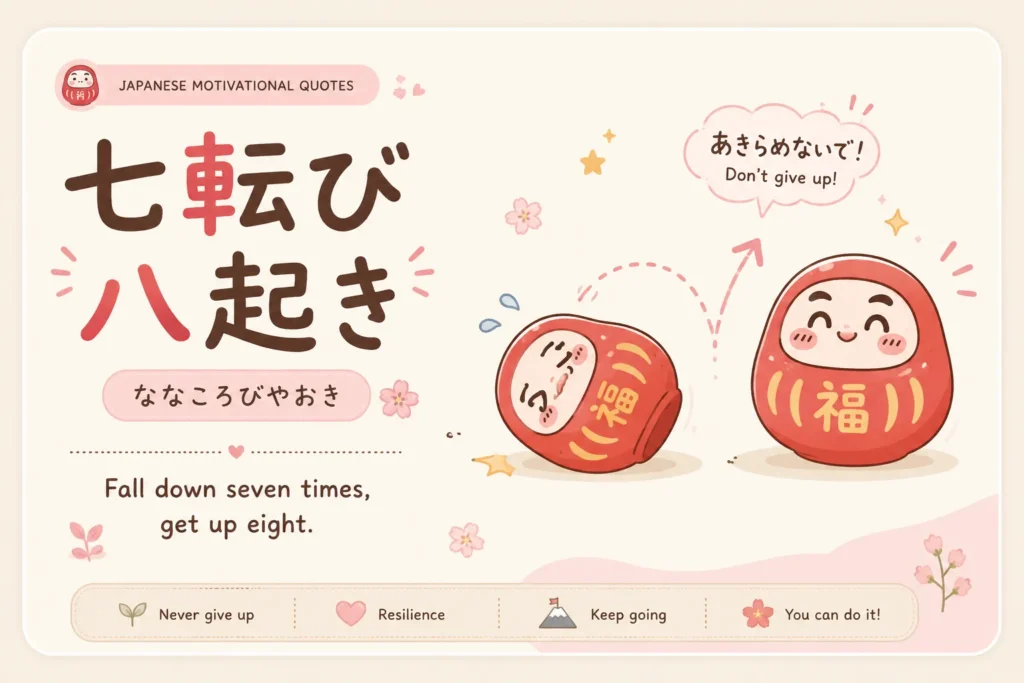
七転八起
しちてんはっき · Shichiten hakki
Meaning: Fall down, rise again.
Use it when: You want a short four-character tattoo about resilience.
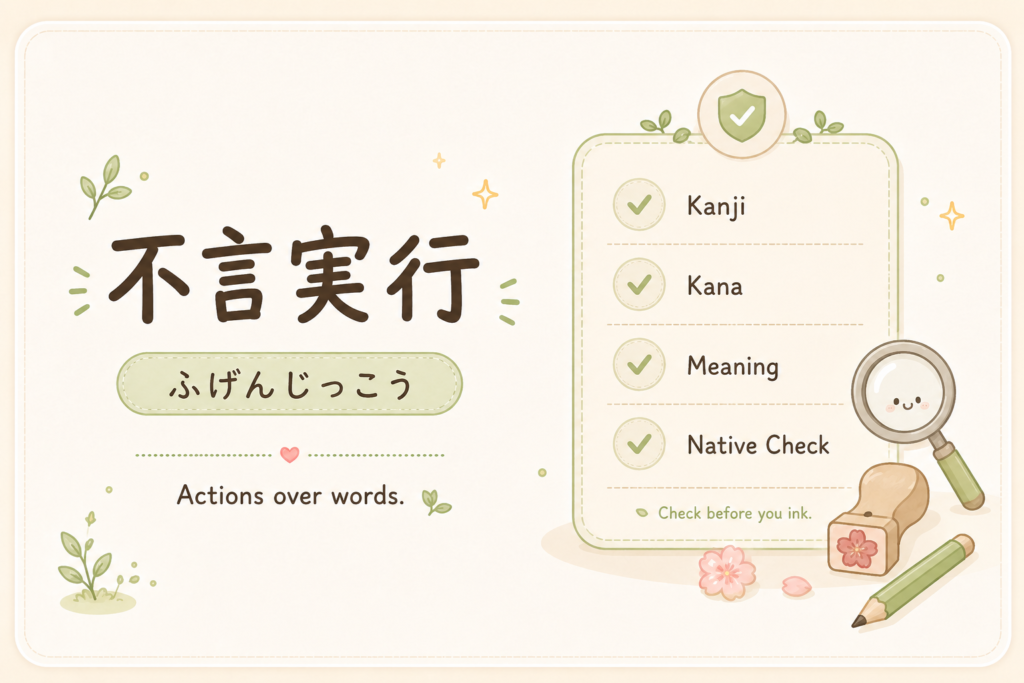
不言実行
ふげんじっこう · Fugen jikkou
Meaning: Actions over words.
Use it when: You want something stable, strong, and minimal.
初志貫徹
しょしかんてつ · Shoshi kantetsu
Meaning: Stay true to your first goal.
Use it when: You want a tattoo about commitment and finishing what you started.
明鏡止水
めいきょうしすい · Meikyou shisui
Meaning: Clear mirror, still water.
Use it when: You want a calm, Zen-like phrase about mental clarity.
花鳥風月
かちょうふうげつ · Kachou fuugetsu
Meaning: Flower, bird, wind, moon.
Use it when: You want something visual, elegant, and connected to nature.
山川草木
さんせんそうもく · Sansen soumoku
Meaning: Mountains, rivers, grasses, and trees.
Use it when: You want a poetic nature phrase with a quiet visual feeling.
諸行無常
しょぎょうむじょう · Shogyou mujou
Meaning: All things are impermanent.
Use it when: You want a Buddhist phrase about change, loss, and letting go.
自由
じゆう · Jiyuu
Meaning: Freedom, liberty.
Use it when: You want a simple and easy-to-understand tattoo phrase.
忍耐
にんたい · Nintai
Meaning: Patience and endurance.
Use it when: You want a stable phrase about strength through restraint.
一心不乱
いっしんふらん · Isshin furan
Meaning: Single-minded focus.
Use it when: You want a powerful four-character phrase about deep concentration.
運命
うんめい · Unmei
Meaning: Fate or destiny.
Use it when: You want something short, recognizable, and personal.
天命
てんめい · Tenmei
Meaning: Heaven’s decree, divine fate, or life’s calling.
Use it when: You want a deeper phrase about destiny and purpose.
無限
むげん · Mugen
Meaning: Infinite, limitless.
Use it when: You want a clean tattoo phrase with a strong visual shape.
武士道
ぶしどう · Bushidou
Meaning: Bushido, the samurai code.
Use it when: You want warrior imagery and understand the cultural weight behind it.
A good tattoo phrase should fit your actual meaning, personality, and comfort with the cultural nuance behind the words.
🌸 Japanese Quotes About Love and Relationships
Japanese love quotes often feel quiet. They focus on timing, fate, loyalty, and the kind of bond that does not need to explain itself.
一蓮托生
いちれんたくしょう · Ichiren takushou
Meaning: Sharing the same fate.
Use it when: You want a quote about deep loyalty and going through everything together.
縁は異なもの味なもの
えんはいなものあじなもの · En wa ina mono aji na mono
Meaning: Fate is strange and wonderful.
Use it when: You want a quote about unexpected connections that arrive without explanation.
恋は盲目
こいはもうもく · Koi wa moumoku
Meaning: Love is blind.
Use it when: You want a quote about how love changes what we see in another person.
袖振り合うも多生の縁
そでふりあうもたしょうのえん · Sode furi au mo tashou no en
Meaning: Even brushing sleeves is a bond from a previous life.
Use it when: You want to say that even brief encounters can carry meaning.
逢うは別れの始め
あうはわかれのはじめ · Au wa wakare no hajime
Meaning: Every meeting is the beginning of a parting.
Use it when: You want a quote about the bittersweet nature of connection.
好きこそ物の上手なれ
すきこそもののじょうずなれ · Suki koso mono no jouzu nare
Meaning: You become skilled at what you love.
Use it when: You want a quote about how affection or passion leads to mastery.
情けは人のためならず
なさけはひとのためならず · Nasake wa hito no tame narazu
Meaning: Kindness to others comes back to you.
Use it when: You want a quote about generosity, care, and human connection.
離れていても心は一つ
はなれていてもこころはひとつ · Hanarete itemo kokoro wa hitotsu
Meaning: Even apart, our hearts are one.
Use it when: You want a quote about love that distance cannot break.
いつもそばにいる
いつもそばにいる · Itsumo soba ni iru
Meaning: Always by your side.
Use it when: You want a quiet declaration of presence and loyalty.
夢中
むちゅう · Muchuu
Meaning: Completely absorbed, crazy about something or someone.
Use it when: You want a short word for being deeply into someone you love.
相思相愛
そうしそうあい · Soushi souai
Meaning: Mutual love.
Use it when: You want a clear phrase about two people loving each other.
良縁
りょうえん · Ryouen
Meaning: A good match or fortunate relationship.
Use it when: You want a soft phrase about meeting the right person.
⚡ Famous Anime Quotes in Japanese Fans Still Remember
Anime quotes work differently from proverbs. Fans remember the scene, the voice, the character, and the feeling.
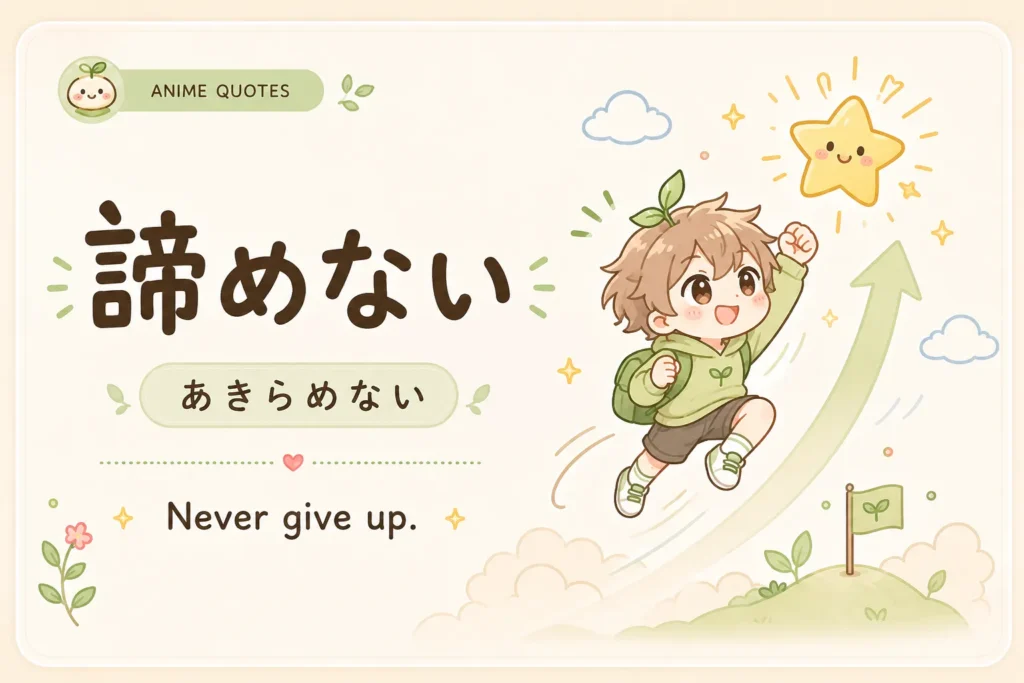
This section uses short lines and fan-recognizable phrases for language learning and cultural reference. Before using any anime quote for a tattoo, poster, product, or permanent purpose, verify the exact Japanese against the original episode, manga panel, or official subtitle.
| Anime | Character | Japanese | Kana | Romaji | Meaning | Why Fans Love It |
|---|---|---|---|---|---|---|
| Naruto | Naruto Uzumaki | 諦めない | あきらめない | Akiramenai | I will not give up. | It captures the spirit of stubborn hope. |
| Naruto | Rock Lee | 努力は天才に勝る | どりょくはてんさいにまさる | Doryoku wa tensai ni masaru | Effort beats talent. | It fits a character built around training and discipline. |
| Naruto | Kakashi Hatake | 友を見捨てる者はそれ以上にクズだ | ともをみすてるものはそれいじょうにくずだ | Tomo wo misuteru mono wa sore ijou ni kuzu da | Anyone who abandons their friends is worse than scum. | It defines loyalty as a core value. |
| One Piece | Monkey D. Luffy | 海賊王に、俺はなる | かいぞくおうに、おれはなる | Kaizoku-ou ni, ore wa naru | I will become the Pirate King. | One of the most recognizable anime declarations. |
| One Piece | Whitebeard | 人は死んでも、その意志は受け継がれる | ひとはしんでも、そのいしはうけつがれる | Hito wa shinde mo, sono ishi wa uketsugareru | Even if a person dies, their will lives on. | It carries the emotional weight of inherited dreams. |
| Demon Slayer | Tanjiro Kamado | 頑張れ | がんばれ | Ganbare | Do your best. Keep going. | Simple, direct, and deeply familiar in Japanese. |
| Demon Slayer | Rengoku Kyojuro | 心を燃やせ | こころをもやせ | Kokoro wo moyase | Set your heart ablaze. | Fans connect it with courage and the Mugen Train arc. |
| Jujutsu Kaisen | Gojo Satoru | 最強 | さいきょう | Saikyou | The strongest. | Short, bold, and instantly recognizable. |
| Jujutsu Kaisen | Yuji Itadori | 正しい死 | ただしいし | Tadashii shi | A proper death. | It points to the series’ question about how to live. |
| Jujutsu Kaisen | Nanami Kento | 仕事は仕事だ | しごとはしごとだ | Shigoto wa shigoto da | Work is work. | Dry, adult, and unexpectedly comforting. |
| Haikyuu!! | Hinata Shoyo | 飛べ | とべ | Tobe | Fly. | One word carries the whole feeling of the series. |
| Haikyuu!! | Kageyama Tobio | 俺はお前の翼になる | おれはおまえのつばさになる | Ore wa omae no tsubasa ni naru | I will become your wings. | It captures trust, support, and partnership. |
| Attack on Titan | Eren Yeager | 前へ! | まえへ | Mae e! | Forward! | Short, raw, and full of motion. |
| My Hero Academia | All Might | 私が来た! | わたしがきた | Watashi ga kita! | I am here! | It turns a simple arrival into a promise of safety. |
| My Hero Academia | Izuku Midoriya | 諦めたくない | あきらめたくない | Akirametaku nai | I do not want to give up. | Softer than a battle cry, and somehow heavier. |
| Your Name | Title | 君の名は | きみのなは | Kimi no na wa | What is your name? | The title itself carries the weight of the film. |
| Spirited Away | Haku | 名前を奪われると、帰り道が分からなくなる | なまえをうばわれると、かえりみちがわからなくなる | Namae wo ubawareru to, kaerimichi ga wakaranaku naru | When you lose your name, you forget how to go home. | Ghibli turns identity into something fragile and magical. |
| Princess Mononoke | Ashitaka | 曇りなき眼で見定め、決める | くもりなきめでみさだめ、きめる | Kumori naki me de misadame, kimeru | See with unclouded eyes and decide. | It is about clarity before action. |
| Fullmetal Alchemist | Edward Elric | 人は何かの犠牲なしに何も得られない | ひとはなにかのぎせいなしになにもえられない | Hito wa nanika no gisei nashi ni nani mo erarenai | Nothing can be gained without sacrifice. | It echoes the idea of equivalent exchange. |
| Vinland Saga | Thors | 本当の戦士には敵がいない | ほんとうのせんしにはてきがいない | Hontou no senshi ni wa teki ga inai | A true warrior has no enemies. | It changes what strength means in a story about violence. |
📖 Famous Japanese Proverbs and What They Actually Mean

Japanese proverbs are often memorable because the literal image sounds strange, funny, or poetic. This section gives the simple meaning and the real lesson behind each saying.
出る杭は打たれる
でるくいはうたれる · Deru kui wa utareru
Meaning: The nail that sticks out gets hammered down.
Use it when: You want to understand social pressure or the cost of standing out.
急がば回れ
いそがばまわれ · Isogaba maware
Meaning: If you hurry, take the long way.
Use it when: You need patience and better planning.
口は災いの元
くちはわざわいのもと · Kuchi wa wazawai no moto
Meaning: The mouth is the source of disaster.
Use it when: You want a quote about speaking carefully.
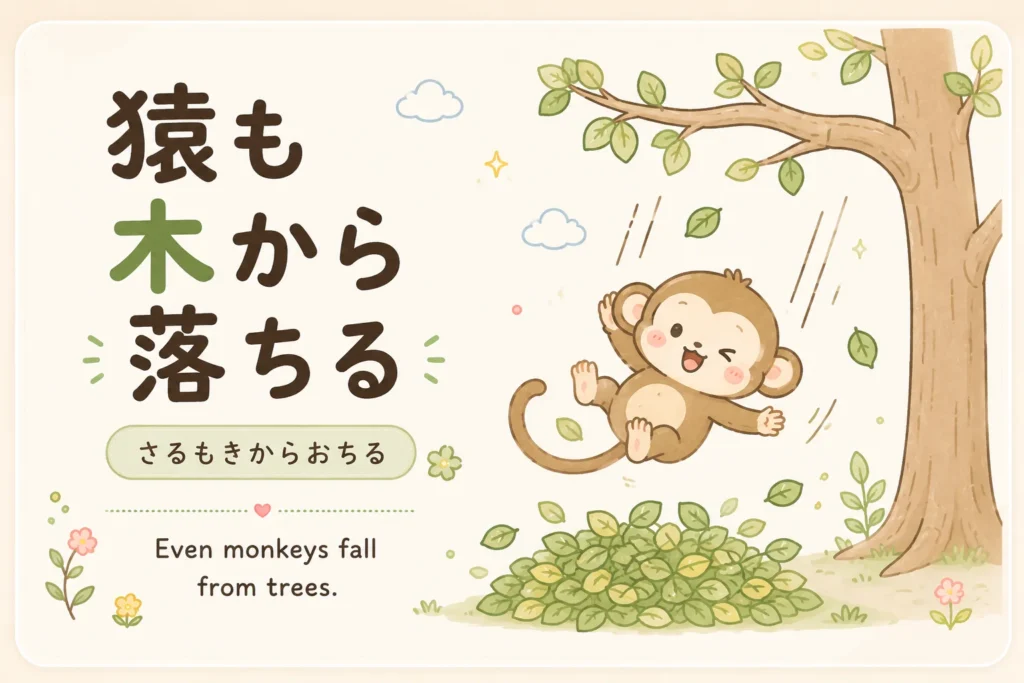
猿も木から落ちる
さるもきからおちる · Saru mo ki kara ochiru
Meaning: Even monkeys fall from trees.
Use it when: You want to say that even experts make mistakes.
花より団子
はなよりだんご · Hana yori dango
Meaning: Dumplings over flowers.
Use it when: You want a funny quote about choosing substance over appearance.
井の中の蛙大海を知らず
いのなかのかわずたいかいをしらず · I no naka no kawazu taikai wo shirazu
Meaning: A frog in a well does not know the great sea.
Use it when: You want a quote about limited experience and narrow perspective.
能ある鷹は爪を隠す
のうあるたかはつめをかくす · Nou aru taka wa tsume wo kakusu
Meaning: A capable hawk hides its talons.
Use it when: You want a quote about quiet confidence.
一石二鳥
いっせきにちょう · Isseki nichou
Meaning: One stone, two birds.
Use it when: You want a quote about achieving two goals with one action.
自業自得
じごうじとく · Jigou jitoku
Meaning: Your own deed, your own result.
Use it when: You want a quote about personal responsibility.
三人寄れば文殊の知恵
さんにんよればもんじゅのちえ · Sannin yoreba Monju no chie
Meaning: Three people together can have the wisdom of Monju.
Use it when: You want a quote about collective wisdom.
知らぬが仏
しらぬがほとけ · Shiranu ga hotoke
Meaning: Not knowing is Buddha.
Use it when: You want to say that ignorance can sometimes feel peaceful.
遠くの親戚より近くの他人
とおくのしんせきよりちかくのたにん · Tooku no shinseki yori chikaku no tanin
Meaning: A nearby stranger is better than a faraway relative.
Use it when: You want a quote about practical support from people close by.
笑う門には福来る
わらうかどにはふくきたる · Warau kado ni wa fuku kitaru
Meaning: Good fortune comes to a smiling home.
Use it when: You want a warm proverb about laughter and luck.
後悔先に立たず
こうかいさきにたたず · Koukai saki ni tatazu
Meaning: Regret always comes too late.
Use it when: You want a reminder to think before acting.
🍃 Japanese Quotes About Nature, Wabi-Sabi, and Zen Calm
Japanese nature quotes often carry more than scenery. They are about seasons, change, impermanence, quiet beauty, and the calm you find when you stop forcing everything to be perfect.
春夏秋冬
しゅんかしゅうとう · Shunka shuutou
Meaning: Spring, summer, autumn, and winter.
Use it when: You want a simple quote about the four seasons.
雪月花
せつげっか · Setsugekka
Meaning: Snow, moon, and flowers.
Use it when: You want a poetic phrase about seasonal beauty.
一陽来復
いちようらいふく · Ichiyou raifuku
Meaning: Light returns after darkness.
Use it when: You want a quote about spring, hope, or fortune turning around.
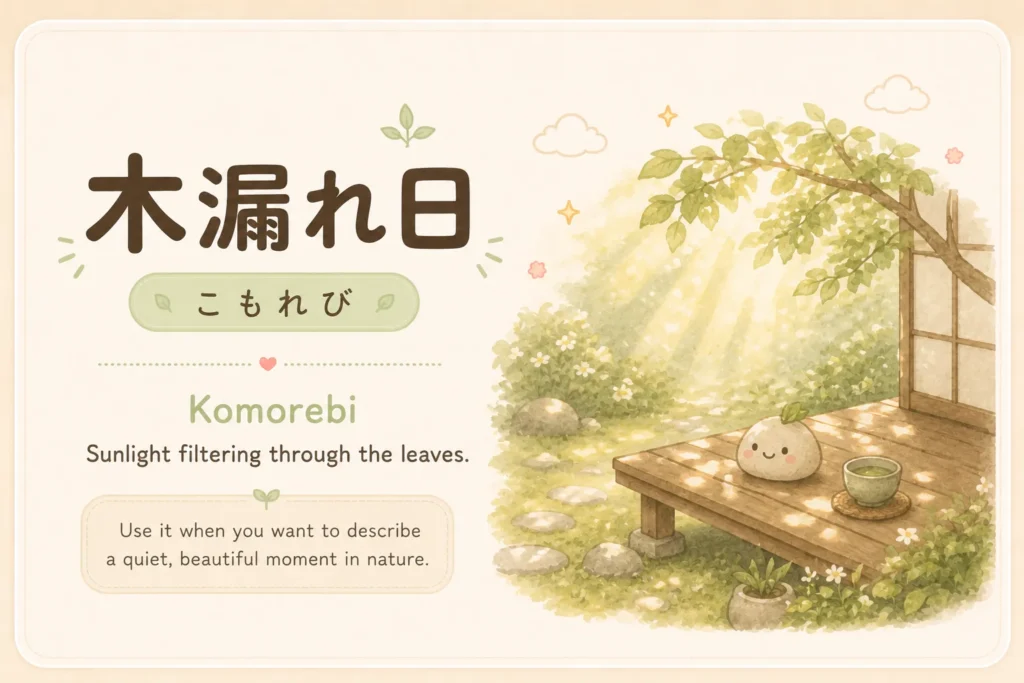
木漏れ日
こもれび · Komorebi
Meaning: Sunlight filtering through leaves.
Use it when: You want a beautiful Japanese word for a soft natural moment.
上善若水
じょうぜんみずのごとし · Jouzen mizu no gotoshi
Meaning: The highest good is like water.
Use it when: You want a quiet phrase about softness, humility, and natural strength.
平常心
へいじょうしん · Heijoushin
Meaning: A calm, ordinary mind.
Use it when: You want a Zen-like quote about staying steady in any situation.
冬来たりなば春遠からじ
ふゆきたりなばはるとおからじ · Fuyu kitarinaba haru tookaraji
Meaning: If winter comes, can spring be far behind?
Use it when: You want a quote about hope after a hard season.
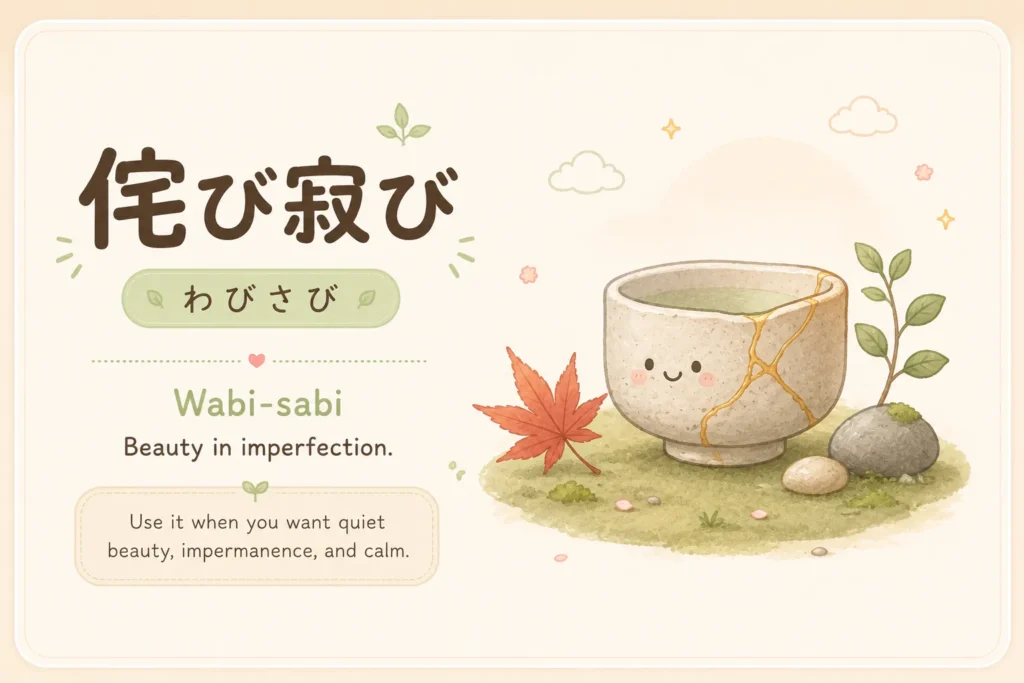
侘び寂び
わびさび · Wabi-sabi
Meaning: Beauty in imperfection, simplicity, and age.
Use it when: You want a phrase about imperfect beauty and quiet acceptance.
和敬清寂
わけいせいじゃく · Wakei seijaku
Meaning: Harmony, respect, purity, and tranquility.
Use it when: You want a calm phrase connected with Japanese tea ceremony values.
⚔️ Samurai and Bushido Quotes in Japanese
Many “samurai quotes” online are invented, loosely translated, or misattributed. This section keeps the focus on broadly recognized phrases and ideas with clear meanings.
風林火山
ふうりんかざん · Fuurin kazan
Meaning: Wind, forest, fire, mountain.
Use it when: You want a quote about strategy, adaptability, and controlled strength.
一騎当千
いっきとうせん · Ikki tousen
Meaning: One warrior worth a thousand.
Use it when: You want a powerful phrase about exceptional strength.
剣は心なり
けんはこころなり · Ken wa kokoro nari
Meaning: The sword reflects the mind.
Use it when: You want a sword-related phrase about inner character.
武士は食わねど高楊枝
ぶしはくわねどたかようじ · Bushi wa kuwanedo taka-youji
Meaning: A samurai keeps his pride even in poverty.
Use it when: You want a quote about dignity, pride, and self-control.
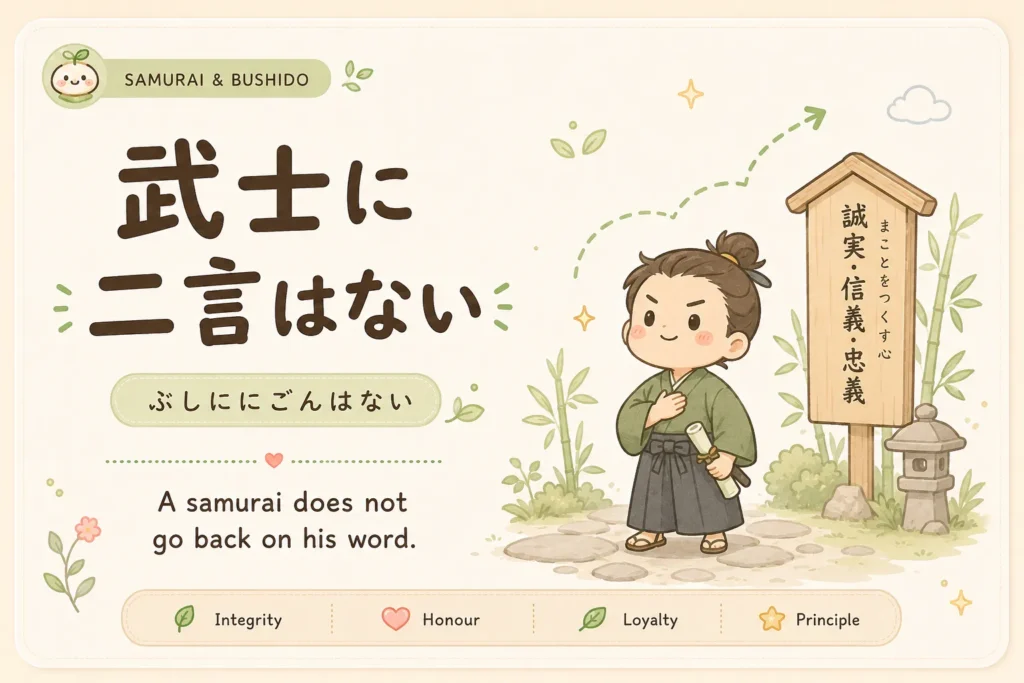
武士に二言はない
ぶしににごんはない · Bushi ni nigon wa nai
Meaning: A samurai does not go back on his word.
Use it when: You want a quote about honor and keeping promises.
武士の情け
ぶしのなさけ · Bushi no nasake
Meaning: A warrior’s mercy.
Use it when: You want a phrase about strength that still leaves room for compassion.
🐒 Funny and Surprisingly Literal Japanese Proverbs
Some Japanese proverbs are easy to remember because the literal image is so strange. The joke makes the lesson stick.
夫婦喧嘩は犬も食わない
ふうふげんかはいぬもくわない · Fuufu genka wa inu mo kuwanai
Meaning: Even a dog will not eat a couple’s quarrel.
Use it when: You want to say that a couple’s argument is their own business.
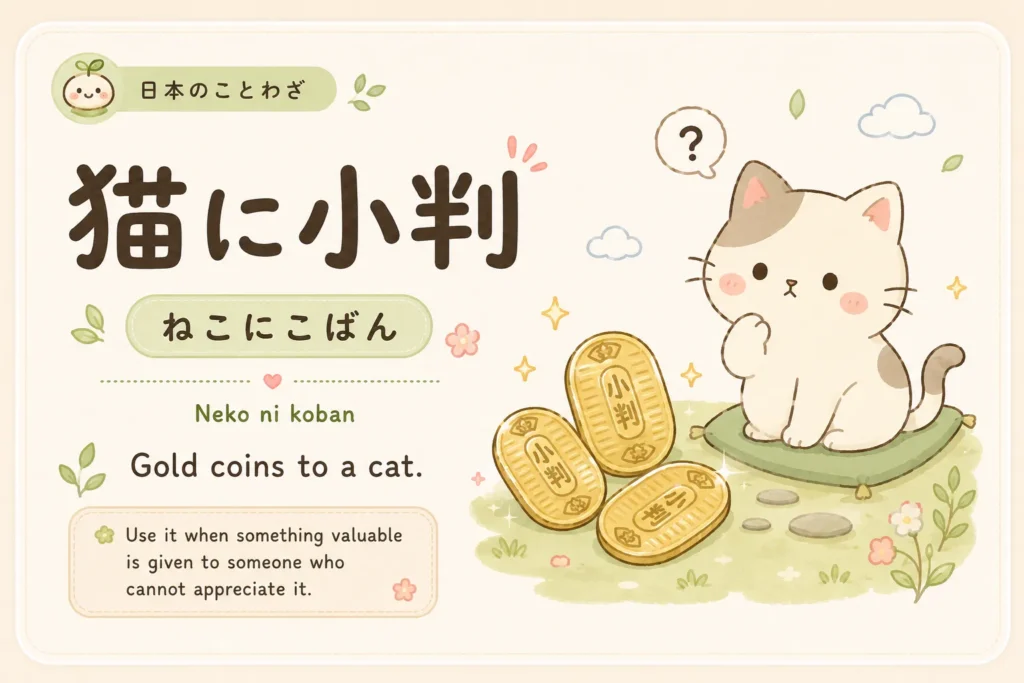
猫に小判
ねこにこばん · Neko ni koban
Meaning: Gold coins to a cat.
Use it when: You want to describe giving something valuable to someone who cannot appreciate it.
泣きっ面に蜂
なきっつらにはち · Nakittsura ni hachi
Meaning: A bee stings a crying face.
Use it when: You want to describe one bad thing happening right after another.
糠に釘
ぬかにくぎ · Nuka ni kugi
Meaning: A nail in rice bran.
Use it when: You want to describe effort that has no effect.
暖簾に腕押し
のれんにうでおし · Noren ni ude oshi
Meaning: Pushing your arm against a curtain.
Use it when: You want a funny proverb about getting no response.
棚から牡丹餅
たなからぼたもち · Tana kara botamochi
Meaning: A sweet rice cake falls from the shelf.
Use it when: You want to describe unexpected good fortune falling into your lap.
犬も歩けば棒に当たる
いぬもあるけばぼうにあたる · Inu mo arukeba bou ni ataru
Meaning: If a dog walks around, it may run into a stick.
Use it when: You want to say that taking action can bring luck or trouble.
河童の川流れ
かっぱのかわながれ · Kappa no kawa-nagare
Meaning: Even a water spirit can be swept away by the river.
Use it when: You want a funny way to say that even experts can fail.
Bonus PDF: Japanese Quotes Vocabulary List
Want to remember these Japanese quotes more easily? Download the bonus vocabulary list with Kanji, Kana, Romaji, and simple English meanings.
It includes the most useful words from this guide, grouped by theme: life, love, strength, nature, anime, and wisdom.
Use it as a study sheet, journal insert, or quick reference when you want to read Japanese quotes without guessing the pronunciation.
[Download the Vocabulary PDF] ⬇️
If you are learning Japanese for an upcoming trip, you may also want to save this Japanese phrases for travel guide. It covers the words you are more likely to say out loud in restaurants, train stations, shops, hotels, and emergencies.
Practice Japanese Quotes With AI
Reading Japanese quotes is a good start. But if you want to remember them, you need to use the full quote in a real scene.
This section gives you practical AI prompts with complete Japanese quotes, readings, meanings, and example check-ins. Use them for daily study, speaking practice, journaling, or review.
1. Read a Story
Use this when you want to remember poetic or emotional Japanese quotes through a scene.
Practice set:
一期一会
いちごいちえ · Ichi-go ichi-e
Meaning: Treasure this one-time moment.
物の哀れ
もののあわれ · Mono no aware
Meaning: The bittersweet beauty of passing things.
七転び八起き
ななころびやおき · Nanakorobi yaoki
Meaning: Fall seven times, stand up eight.
Copy this prompt:
Write a short, simple English story for a Japanese learner. Naturally include these three Japanese quotes: 一期一会, 物の哀れ, and 七転び八起き. After the story, explain each quote in plain English, show why it fits the scene, and give me one short diary sentence I can write in my notebook. In your final feedback, include the Hiragana reading for each quote. Keep your responses concise and break them into readable bullet points.
Example check-in:
Today I practiced 一期一会 because I wanted to remember that some moments only happen once.
My sentence: I want to notice small moments before they pass.
2. Take a Quiz
Use this when you want to check whether you remember the meaning, reading, and feeling of a quote.
Practice set:
継続は力なり
けいぞくはちからなり · Keizoku wa chikara nari
Meaning: Consistency becomes strength.
不言実行
ふげんじっこう · Fugen jikkou
Meaning: Actions over words.
急がば回れ
いそがばまわれ · Isogaba maware
Meaning: If you hurry, take the long way.
猿も木から落ちる
さるもきからおちる · Saru mo ki kara ochiru
Meaning: Even experts make mistakes.
泣きっ面に蜂
なきっつらにはち · Nakittsura ni hachi
Meaning: One bad thing happens right after another.
Copy this prompt:
Quiz me on these five Japanese quotes: 継続は力なり, 不言実行, 急がば回れ, 猿も木から落ちる, and 泣きっ面に蜂. Give me five questions. Mix multiple choice, matching, fill-in-the-blank, and short explanation questions. Do not give me the answers first. After I answer, correct me gently, tell me which quote I should review again tomorrow, and include the Hiragana reading for each quote in your final feedback. Keep your responses concise and break them into readable bullet points.
Example check-in:
Today I got 4 out of 5 right.
The hardest one was 急がば回れ because I remembered the literal meaning, but not the real lesson.
Tomorrow I will review it again with one real-life example.
3. Have a Conversation
Use this when you want to practice saying why a Japanese quote fits a real situation.
Practice set:
一歩一歩
いっぽいっぽ · Ippo ippo
Meaning: One step at a time.
以心伝心
いしんでんしん · Ishin denshin
Meaning: Heart to heart.
明鏡止水
めいきょうしすい · Meikyou shisui
Meaning: Clear mirror, still water.
後悔先に立たず
こうかいさきにたたず · Koukai saki ni tatazu
Meaning: Regret always comes too late.
Speak this prompt:
Let’s have a short conversation in English. I am learning Japanese quotes. Today I want to practice these four quotes: 一歩一歩, 以心伝心, 明鏡止水, and 後悔先に立たず. Create natural situations where these quotes would fit. Ask me one question at a time. Let me choose the best quote and explain why. After every two replies, correct my English, make my answer sound more natural, and help me say it again out loud. In your final feedback, include the Hiragana reading for the quotes we practiced. Keep your responses concise and break them into readable bullet points.
Example practice:
AI: Your friend is trying to improve their Japanese, but they feel slow. Which quote fits?
You: 一歩一歩 fits because they do not need to rush. They just need to keep moving.
AI: Good. You can say it more naturally like this: “一歩一歩 fits because progress does not have to be fast. They just need to keep moving step by step.”
Daily speaking note:
Today’s quote: 一歩一歩
My sentence: I am moving slowly, but I am still moving forward.
Better version: I am moving slowly, but I am still taking one step forward.
4. Try a Translation Challenge
Use this when you understand the meanings but still cannot choose the right Japanese quote for a specific situation.
Practice set:
努力に勝る天才なし
どりょくにまさるてんさいなし · Doryoku ni masaru tensai nashi
Meaning: No genius surpasses hard work.
花より団子
はなよりだんご · Hana yori dango
Meaning: Dumplings over flowers.
恋は盲目
こいはもうもく · Koi wa moumoku
Meaning: Love is blind.
木漏れ日
こもれび · Komorebi
Meaning: Sunlight filtering through leaves.
武士に二言はない
ぶしににごんはない · Bushi ni nigon wa nai
Meaning: A samurai does not go back on his word.
Copy this prompt:
Give me five short English life situations. For each one, ask me to choose the best Japanese quote from this list: 努力に勝る天才なし, 花より団子, 恋は盲目, 木漏れ日, and 武士に二言はない. After I choose, explain why my answer works or why another quote fits better. At the end, give me a quick review table with the quote, Hiragana reading, and simple English meaning. Keep your responses concise and break them into readable bullet points.
Example challenge:
Situation: Your friend practiced every day for six months and finally performed well.
Best answer: 努力に勝る天才なし
Why it fits: This quote is about effort beating natural talent. The scene is about daily practice turning into visible progress.
5. Do a 7-Day Japanese Quote Check-In
Use this when you want Japanese quotes to become a small daily habit.
Day 1: 継続は力なり
Write about one thing you want to keep doing.
Day 2: 前向きに
Write about one thing you want to face with a better attitude.
Day 3: 相思相愛
Write about love, friendship, or mutual care.
Day 4: 能ある鷹は爪を隠す
Write about quiet confidence.
Day 5: 春夏秋冬
Write about the season you are in right now.
Day 6: 猫に小判
Write about something valuable that someone failed to appreciate.
Day 7: 七転八起
Write about one time you got back up after a setback.
Copy this prompt:
Help me do a 7-day Japanese quote check-in. Each day, give me one simple question based on that day’s quote. After I answer, correct my English, make it sound natural, and give me one short version I can save as a daily note. Include the Hiragana reading for each daily quote when you introduce it. Keep your responses concise and break them into readable bullet points.
Example daily note:
Today’s quote: 継続は力なり
My sentence: I want to keep learning Japanese even when I feel slow.
Better version: I want to keep learning Japanese, even when my progress feels slow.
Japanese Quote FAQs
What is the best way to choose a Japanese quote?
Start with the purpose. A quote for a tattoo should be short, stable, and easy to verify. A quote for an Instagram bio can be more poetic. A quote for language learning should be easy to read out loud and remember in context.
Why do Japanese quotes need Kana and Romaji?
Kana shows the real Japanese reading, while Romaji helps English speakers pronounce it. Including both makes a quote easier to read, remember, and verify.
Can I use Japanese quotes for tattoos?
Yes, but be careful. Check the Kanji spelling, Kana reading, Romaji, natural meaning, and real-life usage. Then ask a native Japanese speaker or teacher to confirm the phrase before making it permanent.
Are anime quotes safe for tattoos?
Anime quotes are better for fandom, study notes, edits, and captions. For tattoos, verify the exact original Japanese and make sure you are comfortable with the character, scene, and context attached to the line.
Are Japanese proverbs still used today?
Many common proverbs are still understood and used today, especially in writing, speeches, social media, and conversation. Some four-character idioms feel more formal, so context matters.
How should I practice Japanese quotes with AI?
Pick a few quotes from this guide and ask AI to create stories, quizzes, role-plays, or translation challenges. Quotes become easier to remember when you connect them with a scene.
Conclusion
The best Japanese quote is the one that makes you pause.
Save the line that fits your current season of life, whether you need courage, calm, love, discipline, humor, or a quiet reminder that everything changes.
Use the PDF to review your favorite quotes, then try one AI prompt above to turn the words into a scene, a quiz, or a short conversation. If you enjoyed the proverbs and four-character idioms here, Japanese idioms are the natural next step — they work the same way, but show up more often in everyday conversations and shows.